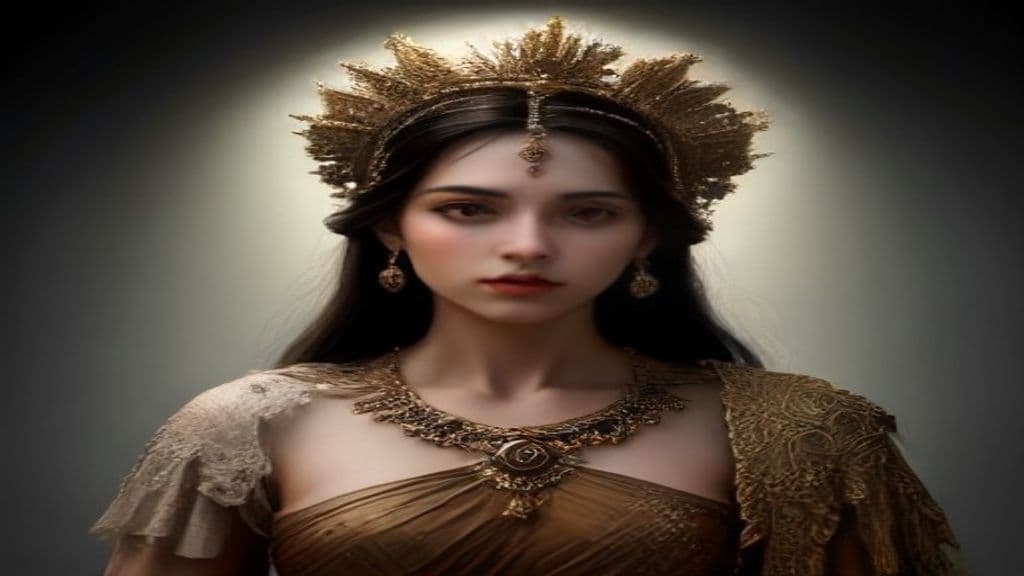
Déjanire is drawn from the classical figure Deianira of the Heracles cycle and appears in the narrative lineage of Sophocles' Trachiniae. In the modern French adaptations cited (a late-19th-century play with music and the Saint-Saëns / Louis Gallet operatic treatment), she is portrayed as the wife of Heracles whose attempt to secure her husband's fidelity leads her to accept advice from the dying centaur Nessus that his blood will restore faithfulness. Unaware that the blood is in fact poisonous, she gives a blood-soaked tunic which causes Heracles' fatal agony and eventual ascent to Olympus.
The provided sources are theatrical and bibliographic rather than iconographic; they describe Déjanire as a staged dramatic role performed in large-scale productions rather than giving a consistent physical description. Presentation details in the materials include her appearance in the massive open-air 1898 Béziers performances (with extensive choral forces and spectacle) and on the operatic stage in premieres at Monte Carlo and the Paris Opera in 1911; casting examples (e.g., Carmen Melis, Annie Fargue) indicate the role's use in conventional late-19th / early-20th-century theatre practice. Costuming and makeup vary by production and are not specified in the cited sources.
Sources describe Déjanire as a mortal character without inherent supernatural powers. Her dramatic agency is psychological and moral: jealousy, desperation, and credulity lead her to use an artefact (the tunic stained with Nessus's blood) that Nessus claimed would make an unfaithful lover return. The narrative specifies that the blood was actually poisonous; the fatal effect derives from that substance rather than from any innate magical ability of Déjanire herself.
Weaknesses
- conditionhuman fallibility (jealousy, credulity, emotional desperation)
Wards
None recorded.
Nessus
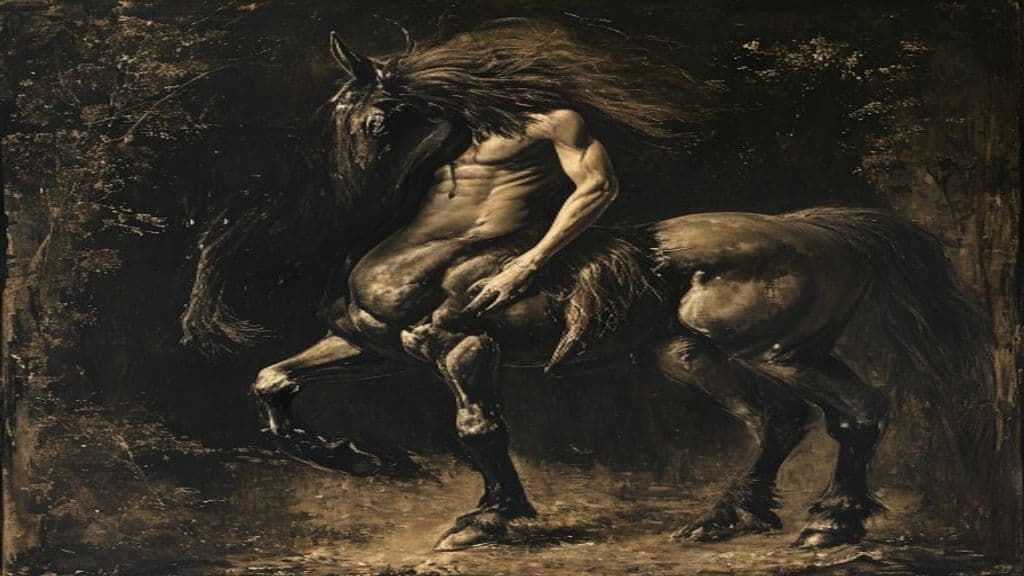
Nessus is primarily recorded in the supplied sources as a name from Greek myth — most prominently a centaur identified in modern reference works as the figure who caused the death of Heracles — and as a widely reused name in modern literature, gaming, and technical products. The provided materials constitute a disambiguation-style set rather than a single coherent supernatural tradition.
Heracles
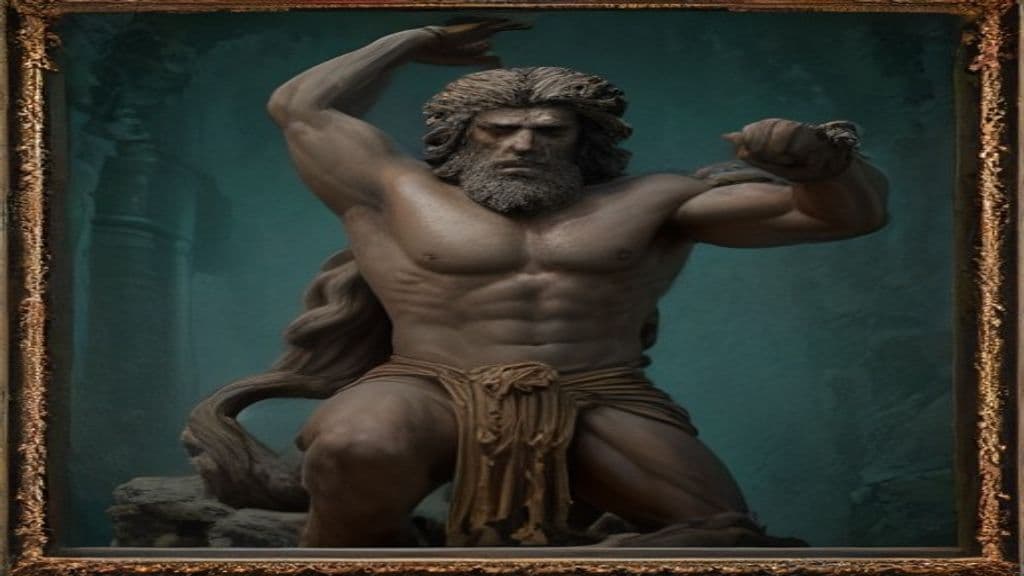
Heracles is the greatest hero of Greek myth whose career bridges mortal hero-cult and full divinization. Celebrated for his Twelve Labours, martial prowess, and travels between the mortal world, the underworld, and Olympus, he functioned as a civic patron, ancestor of royal lines (the Heracleidae), and object of cult that treated him both as chthonic hero and as god.
Dzahui
Dzahui (also spelled Dzavui) is the Mixtec rain deity attested in Mixtec codices and brief modern summaries. He is depicted with Mesoamerican rain-deity iconography and was the recipient of extreme propitiatory offerings in times of drought, disease, and at harvest.
Dzedka
Dzedka is a benevolent figure of Belarusian folklore associated with wealth and fortune. Described as an old man who walks roads and fields by day, he is said to cause a passerby to sleep and later find money, and to appear in dreams to advise wealthy but unhappy people.
Dziwożona
A malevolent supernatural entity associated with swamps in Slavic mythology. (Note: - The power tier should be Primordial because the Dziwożona is a powerful, malevolent entity associated with swamps and death. - The origin story summary should note that it's specifically female in S)
Dáin II Ironfoot
Dáin II Ironfoot is a named Dwarven king and military leader of the Iron Hills in J. R. R. Tolkien’s legendarium, presented in sources as a kinsman of Thorin Oakenshield who brings reinforcements to the Lonely Mountain and who is reported to have warned that Moria remained dangerous because of Durin's Bane.
Dáinn
Dáinn is a named figure in Old Norse poetic tradition variously listed among the dwarfs (dvergar) and invoked as an elven name in other contexts. Attested as an artisan-name in Hyndluljóð and as an onomastic/rune-related name in Hávamál, the name also appears attached to a legendary sword (Dáinsleif) and to a deer-shaped constellation in Norse stellar lore.
Dáire
Dáire is an Old Irish personal and ancestral name borne by multiple legendary figures in early Irish tradition; it functions as an eponymous ancestor and royal figure cluster associated with sovereignty, fertility/sexual potency, and martial/otherworldly associations rather than a single coherent supernatural being.
Dían Cécht
Dían Cécht is the professional healer of the Tuatha Dé Danann in medieval Irish myth. Presented as a master of remedies, salves, sacred wells, and prosthetic craft (notably the silver arm of Nuada), he functions as the gods' physician and head of a hereditary healing household.
Dís (dísir)
In Norse/North Germanic tradition, a dís (pl. dísir) is a collective term for female supernatural beings whose roles range from protective ancestral spirits and fertility figures to fate‑linked women comparable to valkyries or norns; they are invoked in both private and public cult (notably the dísablót) and can be benevolent or hostile toward humans.
Dísir
In Norse tradition, the dísir are a class of female supernatural beings associated with fate, fertility, and the welfare of kin; they may be protective guardians of clans or ambivalent/hostile toward mortals and are venerated in rites called dísablót.
Dôn
Dôn is an ancestral matriarch in medieval Welsh legend, presented as the mother and progenitor of a named kin-group commonly called the 'Children of Dôn'. She functions as a genealogical and cosmological origin-figure whose household is mapped onto Welsh place-names and constellations.
Dökkálfar and Ljósálfar
In the Prose Edda framework these are two contrasted classes of álfar (elves): Ljósálfar ('light-elves') associated with luminous, upper heavens and described as “fairer than the sun,” and Dökkálfar ('dark-elves') associated with subterranean dwelling and described as “blacker than pitch.” Scholarly sources debate whether Snorri’s binary reflects older Norse ideas or a later, possibly Christian-influenced ordering and whether dökkálfar overlap with svartálfar or dwarfs.
Dúnedain
The Dúnedain are a lineage of Men in J. R. R. Tolkien's legendarium descended from the Edain and the Númenóreans. They are renowned for their long lifespans (in earlier generations), martial skill, keen senses, and historical role as rulers of Númenor and later as the kingdoms and rangers of Arnor and Gondor; the name in Sindarin literally means 'Men of the West.'
Community Record
- [1]Déjanire — Wikipedia. Wikipedia article 'Déjanire' (synopsis and performance history, including Nessus's blood and Béziers/1911 premieres)wiki
- [2]Déjanire — Wikidata. Wikidata entry for Déjanire (linked data record for the theatrical/literary figure)other
- [3]ReType Foundry — Dejanire (font family notes). ReType foundry page noting the font takes its name from Deianira, a Calydonian princess in Greek mythologyother
- [4]Dejanire Text Fonts — Explore the Family. Typographic material using the name Déjanire, documenting modern cultural reuse of the nameother
- [5]Goldoni - La Locandiera - 1957 (cast listing referencing Déjanire as a stage name). Archive recording listing Annie Fargue as Déjanire in a 1957 production, showing the name's theatrical reuseother
- [6]Dejanire Sans | Adobe Fonts. Commercial font family named 'Dejanire Sans,' evidencing the character's name in typographic cultureother