
Within Haitian Vodou cosmology Erzulie Dantor is presented as a particular manifestation or incarnation of the broader Erzulie/Èzili complex of feminine spirits associated with love and womanhood. She is identified specifically as the main or a senior spirit of the Petro nanchon (family) of lwa, which in Vodou denotes a grouping of powerful, often forceful or protective spirits. Sources frame her identity relationally: she is the darker, maternal, Petro aspect of Erzulie rather than an entirely separate deity. Ethnographic and documentary sources in the supplied material do not provide a single canonical mythic life-story or philological etymology of the name "Dantò/Dantor," and the name is used to signal this particular Petro embodiment of the Erzulie persona.
Documentary and encyclopedic sources describe Erzulie Dantor as dark-skinned and maternal in nature; this darker complexion and motherly temperament are repeatedly emphasized in descriptions. In Haitian material and folk art she is widely depicted in visual media, and several sources note that the stylistic variant of the Black Madonna of Czestochowa is often used in popular depictions of Erzulie Dantor, linking her image to a scarred, dark-faced Marian iconography in syncretic visual practice. Other popular-attributed accoutrements (e.g., knives, rum, cigarettes) appear in some blogs and popular summaries but are unevenly attested in the provided scholarly/encyclopedic entries and thus are recorded in the literature as folk attributions rather than uniformly canonical features.
As a senior Petro lwa and a manifestation of the Erzulie family, Erzulie Dantor is principally described as maternal and protective toward women and family lines; Petro associations in Vodou often connote forceful or stern protective powers. The supplied sources characterize her role in general terms—protector, maternal agent, and a prominent presence in ritual and popular devotion—but do not supply a systematic catalogue of specific magical powers (such as named healing or exorcistic formulas). Popular and journalistic sources attach revolutionary and identity-protective meanings to her in collective memory (e.g., links to slave resistance or modern identity politics), but detailed doctrinal claims about discrete supernatural effects are not documented in the provided corpus.
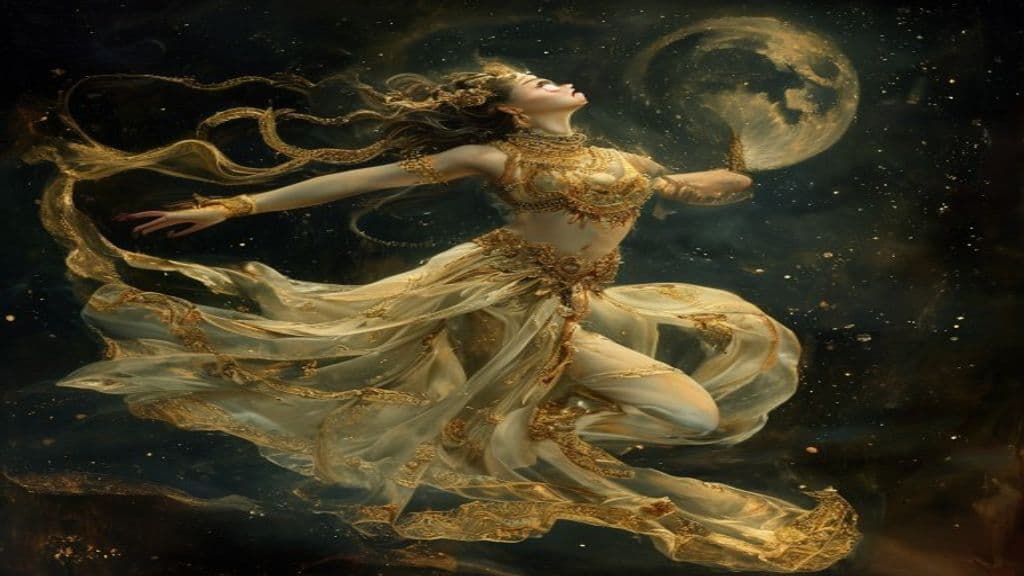
Apsara
Celestial dancers and water nymphs of Hindu cosmology — beautiful semi-divine beings who dance at the court of Indra and, by his command, descend to earth to distract sages from excessive asceticism.
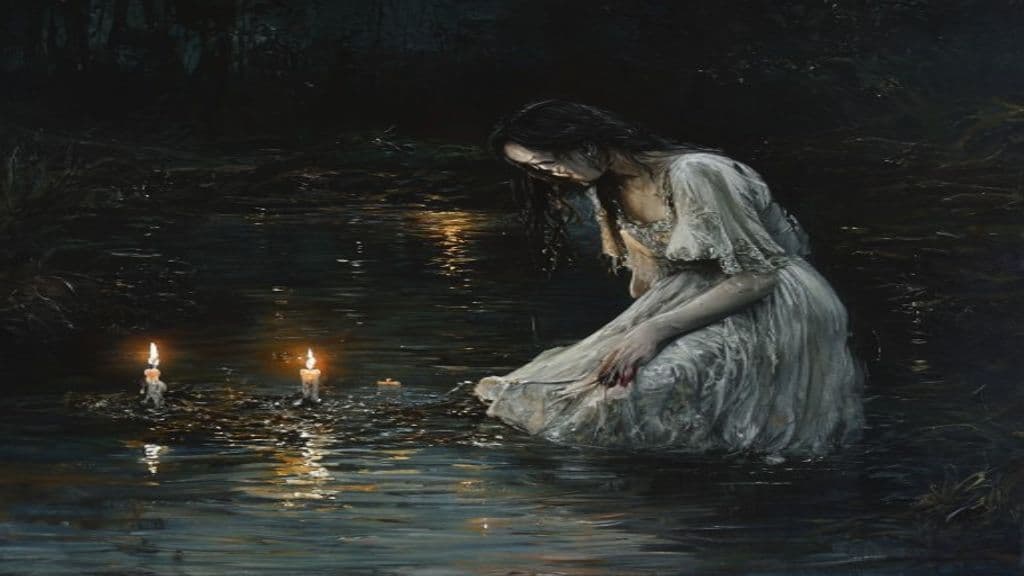
La Llorona
The Weeping Woman of Mexican folklore — the ghost of a mother who drowned her children and now wanders rivers and lakes, weeping for them and taking other children she finds at night.
Adjassou-Linguetor
Adjassou-Linguetor is a loa in Haitian Vodou associated with spring water. The limited cited sources describe her as having protruding eyes and a bad temper; beyond these points, the available documentation (Wikipedia and Wikidata) is minimal.
Agwé
Agwé is a high-ranking lwa in Haitian Vodou associated with the sea, navigation, fishing, and certain funerary conveyances. He is portrayed as a naval officer who lives in a palace beneath the sea, commands attendant spirits, and is propitiated with maritime offerings and ceremonies.
Ayida Wedo
Ayida Wedo is a primordial rainbow-serpent loa of Haitian Vodou (with counterparts in Fon and Ewe vodun) associated with water, the rainbow, and the elemental forces; she often appears paired with Damballa as the dual cosmic serpent that assisted the creator in forming and upholding the world.
Ayizan
Ayizan is a racine (root loa) in Haitian Vodou and related West African-derived Vodoun traditions, functioning as the archetypal mambo (priestess) and a guardian of ritual order, initiation (kanzo), and the transmission of sacerdotal implements such as the asson. She is also associated with the marketplace and commerce and is syncretized with the Catholic Saint Clare.
Baron Samedi
A principal lwa of Haitian Vodou who serves as master of the dead and psychopomp, head of the Gede family; associated with cemeteries, crossroads, resurrection/healing, and licentious, comic behavior.
Damballa (Damballah)
Damballa is one of the most important loa (spirits) in West African Vodun and its New World continuations such as Haitian Vodou and related African-diasporic practices. Traditionally associated with serpentine imagery and sometimes depicted as a rainbow, Damballa represents a central, revered presence transmitted from the Whydah/Ouidah region of modern Benin into Caribbean Vodou practice.
Erzulie Freda
Erzulie Freda is a manifestation within the Ezili/Erzulie family of loa in Haitian Vodou associated with aspects of love and femininity. She is named among the prominent incarnations of Erzulie alongside Erzulie Dantor and Lasirenn in the cited sources.
Ezili Dantor
Ezili Dantor (Èzili Dantò, Erzulie Dantor) is a principal Petro lwa in Haitian Vodou, venerated as a dark-complexioned, maternal and fiercely protective spirit of children, single mothers, and marginalized gender identities. She is known for quick, destructive wrath as well as deep suffering, and figures in Haitian devotional life, syncretic Catholic imagery, and revolutionary memory in some traditions.
Gede (Ghede)
The Gede are a family of lwa in Haitian Vodou associated with death, ancestors, fertility, and the boundary between life and death. They function as psychopomps and graveyard guardians, appear in public ritual through distinctive drums, dance (banda), and possession, and are honored each year at Fèt Gede around All Souls' Day.
La Sirène
La Sirène is a mermaid-like water spirit (lwa) within Haitian Vodou, represented in ritual art and drapo (Vodou flags) and situated in Vodou pantheon lists alongside other named lwa. She is associated with marine imagery and participates in the visual and religious culture of Haitian Vodou rather than appearing only as a folkloric sea creature.
Lwa (Loa)
Lwa, also spelled loa, are spirit beings venerated within the African diasporic religion of Haitian Vodou and incorporated into some revivalist forms of Louisiana Voodoo. Many lwa identities derive in part from deities of West African traditions, especially Fon and Yoruba.
Marassa (Marassas, Marassa Jumeaux)
In Haitian Vodou the Marassa (Marassas, Marassa Jumeaux) are described as divine twins: childlike yet presented as older than other loa and as personifications of core moral and cosmological principles. Sources characterize them as paradoxical 'children mysteries' who synthesize aspects of the loa and are linked to love, truth, justice, reason, and astronomic‑astrological learning.
Community Record
- [1]Ezili Dantor - Wikipedia. Wikipedia: Ezili Dantorwiki
- [2]Wikidata: Ezili Dantor. Wikidata: Q5423293wiki
- [3]Vevé Ezili Dantor (Archive). Archive.org: Vevé Ezili Dantorother
- [4]The Greatest Woman In History (Archive reference to Black Madonna syncretism). Archive.org video referencing Black Madonna and Erzulie Dantor stylistic linksother
- [5]Our Lady the Blessed Virgin Mary - Marian Apparitions (Archive). Archive.org: Marian iconography referenced in relation to Erzulie Dantorother
- [6]Haitian Vodou art - Wikipedia. Wikipedia: Haitian Vodou art (documents folk-art presence of Erzulie Dantor)wiki
- [7]Double Feature: Haitian Folk Art of the Vodou Spirit Erzulie Dantor – O'Neill School Art Committee. O'Neill School Art Committee blog on Haitian folk art representations of Erzulie Dantorfolk
- [8]Spirit Work: Blesseed Virgin of the Bright Hill (Black Madonna / Erzulie Dantor note). Spirit Work: discussion linking Black Madonna iconography to Erzulie Dantor depictionsfolk
- [9]Black Madonna of Czestochowa becomes lesbian defender Erzuli Dantor. QSpirit article noting popular syncretic identification and modern cultural readingsfolk
- [10]Erzulies Voodoo - About Haitian Vodou - Haitian Vodou History & Beliefs. Erzulies.com: overview of Erzulie family and Dantor as Petro manifestationfolk
- [11]ERZULIE DANTOR - the Haitian Goddess of Women (Godchecker). Godchecker entry summarizing popular attributes of Erzulie Dantorfolk