
La Sirène's presence in Haitian Vodou is part of a trans‑Atlantic set of water‑spirit beliefs that link West and Central African mermaid/water‑spirit concepts with Caribbean religious formation. Comparative literature on Mami Wata situates mermaid/water‑spirit figures across African and Atlantic contexts, and scholarship and cultural materials on Haitian Vodou describe how Vodou absorbed and adapted diverse African-derived spirits and European iconography. Sources representing La Sirène in Vodou contexts (including pantheon lists and visual ritual objects) locate her within the living pantheon of lwa rather than as an isolated folktale figure (sources: Mami Wata overview; Haitian Vodou contextual sources and exhibition/catalog descriptions) (sources: 1, 6, 9, 11).
Visual and material culture consistently present La Sirène in mermaid/merwoman form with marine motifs. Drapo (Vodou flags) and sequined embroidered banners depict her as a merwoman — for example, a flagged drapo labeled "La Sirene, La Baleine" shows a merwoman playing a horn amid fish and star motifs; exhibitions and gallery presentations also display images of La Sirène alongside other lwa (sources: auction listing for Vodou flag; exhibition/catalog materials; Haitian Vodou art overviews) (sources: 12, 11, 14, 15). Textual sources in the provided material do not supply a standardized textual physical description beyond these visual depictions.
The provided sources do not record detailed, specific powers, behavioral narratives, or liturgical functions unique to La Sirène. What is documented is her status as a Vodou lwa and her inclusion in ritual and visual practice — that is, she is a spirit referenced, depicted, and engaged with within Vodou's ritual culture. Comparative material on Mami Wata places such water spirits within a broader tradition of powerful and sometimes ambivalent aquatic beings, but the supplied sources do not attribute particular abilities (such as bestowing wealth, causing possession, or inflicting harm) to La Sirène specifically and do not provide ritual texts describing such functions (sources: 1, 11, 12).
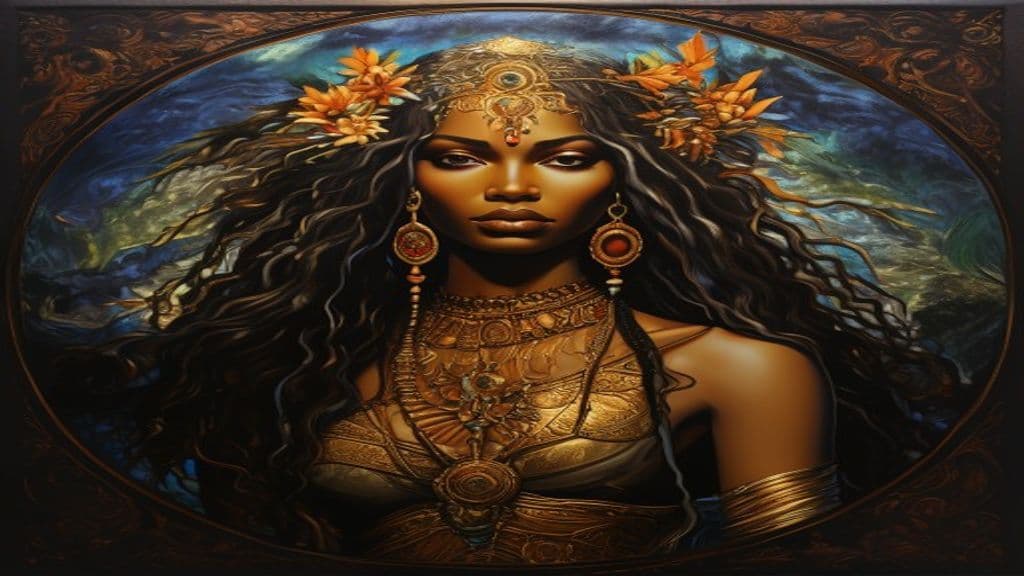
Adjassou-Linguetor
Adjassou-Linguetor is a loa in Haitian Vodou associated with spring water. The limited cited sources describe her as having protruding eyes and a bad temper; beyond these points, the available documentation (Wikipedia and Wikidata) is minimal.
Agwé
Agwé is a high-ranking lwa in Haitian Vodou associated with the sea, navigation, fishing, and certain funerary conveyances. He is portrayed as a naval officer who lives in a palace beneath the sea, commands attendant spirits, and is propitiated with maritime offerings and ceremonies.
Ayida Wedo
Ayida Wedo is a primordial rainbow-serpent loa of Haitian Vodou (with counterparts in Fon and Ewe vodun) associated with water, the rainbow, and the elemental forces; she often appears paired with Damballa as the dual cosmic serpent that assisted the creator in forming and upholding the world.
Ayizan
Ayizan is a racine (root loa) in Haitian Vodou and related West African-derived Vodoun traditions, functioning as the archetypal mambo (priestess) and a guardian of ritual order, initiation (kanzo), and the transmission of sacerdotal implements such as the asson. She is also associated with the marketplace and commerce and is syncretized with the Catholic Saint Clare.
Baron Samedi
A principal lwa of Haitian Vodou who serves as master of the dead and psychopomp, head of the Gede family; associated with cemeteries, crossroads, resurrection/healing, and licentious, comic behavior.
Damballa (Damballah)
Damballa is one of the most important loa (spirits) in West African Vodun and its New World continuations such as Haitian Vodou and related African-diasporic practices. Traditionally associated with serpentine imagery and sometimes depicted as a rainbow, Damballa represents a central, revered presence transmitted from the Whydah/Ouidah region of modern Benin into Caribbean Vodou practice.
Erzulie Dantor
Erzulie Dantor (Èzili Dantò) is a senior Petro lwa (spirit) in Haitian Vodou, a dark-mother manifestation within the Erzulie family associated with womanhood and maternal protection. She is prominent in Haitian folk art and is sometimes iconographically syncretized with images of the Black Madonna (Our Lady of Czestochowa) in popular devotional contexts.
Erzulie Freda
Erzulie Freda is a manifestation within the Ezili/Erzulie family of loa in Haitian Vodou associated with aspects of love and femininity. She is named among the prominent incarnations of Erzulie alongside Erzulie Dantor and Lasirenn in the cited sources.
Ezili Dantor
Ezili Dantor (Èzili Dantò, Erzulie Dantor) is a principal Petro lwa in Haitian Vodou, venerated as a dark-complexioned, maternal and fiercely protective spirit of children, single mothers, and marginalized gender identities. She is known for quick, destructive wrath as well as deep suffering, and figures in Haitian devotional life, syncretic Catholic imagery, and revolutionary memory in some traditions.
Gede (Ghede)
The Gede are a family of lwa in Haitian Vodou associated with death, ancestors, fertility, and the boundary between life and death. They function as psychopomps and graveyard guardians, appear in public ritual through distinctive drums, dance (banda), and possession, and are honored each year at Fèt Gede around All Souls' Day.
Lwa (Loa)
Lwa, also spelled loa, are spirit beings venerated within the African diasporic religion of Haitian Vodou and incorporated into some revivalist forms of Louisiana Voodoo. Many lwa identities derive in part from deities of West African traditions, especially Fon and Yoruba.
Marassa (Marassas, Marassa Jumeaux)
In Haitian Vodou the Marassa (Marassas, Marassa Jumeaux) are described as divine twins: childlike yet presented as older than other loa and as personifications of core moral and cosmological principles. Sources characterize them as paradoxical 'children mysteries' who synthesize aspects of the loa and are linked to love, truth, justice, reason, and astronomic‑astrological learning.
Community Record
- [1]Mami Wata. Wikipedia: 'Mami Wata or similar is a mermaid, water spirit, and/or goddess in the folklore of parts of Western Africa, Central Africa, Eastern Africa, and Southern Africa.'wiki
- [2]Haitian Vodou. Wikipedia: overview of Haitian Vodou religious system and lwa practice.wiki
- [3]The Haitian Vodou Handbook. Reference overview of Vodou practice and lwa (used as contextual background for Vodou ritual culture).other
- [4]Vodou Love Magic. Contextual material on Vodou practice and lwa in popular/ritual contexts.other
- [5]Haitian Vodou Flag or Banner La Sirene, La Baleine (Lot 201 - May Estate Auction, May 10, 2023). Auction listing describing a drapo labeled 'La Sirene, La Baleine' depicting a Vodou merwoman playing a horn with fish and stars (visual object documentation).other
- [6]AYITI TOMA III: SPIRALING, SILENCE, & SIRENES — CENTRAL FINE. Exhibition text listing La Sirène among Vodou-related visual presentations and situating siren imagery in Haitian art contexts.other
- [7]Drapo Vodou: Haitian Vodou Flags | Indigo Arts (exhibition/gallery). Gallery/exhibition materials documenting drapo and the representation of lwa including water spirits in Vodou material culture.other
- [8]Haitian Vodou art. Wikipedia: overview of Vodou visual arts, including drapo and the depiction of lwa in art and exhibitions.wiki
- [9]Bridge: Fabiola Jean-Louis — 'Waters of the Abyss' (magazine feature). Magazine feature referencing contemporary artistic engagements with siren imagery and Vodou motifs.other