
In Paracelsian natural-philosophy the gnomi are classified as earth elementals — beings ontologically tied to the element Earth and locally embodied within the earth-substance. Paracelsus presents them as a category distinct from incorporeal spirits because they eat, drink and speak, yet they move through earth as humans move through air. Early-modern German miners' tradition, recorded by observers such as Georg Agricola, treats comparable beings (Bergmännlein / Berggeist / daemon metallicus) as part of miners' explanatory lore: animate subterranean entities whose existence accounts for unpredictable underground phenomena (helpful leads of ore, prankish acts, and hazardous occurrences). The taxonomy and miners' vocabulary intersect in early-modern attempts to integrate local occupational beliefs with a systematic elemental ontology.
Primary historical descriptions depict gnomi / Bergmännlein as diminutive humanoid 'manikins.' Paracelsus describes gnomi as two spans tall (two spans ≈ 18 inches). Agricola and related mine lore record comparable subterranean creatures at three spans (three spans ≈ 27 inches). Across sources the consistent image is of small, manlike mountain-people (the German Bergmännlein literally 'mountain manikin') rather than formless incorporeal entities; discrepancies in exact measured stature are noted between authors.
Sources ascribe to gnomi the capacity to move through solid earth 'as easily as humans move through air' (Paracelsus), making subterranean mobility a defining trait tied to their elemental nature. Paracelsus also emphasizes their humanlike activities — they eat, drink and talk — distinguishing them from purely incorporeal spirits. Agricola's miners' legends attribute a range of behaviors: prankish mischief (miming, laughing, throwing pebbles at miners) and occasionally beneficial actions such as leading miners to rich veins of ore. Terminology linked to kobel/kobelt associates certain mine-spirits with troublesome or noxious ores (the miners' term that later influenced the element name cobalt). Agricola notes variation in temperament and danger among subterranean beings rather than a single uniform disposition.
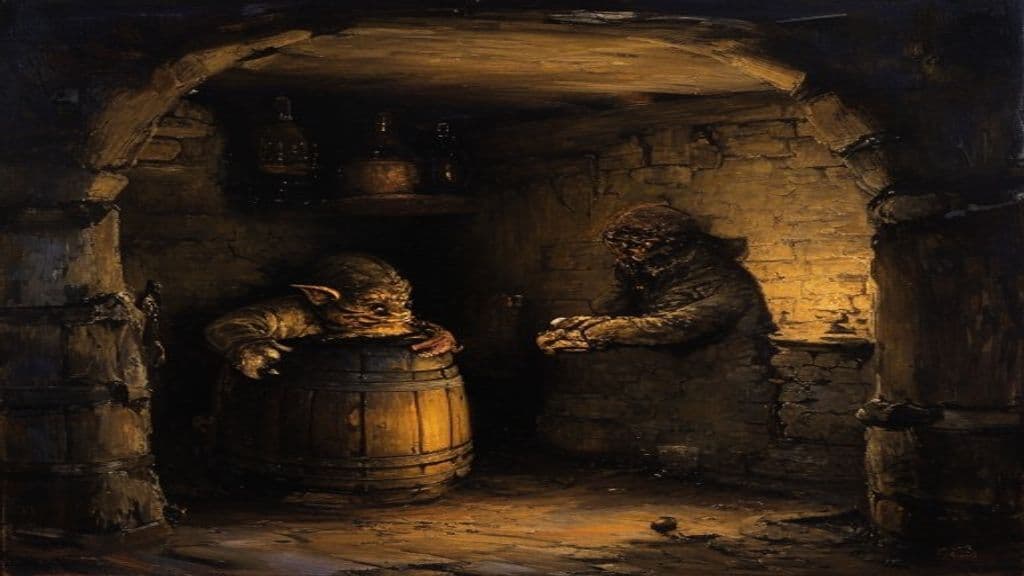
Kobold
The German household and mine spirit — a mischievous but potentially helpful small being who attaches to a household, bringing luck or disaster depending on how it is treated.
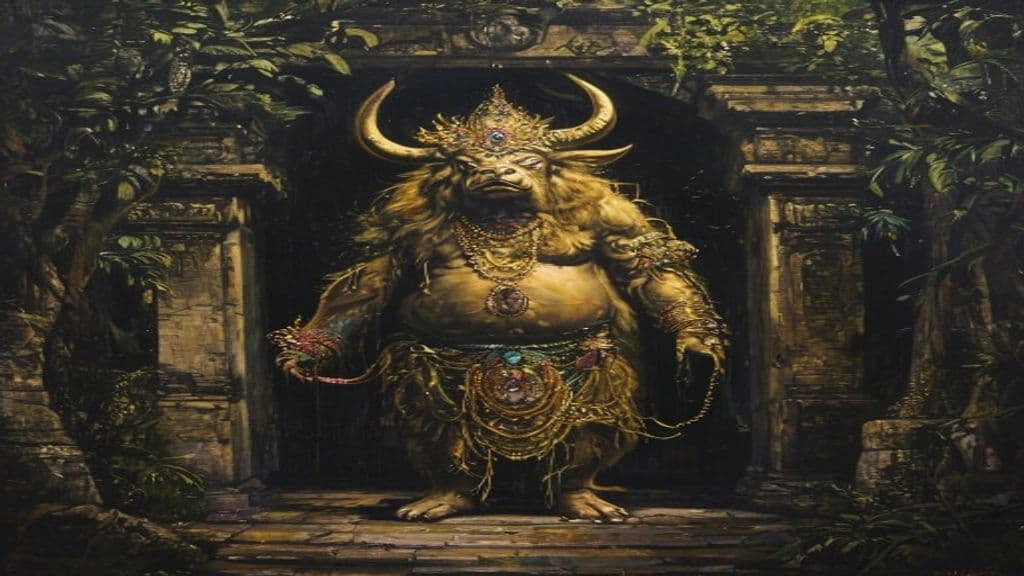
Yaksha
Nature spirits of Hindu, Buddhist, and Jain cosmology — guardians of forests, treasures, and wilderness. Ambivalent beings, capable of great benevolence to the respectful and terrible harm to the greedy.
Glinda the Good Witch
Fictional benevolent sorceress created by L. Frank Baum for his Oz novels; depicted as the most powerful sorceress in the Land of Oz, ruler of the Quadling Country, and protector of Princess Ozma who aids protagonists such as Dorothy.
Global Guardians
A fictional international team of superheroes published by DC Comics, composed of individually costumed heroes recruited from various nations to operate under an international coordinating body known as the Dome. Originating in Super Friends stories and later integrated into DC Universe continuity, the group functions as a transnational enforcement/respondent team and has been depicted as cooperating with and opposing other superhero organizations in multiple storylines.
Glorfindel
Glorfindel is a fictional Elf‑lord of the Noldor in J. R. R. Tolkien's Middle‑earth legendarium, notable for a First‑Age deed (slaying a Balrog at the Fall of Gondolin and dying there) and for a Third‑Age role as a powerful protector who aided Frodo against the Nazgûl. Tolkien's later writings treat him as a case of an Elf re‑embodied in Valinor and (in Tolkien's proposed reconciliation) returned to Middle‑earth, with his spiritual power described in late notes as greatly enhanced, "almost an equal of the Maiar."
Glorian (Thomas Gideon)
Glorian is a modern fictional supernatural/cosmic character from American comic-book fiction: the transformed human Thomas Gideon who serves as the Shaper of Worlds' apprentice and functions as a craftsman/creator figure capable of reshaping matter and constructing dreamlike realities.
Gloucester sea serpent
A long-standing regional legendary large marine animal reported off Gloucester and Cape Ann, Massachusetts, famous for a cluster of sightings beginning in 1817–1819 and remembered in local folklore, naturalist reports, and later skeptical and popular accounts.
Gnadenstuhl
An iconographic motif in Christian art, the Gnadenstuhl (German: 'seat of mercy') depicts the Trinity with the Father supporting or presenting the crucified Christ and the Holy Spirit as a dove, functioning as a visual theology of divine mercy and the cross as an event of the Triune God.
Goatman (urban legend)
A modular North American roadside/woods urban legend about a half-goat/half-human figure tied to specific local sites (notably Prince George's County, MD; Denton County/Old Alton Bridge, TX; and Nags Head Woods, NC). The Goatman functions as a liminal, threatening presence in stories—blending animal and human traits—and is used to explain local misfortunes and to police risky spaces.
Goblin
A class of small, often grotesque humanoid beings in European folk belief that range from household helpers to tricksters and violent figures. Goblins occupy liminal spaces—hearths, cellars, ruins and wild places—and their behavior toward humans depends on region, story, and reciprocal treatment.
Gochihr
In Zoroastrian tradition, Gochihr is a powerful dragon associated with water and chaos. (Note: The power_tier should be adjusted to "Primordial" based on the provided source, but with the understanding that Primordial entities are often cosmic in nature and Gochihr's association with water and )
God (Christianity)
In the Christian tradition represented in the sources, God is the eternal, supreme being who created and preserves all things, is both transcendent and immanent, and is understood in mainstream theology as one God in three Persons (Father, Son, Holy Spirit). Christian doctrine emphasizes God's action in history (covenant with Abraham, revelation in scripture, the Incarnation of the Son, and the sending of the Spirit).
God L
God L is a major Classic and Postclassic Maya deity associated with long‑distance trade, wealth (notably cacao and merchandise), age (the 'Mam' or grandfather figure), and underworld/night forces expressed through jaguar and owl symbolism. He appears in codices, ceramics, and monumental reliefs where he combines mercantile, shamanic/magic, and martial aspects.
God in Buddhism (concept)
A doctrinal and conceptual topic concerning the status of a creator or ultimate deity within Buddhist thought. Most sourced summaries state that Buddhism does not include belief in a creator deity, while noting that some schools posit transcendent, unborn, or unconditioned ultimate realities.
Community Record
- [1]Gnome — Wikipedia (summary of Paracelsus, Agricola and later commentary). Wikipedia: 'Gnome' article summarizing Paracelsus' classification of gnomi and Agricola's account of Bergmännlein.wiki
- [2]Wikidata: Gnome. Wikidata entry for 'Gnome' referenced in research notes.other