
Two modes of origin appear in the sources. The traditional/devotional account locates the buddha within a long cosmological sequence: he is described in lists of past buddhas (e.g., as the last of twenty-five in one source) and connected to prior lives (Sumedha) and pre-birth existence in Tusita heaven in some traditional retellings. The historical-critical account, emphasized by modern scholarship cited here, treats Siddhartha Gautama as a historical person from the Sakya clan who lived in the eastern Indo‑Gangetic Plains in the 6th or 5th century BCE, underwent a process of renunciation and ascetic training, achieved awakening (nirvana) at Bodh Gaya, and later died (reached parinirvana) at Kushinagar; the two modes coexist in the materials and are presented as differing interpretive frames rather than identical historical claims.
The provided sources give limited concrete physical description. Biographical summaries place him as born a prince of the Shakya (Sakya) clan who initially wore royal garb and later the simple robes of a wandering ascetic and monastic; narratives emphasize episodes such as the Four Sights that prompted renunciation and the encounter with Māra at the moment of awakening. Devotional and later legendary materials attribute miraculous manifestations and superhuman signs to the Buddha, but specific physical details such as stature, coloring, or precise facial features are not supplied in the cited excerpts.
Across the sources, Gotama is described primarily as a teacher and founder of a monastic community (sangha) and as one who attained full awakening (nirvana) and taught the path to end suffering (dukkha). Traditional accounts ascribe superhuman or miraculous abilities to him in hagiographic terms (e.g., miraculous activities seen in devotional literature, the Māra episode at the final moments of realization). Modern interpretive work cited here presents the awakening in psychological, social, and historical terms—emphasizing renunciation as a prolonged internal process and the realization as radical clarity grounded in human experience—while acknowledging the existence of devotional miracle motifs in other sources.

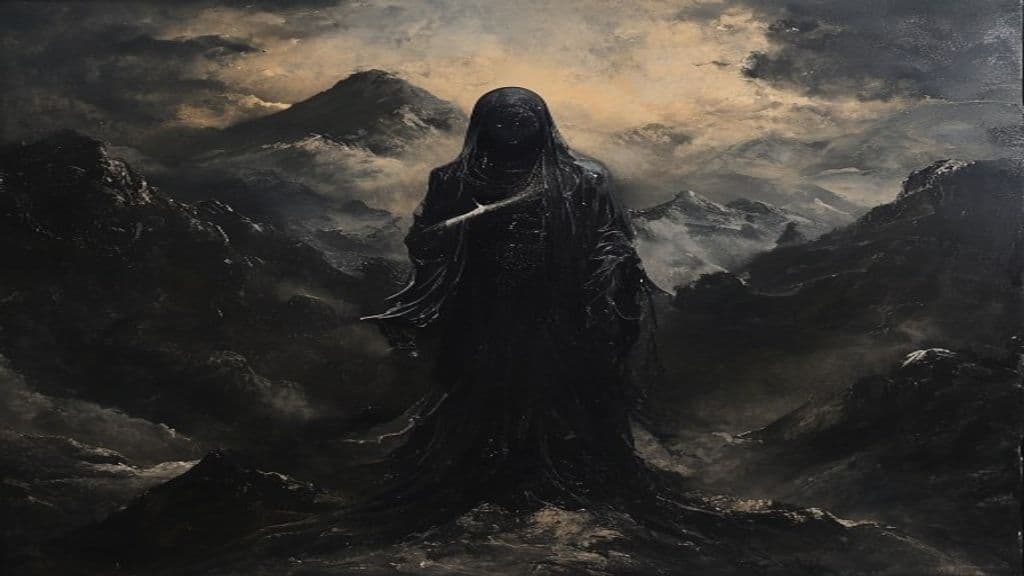
Mara
The nightmare spirit of Northern European tradition who rides sleeping people at night, causing suffocation, terror, and the sensation of an invisible weight on the chest.
Sumedha
Previous life of Gotama Buddha, demonstrating selflessness and spiritual dedication. (Note: - Power tier should be Ancient (deity-level), not Primordial (cosmic). Sumedha's abilities are remarkable but not cosmic in scope. - The article doesn't mention any sensory cues, wards, or weaknesses )
Amrita (Buddhist tradition)
In the context of Indian religions, particularly within Hinduism and Buddhism, Amrita is a divine elixir that grants immortality and eternal life. (Note: - Power tier should be Ancient (deity-level), not Primordial. - Origin story appears accurate but lacks specificity on when Amrita was first mentioned in the Rigveda; add more detail. - Abilities are )
Asura
Asura (Sanskrit: असुर) are a class of supernatural beings in Indian religious traditions. In Hinduism they are described as power-seeking beings related to, and often oppositional toward, the Deva; in Buddhist cosmology they form a demigod/titan class characterized by passions such as wrath and envy. Individual asura figures (notably the asura Svarbhānu) appear in myths that produce the eclipse-entities Rahu and Ketu.
Bhuta (Bhoot)
Bhuta (also rendered Bhoot or Bhoota) is a South Asian lexical term with at least two related senses in the cited source: a 'bhoota' as the ghost or spirit of a deceased person (a disembodied spirit), and 'mahābhūta' as the term for the classical elements or primordial states of matter (and related Bhuta-Shakti). The supplied source treats the term primarily as a lexical/definitional entry rather than an ethnographic account of regional cults.
Brahmayu
A former Brahmin who converts to Buddhism after an encounter with the Buddha, exemplifying personal transformation within Buddhist teachings. (Note: 1. Power tier: Primordial seems implausible given that there is no mention of supernatural powers or abilities; reevaluate as Lesser or Minor Spirit. 2. Appearance: Since no specific description exist)
Buddha (Siddhartha Gautama)
Siddhartha Gautama, most commonly called the Buddha, is presented in the provided sources as a historical wandering ascetic and religious teacher of the 6th–5th century BCE who attained nirvana, taught Dharma, and founded the monastic community (sangha) that became Buddhism.
Buddhas of the Ten Directions (Shífāng Fó)
A doctrinal and devotional designation for the manifold buddhas present throughout the Buddhist cosmological field (the 'ten directions'), invoked as fully awakened presences and used as objects of contemplation and repentance in devotional practice.
Devata
Devata denotes a class of divine or godlike beings in South and Southeast Asian Hindu and Buddhist traditions. The term covers specialized, often localized presences (village, household, forest, directional guardians) and in some contexts overlaps with the broader category deva; devatas are integrated into lived ritual practice across India, Sri Lanka, Bali, and neighboring regions.
Diyu (Buddhist tradition)
The realm of the dead or 'hell' in Chinese mythology, combining elements from Buddhist and traditional Chinese beliefs about the afterlife. (Note: 1. Remove "Primordial" power tier designation as it implies cosmic-level power, which is not supported by the source material (Diyu is described as a realm or "hell", not an entity with vast cosmologi)
Dīpankara Buddha
A Buddha of the past in Buddhist sacred history who, according to traditional narratives, recognized and predicted the future Buddhahood of the bodhisattva Sumedha (a previous life of Gautama/Śākyamuni). He is venerated in ritual contexts, represented in Asian Buddhist art, and commemorated in contemporary temple and festival practices.
Gaja (Hindu tradition)
In Hinduism, the Gaja is an elephant with cultural and symbolic significance, appearing in various scriptures. (Note: - Power tier should be Primordial (as it's an animal referenced in multiple scriptures and holds cultural significance) - No specific physical description is mentioned, so Appearance section should be)
Gandharva
A class of non-human celestial or semi-celestial beings in Indic religions associated principally with music, song, dance, fertility, and an escort/guardian role for liminal arrivals (such as Soma or beings). In Hinduism they are minor deities and musicians of the devas; in Buddhist cosmology they are a low rank of devas and the term (gandhabba in Pāli/commentary) is also used doctrinally for a sentient intermediate state between death and rebirth.
Garuda
Garuda is a divine, eagle-like being in South Asian traditions best known as the vahana (mount) of the god Vishnu. In Vedic, Purānic and later texts he appears as a powerful, solar-associated bird-personage who is both an individual mythic personality (son of the sage Kaśyapa and Vinatā) and an archetype invoked in temple iconography and theological metaphor.
Community Record
- [1]The Buddha (Wikipedia). Wikipedia: 'Siddhartha Gautama... was a wandering ascetic and religious teacher who lived in the eastern Indo-Gangetic Plains during the 6th or 5th century BCE and founded Buddhism.'wiki
- [2]Wikidata Q9441. Wikidata: variant date ranges for birth and death (e.g., 623 or 563 BCE – 543 or 483 BCE).wiki
- [3]The Buddha: New Perspectives (archive). Archive: interpretive work arguing for historical/psychological reading of Siddhartha's renunciation and awakening.academic
- [4]Gotama Buddha (Aimwell.org). Aimwell.org: traditional notes that he was 'the last of the twenty-five' and that pre-birth narratives place him in Tusita heaven.folk
- [5]Sumedha (Wikipedia). Wikipedia: identifies Sumedha as a previous life associated with the Buddha in traditional accounts.wiki
- [6]Tissa Buddha (Wikipedia). Wikipedia: example of buddhas listed in traditional sequences related to Gotama's placement among past buddhas.wiki
- [7]Gautama Buddha - Wikiquote. Wikiquote: quotations reflecting devotional attributions of superhuman abilities and miracle motifs.wiki
- [8]Abhaya Sutta (On Right Speech). Canonical sutta reference included in source list indicating moral and meditative instruction attributed to the Buddha.other
- [9]The Final Moment of the Buddha's Realization (Buddhism.SE discussion). Discussion referencing the Māra episode and final moments of awakening in traditional narratives.other
- [10]Prince Gotama and the Four Sights (blog). Narrative retelling of the Four Sights episode that prompts renunciation in biographical accounts.other