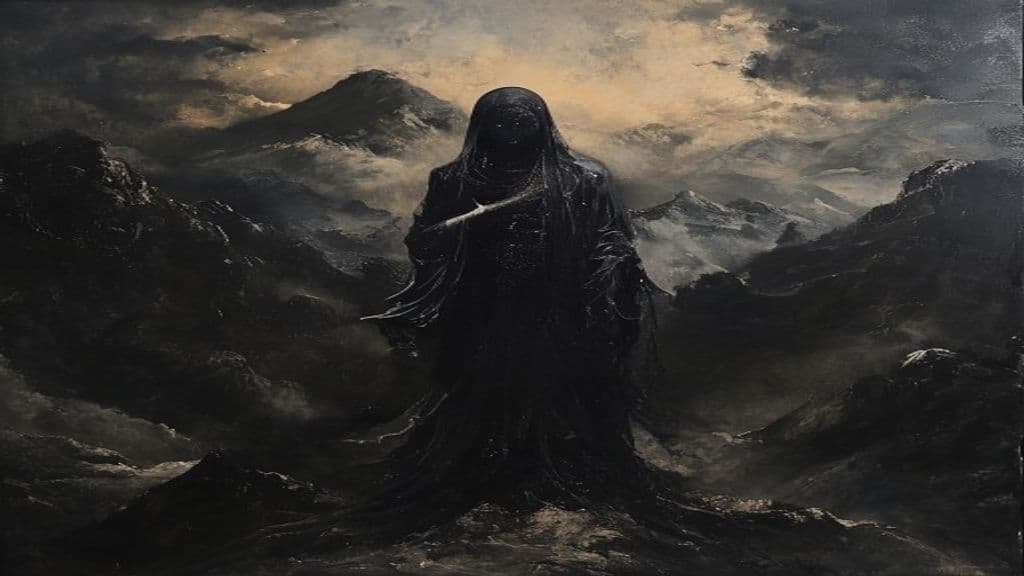
Sumedha is considered a previous life of Gotama Buddha, indicating that it shares a spiritual connection with the Buddha. He demonstrates selflessness by offering his body for Dīpankara Buddha to walk over, showcasing his dedication to spiritual growth.
No specific physical description is provided in the source material.
Sumedha demonstrates selflessness and makes a vow to become a Buddha in a future lifetime. He also shows an ability to make a vow that is confirmed by prophecy.
Apsara
Celestial dancers and water nymphs of Hindu cosmology — beautiful semi-divine beings who dance at the court of Indra and, by his command, descend to earth to distract sages from excessive asceticism.
Bidadari
Bidadari is a Southeast Asian regional term related to the South Asian apsara: a class of celestial/ethereal female beings originally associated with clouds and water in Hindu and Buddhist cosmology, later represented in regional art and performance as nymph- or fairy-like figures. The term is also widely used in modern Southeast Asian toponymy and popular culture (place names, media, vessel names), distinct from detailed mythic narratives in the provided sources.
Maheśvara (Sabbalokādhipatī Devā)
Buddhist deva and teacher of spiritual knowledge, associated with the god Shiva in Hinduism. (Note: 1. Power tier should be Primordial, not Ancient (Maheśvara's association with Shiva and his role as a deva suggest a higher level of power). 2. No information about origin story, appearance, sensory c)
Mahāsammata
In Buddhist tradition, Mahāsammata is a ruler elected by farmers according to the principles of Dhamma. (Note: 1. Power tier should be Primordial since the sources describe him as the founder of eleven world monarchs and a figure connected to the origins of Buddhist tradition. 2. Add sensory cues: Since he is )
Mount Meru (Buddhist Tradition)
Sacred, five-peaked mountain at the center of all physical, metaphysical, and spiritual universes in Buddhist cosmology. (Note: 1. Power tier: Downgrade to "Primordial" to "Greater". A Primordial entity would be a fundamental aspect of the universe's creation or structure, rather than a specific geographical location. Mount Me)
Naga
Divine serpent beings of Hindu, Buddhist, and Jain cosmology — powerful guardians of water, earth, and underground treasures. Revered as deities in South and Southeast Asia.
Oni
Powerful supernatural beings of Japanese folklore — associated with misfortune, disease, and the punishment of sinners in hell. Fearsome, often depicted as guardians of the underworld.
Pishacha
Flesh-eating spirits of Hindu mythology that haunt cremation grounds and are associated with disease, madness, and possession. The lowest class of demon in the Vedic hierarchy.
Preta (Hungry Ghost)
A post-mortem supernatural being associated with extreme, unremitting hunger and thirst. In Hindu usage the Sanskrit term can mean a deceased person, while Buddhist traditions develop the category into a distinct realm of hungry spirits whose condition illustrates karmic consequences for demeritorious action.
Rakshasa (Himalayan variants)
A Himalayan reception of the pan-Indian rakshasa motif: hostile or disruptive non‑human beings known from Sanskrit epic and Puranic literature, here noted where Himalayan sources and discussions intersect with the broader epic tradition. The supplied sources do not document distinct, well‑attested Himalayan folklore variants; the entry therefore presents primarily the epic/legendary profile as transmitted into Himalayan contexts in general references.
Tanuki
The raccoon-dog spirit of Japanese folklore — a cheerful trickster and master of shape-shifting, less dangerous than the kitsune but far more mischievous. Famous for leaves transformed into money.
Tengu
Proud, warrior-like mountain spirits of Japan, associated with martial arts, pride, and the wild mountains. Neither fully good nor evil — they test and train warriors and monks, but punish the arrogant.
Community Record
- [1]Wikipediawiki