
Within the supplied material there is no mythic origin narrative for the Great Duke as an individual. Instead, the term is presented as an office or rank created by demonologists who organized denizens of Hell according to a hierarchical schema modeled on European monarchical and angelic orders (Source 1). No primary-language etymology or early origin text is given in the provided sources.
The provided sources do not give consistent or traditional physical descriptions for holders of the rank 'Great Duke.' The term is treated as a classificatory title rather than a distinct creature with a fixed iconography (Source 1). Modern fictional or commercial reuses in the corpus (e.g., a named daemon in a game context) may depict specific appearances, but those are creative adaptations and are not documented as traditional descriptions in the supplied materials (Sources 5–6).
Traditional sources in the supplied set do not ascribe specific powers or behaviors to 'Great Dukes' beyond their placement high in a demonological hierarchy; the rank indicates prominence and presumed authority within ordered infernal taxonomies but does not enumerate abilities in the available material (Source 1). A modern game entry (BlogNomic) attributes specific mechanical abilities to a named figure, 'Bune, Great Duke of Hell' (e.g., a summon cost and an ability to permanently unsummon other daemons by paying souls), but this is a contemporary fictional/game mechanic and not presented as a historical account (Sources 5–6).
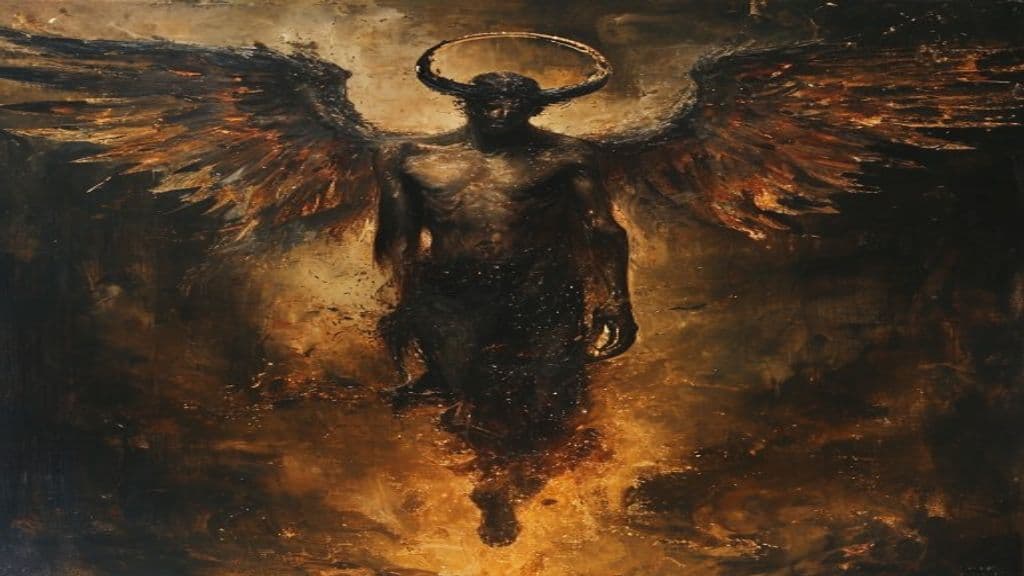
Iblis
The primordial deceiver in Islamic theology; a jinn who refused God's command to bow before Adam and was expelled from heaven. The source of all temptation and whispered suggestion.
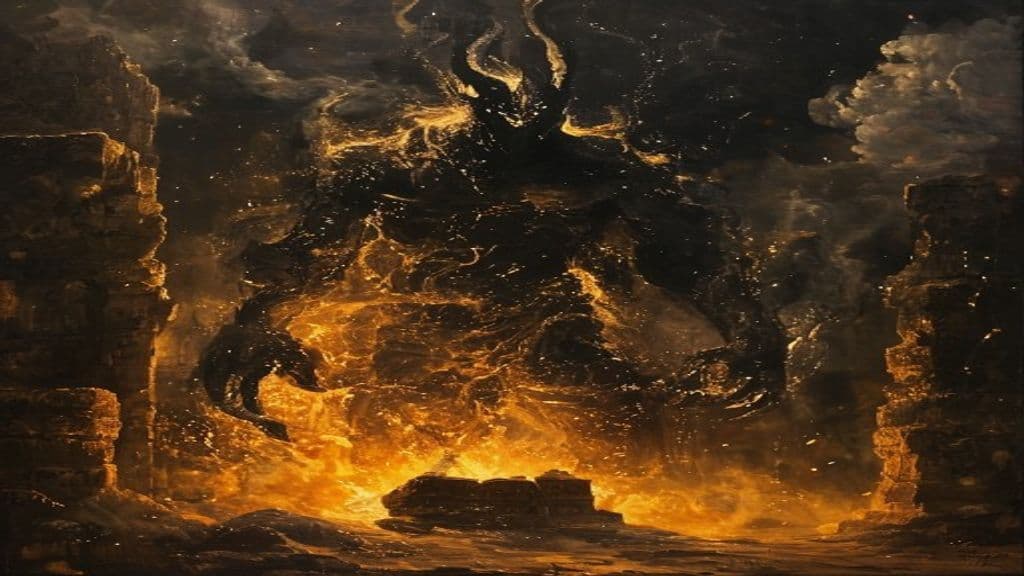
Ifrit
One of the most powerful classes of jinn in Islamic and pre-Islamic Arab tradition — a fire-born being of immense strength and cunning, capable of great works of engineering and terrible violence.
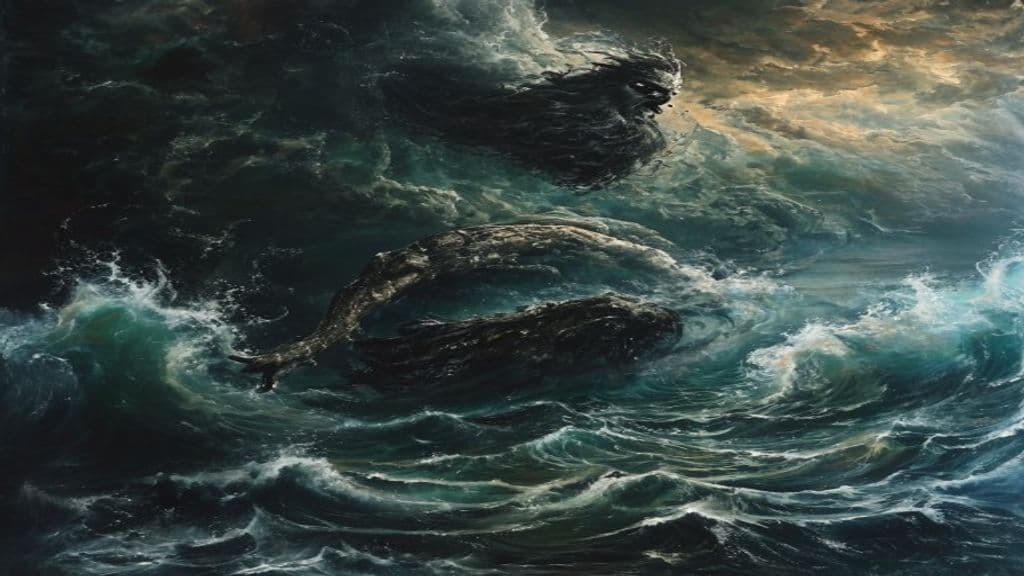
Marid
The most powerful class of jinn in Islamic tradition — beings of the sea, associated with the deep ocean, storms, and the granting of wishes at terrible cost. The classic genie of the Arabian Nights.

Rakshasa (Himalayan variants)
A Himalayan reception of the pan-Indian rakshasa motif: hostile or disruptive non‑human beings known from Sanskrit epic and Puranic literature, here noted where Himalayan sources and discussions intersect with the broader epic tradition. The supplied sources do not document distinct, well‑attested Himalayan folklore variants; the entry therefore presents primarily the epic/legendary profile as transmitted into Himalayan contexts in general references.

Ghoul
A ghoul is a demon-like or monstrous humanoid originating in pre-Islamic Arabian religion, traditionally associated with graveyards and the consumption of human flesh. The concept later entered broader folklore and has been widely reused and transformed in modern fiction and popular culture.
Belphegor
Belphegor is a named infernal figure in Christian and later European literary and occult traditions, commonly identified in those traditions with the ancient Near Eastern figure Baal‑Peor. In demonological lists he is associated with particular vices (notably sloth, though some sources assign gluttony), and literary treatments depict him as a tempter who offers wealth, inventions, or incarnate visitation to lead humans into sin.
Granny Weatherwax
Esmerelda "Esme" Weatherwax, commonly called Granny Weatherwax or Mistress Weatherwax, is a human witch and the leading figure among the Ramtops witches in Terry Pratchett's Discworld novels. She is a practicing herbalist and folk-psychologist ('headology') who serves as a pragmatic guardian of the Kingdom of Lancre and its people.
Grant
The Grant (also attested as Gyant) is a creature attested in Gervase of Tilbury's Otia Imperialia (medieval Latin) described as a kind of demon resembling a yearling colt that runs through towns as a warning of fire. Later commentators have debated its identification, comparing it to horse-like bogies or suggesting it may reflect a hare omen, but the sole medieval description is equid-like and portentous.
Grass snake (Natrix natrix)
A Eurasian semi‑aquatic, non‑venomous colubrid snake (primarily Natrix natrix and closely related taxa) commonly found near water, compost heaps and field edges. Treated in the provided sources as a biological species with well‑documented natural history rather than a mythic or supernatural being.
Gration
Gration (Greek: Γρατίων) is attested in modern reference databases as a named member of the Giants (Gigantes) of Greek mythology. The supplied sources give only a brief indexical identification and no ancient narrative, description, or ritual material for this figure.
Gravekeeper (modern usage)
A modern English-language title or name used in diverse contemporary media (music production credits, videogame title, and tabletop/fantasy character name) rather than a coherently documented traditional folkloric entity. The supplied sources show the term functioning as branding or a character title with grave-related connotations but do not record a folk belief, origin myth, or ritual tradition tied to a specific culture.
Grayven
Grayven is a DC Comics supervillain and New God, described as a son of Darkseid who functions as a warlike, planet‑destroying commander in multiple comic crossover storylines. He appears across DC continuity (comics and animated adaptations) as an antagonistic, near‑immortal combatant whose arcs include being banished, incapacitated, killed, and later resurrected in continuity relaunches.
Great Spirit
A supreme, often-immanent life force or creator-being present in the traditional spiritual beliefs of many Indigenous peoples of what is today Canada and the United States; concepts and names vary by nation and may refer to a single creator, a pervasive sacred power, or a collective of mysterious sacred forces.
Great comet
A great comet is an exceptionally bright comet that becomes easily observable to the naked eye and enters popular awareness; the term is descriptive and astronomical rather than a mythic spirit. It is defined by observational impact (brightness and conspicuous tail) rather than by any supernatural ontology in the supplied sources.
Greater spot-nosed monkey
The greater spot-nosed monkey (Cercopithecus nictitans) is a small Old World guenon native to West Africa, typically found in forest–savannah transition zones. Described in zoological and natural-history sources, it is notable for its prominent white nose, small size among Old World monkeys, and complex vocal behaviour including combinatorial alarm calls.
Greek City-State Patron Gods
Patron deities of ancient Greek city-states, associated with the foundation myths and governance of their respective cities. (Note: 1. Power tier should be Ancient, not Primordial, as city-state patron gods are associated with deities-level abilities. 2. Add sensory cues: The presence of a patron deity is often signified by the lo)
Greek Gods
A pantheon of all-powerful, immortal beings with human-like personalities and flaws that inhabit Mount Olympus, the highest peak in Greece. (Note: * Power tier: Primordial (not Greater), as they are considered to be born from Chaos, which is at the root of the universe. * Origin story: The source material doesn't mention the birth of the gods fr)
Community Record
- [1]Great Duke. Wikipedia, 'Great Duke' (accessed in provided corpus)wiki
- [2]Bune, Great Duke of Hell (Daemon Research) — BlogNomic (proposal). BlogNomic proposal: 'Bune, Great Duke of Hell. Summon Cost: 10 souls...' (as a game entry)other
- [3]Bune, Great Duke of Hell — BlogNomic (archive). BlogNomic archive entry expanding the game-mechanical description of Buneother
- [4]Great Duke of Hell: The New Windows Malware Attack - MiniTool. Modern cultural reuse of the phrase 'Great Duke' in naming (malware report included in corpus)other
- [5]Love Advice from the Great Duke of Hell — webtoon and related mentions. Example of modern/popular cultural reuse of the term in entertainment (webtoon mention)other