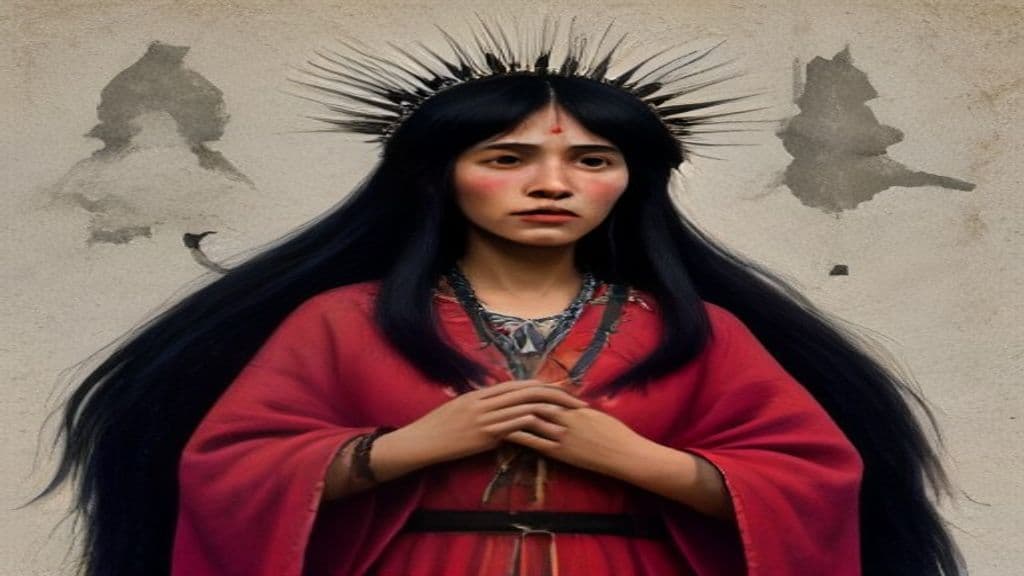
The available sources do not provide a cosmogonic origin narrative for Gualichu. Within Mapuche and Tehuelche cosmological frameworks the entity functions as a culturally authoritative explanation for unexplained suffering and mischance rather than as a creator or antagonist deity with a recorded origin story. Sources contrast Gualichu with the absence of a single named god of evil in these traditions and place it among subterranean, unseen harmful forces (see also related concepts such as wekufe).
Sources consistently report that Gualichu is a purely spiritual being for which there is no depiction or cult image. No anthropomorphic or visual attributes, iconography, or material representation are recorded in the provided materials; the entity is described as non-corporeal and without a documented physical form.
Gualichu is credited with causing disease, calamity, and general evil happenings. It is described as able to enter or infest people's bodies or objects, producing conditions that required ritual expulsion: when Gualichu 'could enter people's body or objects an exorcism had to be performed to expel him.' The lexical extension of the name to gualicho (a curse) and the verb engualichar ('to cast an evil spell') indicates that the entity's influence can be framed as a cast spell or jinx attached to people or things.
Weaknesses
- ritualexorcism (unspecified)
Wards
- ritualexorcism (unspecified)
Anchimayen
Anchimayen is a small, childlike luminous creature in Mapuche mythology described as a servant or familiar kept by a kalku (Mapuche sorcerer). It is said to take the form of small children and to transform into flying fireballs that emit bright light; some sources also describe a later conception as a fuego fatuo (will-o'-the-wisp)-type being that can frighten travelers.
Calcu (Kalku)
In Mapuche tradition, the calcu (also spelled kalku) is a sorcerer or witch who works with black magic and negative powers, presented in sources as the oppositional counterpart to the culturally sanctioned, benevolent shaman (machi).
Chonchon
A Mapuche legendary being described as the detached, flying head of a sorcerer or person who has entered into sorcery. The chonchon is associated with kalku (evil sorcerers), nocturnal covens, and functions as an omen-bearing, predatory extension of illicit witchcraft in southern Chile and Argentina.
Fire-breathing monster
A cross-cultural mythic category of monster defined by the ability to expel flame (or fire-like phenomenon) from the mouth or nostrils. Appears in multiple traditions (e.g., Greco-Roman, Hebrew/Biblical, Anglo‑Saxon, Japanese, Philippine, Native American, West African, Mapuche) and in modern fantasy as a recurring trope.
Kalku
Kalku (also Calcu) is a Mapuche human practitioner who works with negative powers and harmful spirit-agents (wekufe). Presented in contrast to the benevolent machi, kalku command spirit-servants such as Anchimayen and can manifest powerful spirit-forms like the Chonchon; the role is often described as inherited and transgressive of admapu.
Ngen
In Mapuche cosmology, the ngen (Mapudungun: 'owner') are spirits that manage, govern and arrange different features of nature; they are custodial proprietors of particular natural domains and are to be respected and offered to when humans seek resources from nature.
Pillan
Powerful, respected male spirits in Mapuche cosmology associated with the realm of good (Wenumapu) and with volcanoes on Earth; they are moral enforcers and benefactors who receive communal ritual attention (ngillatun) and may punish (or allow the wekufe to punish) with drought, flood, earthquakes, or disease. Antü is named as the most powerful Pillan, and female counterparts called Wangulen accompany them.
Guahaioque
Guahaioque is recorded in available sources as a minor deity of the Muisca people, described as the god of evil, stealing, lies, and death. The Muysccubun name is given as meaning "figure of the deceased." The documentary attestation is brief and does not include myths, iconography, or ritual detail.
Guajona
The Guajona (also called Lumia) is a nocturnal, hag-like creature from Cantabrian (and related Asturian) folklore said to enter homes and suck the blood of sleeping people—especially children—leaving victims pale and weak without necessarily killing them.
Gualicho
Gualicho (also spelled gualichu or walichu in place-names) is a Patagonian/Tehuelche folk term used to name a harmful supernatural influence or curse attached to places, events, or people. The term appears in regional toponymy and modern popular sources and was adopted as the genus name for a newly described theropod, but the supplied materials are primarily toponymic and paleontological references rather than detailed ethnography.
Guan Gong (Guan Yu / Guan Di)
Guan Gong is the honorific cult form of the historical late Eastern Han general Guan Yu (courtesy name Yunchang), a prominent follower of Liu Bei whose memory was transformed through literature and popular religion into a widely venerated 'Warrior Saint' figure with temples, images, and cultural presence across China and overseas Chinese communities.
Guanyin
Guanyin (Guān Yīn, short for Guanshiyin/Guanshiyin 觀世音) is the Chinese manifestation of the bodhisattva Avalokiteśvara associated with compassion. Venerated across Buddhist, Taoist, and Chinese popular-religion contexts, Guanyin is petitioned through temple devotion, recitation, and festivals as a merciful intercessor who 'perceives the sounds of the world.'
Community Record
- [1]Gualichu — Wikipedia. Wikipedia article 'Gualichu'.wiki
- [2]Gualicho — Wikipedia. Wikipedia article 'Gualicho' (notes on vernacular survival and usage).wiki
- [3]Gualichu — Wikidata Q950289. Wikidata entry for Gualichu (labelled 'demon').wiki
- [4]Beliefs and funeral rites – Tehuelche. Summary of Tehuelche beliefs and funeral rites (contextual cultural information referencing Gualichu-like concepts).other