
Hachiman's cult is centered on Usa Hachiman-gū in Ōita Prefecture and traditions identify Hachiman as the deified spirit of the semi‑legendary Emperor Ōjin. Late Heian sources summarized in later compilations (e.g., Fusō Ryakuki tradition) relate a revelation story in which Hachiman appeared in the form of a three‑year‑old boy in 571 AD to a man named Ōga‑no‑hiki and later identified himself as Emperor Ōjin; these foundation and revelation narratives underpin the shrine cult. Historical records cite Hachiman’s patronage of state Buddhist projects (a 749 report of Hachiman speaking through a priestess of Usa to support the Great Buddha of Tōdai‑ji) and an 8th‑century imperial recognition when the court granted the title 'Great Bodhisattva Hachiman' in 781, marking formal shinbutsu syncretism and state endorsement.
Iconographically Hachiman is represented in shrine sculpture and Buddhist imagery. In Shinto contexts he appears as an enshrined kami often venerated together with associated female deities (the Hachiman himegami and Empress Jingū) as a triad (Hachiman Mikami). Under Buddhist syncretism Hachiman is commonly shown in sōgyō style—Hachiman in the form of a Buddhist monk—and notable wooden sculptures include a 1201 sōgyō Hachiman carved for Tōdai‑ji; museum collections and surviving shrine sculpture (e.g., Usa Hachiman pieces) provide material examples of these forms.
Sources describe Hachiman primarily as a protective and oracular figure rather than one who performs spectacular cosmological feats. He acts as chinjū (guardian) of Buddhist temples, a tutelary kami of the Minamoto clan and the samurai class, a guardian of the imperial house and the nation, and an oracular presence speaking through human intermediaries (e.g., priestesses) in foundation and state projects. Within honji‑suijaku frameworks Hachiman was doctrinally integrated with Buddhist figures—some traditions identified Amitābha as his honji, while Nichiren sources claimed his honji was Gautama Buddha—situating him in religious authority and protective roles rather than as a narrowly defined 'war god.'
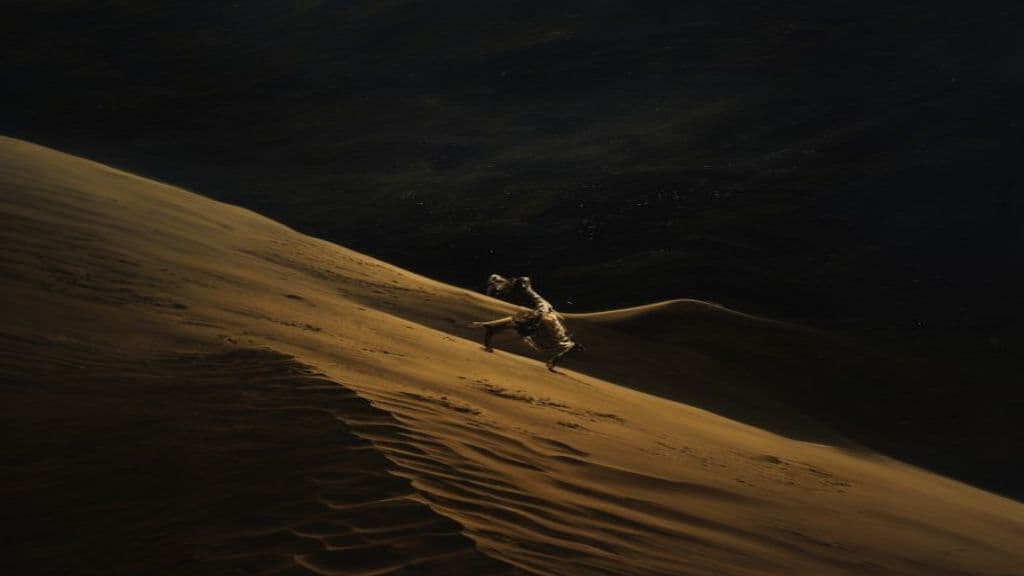
Jann
The weakest class of djinn in Islamic tradition, associated with desert winds and taking the form of snakes or whirlwinds, dwelling in empty wilderness and posing little threat to those who know the proper invocations.
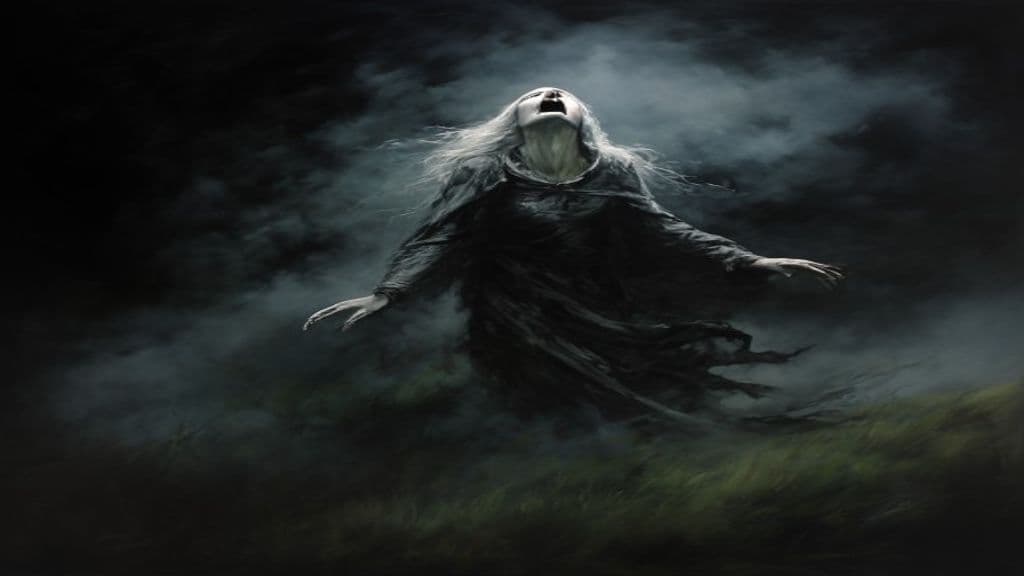
Banshee
A female spirit of Irish and Scottish folklore whose wail heralds an impending death in a family of Gaelic descent. Not a cause of death — a witness to it.
Ajisukitakahikone
Ajisukitakahikone is a kami in Japanese mythic literature (Kojiki/Nihon Shoki). He appears in the transfer-of-rule cycle between heaven and earth, is described as a son of Ōkuninushi, associated with the Kamo cult (called Kamo no ōmikami in some modern museum/catalog entries), and features in narratives that explain landscape formation and meteorological genealogy.
Amaterasu Ōmikami
Amaterasu Ōmikami is the sun deity and a principal kami in Shinto tradition, presented in classical Japanese sources as ruler of Takamagahara (the High Celestial Plain) and the mythic ancestress of the Imperial House through her grandson Ninigi. She is central to shrine cult at Ise and to ritual nomenclature and practice within institutional Shinto.
Amatsumara
Amatsumara (天津麻羅), also called Amenomahitotsu, is a Shinto kami presented in sources as the divine smith of Takamagahara who is said to have aided in making the mirror used in the Amaterasu cave episode and who serves as a patron of earthly blacksmiths.
Ame-no-Koyane-no-mikoto
Ame-no-Koyane-no-mikoto is a male Amatsukami (heavenly kami) in classical Shinto myth, presented as the ritual-official ancestor of the Nakatomi clan and linked genealogically to the Fujiwara. He functions as a divine ritual specialist—performing divination and liturgical speech in foundational myths (notably the Ama-no-Iwato episode) and as guardian of the sacred mirror—and is venerated at major shrines such as Kasuga Taisha and Hiraoka Shrine.
Ame-no-Minakanushi
Ame-no-Minakanushi (天之御中主) is a primordial kami named in Japan's classical creation texts as one of the very first deities to come into being in Takamanohara (High Heaven). Presented in the Kojiki and Nihon Shoki as a solitary, hidden first god, he functions primarily as a mythic point of cosmic origin rather than an actively intervening deity in surviving narratives.
Ame-no-Tajikarao
Ame-no-Tajikarao is a kami in Japanese Shinto myth notable for exceptional physical strength. He appears in the Ama-no-Iwato narrative as the deity who pulls Amaterasu from the heavenly rock cave, and he is venerated at numerous shrines across Japan with associations to physical power and local lineage claims.
Ame-no-Tokotachi
Ame-no-Tokotachi is a primordial kami in classical Shinto cosmology attested in summaries of the Kojiki and Nihon Shoki tradition. Sources identify a very early solitary or among-the-first deity who manifests at the creation of heaven and earth; supplied materials also reference a closely related name, Ame-no-Minakanushi, in English summaries of those chronicles.
Ame-no-Uzume-no-Mikoto
Ame-no-Uzume-no-Mikoto is a Shinto kami of dawn, mirth, revelry and the performing arts whose comic and erotic dance at the entrance of Amano‑Iwato lures the sun goddess Amaterasu from hiding, restoring light; her action is cited as the mythic origin of kagura and of certain ritual/performance lineages.
Ame-no-hohi
Ame-no-hohi (also rendered Ame no Fuhi) is a male kami in Japanese mythology identified in sources as the second son of the sun goddess Amaterasu. He is principally attested as an ancestral figure: historical rulers of Izumo and the modern heads of Izumo Taisha and Izumo-taishakyo claim descent from him.
Ame-no-wakahiko
Ame-no-wakahiko is presented in the provided sources as a kami in Japanese mythology, described specifically as a god of grains and counted among the Amatsukami (heavenly deities). The sources identify him as a son of Amatsukunitama and note a medieval prose narrative, the Ame no Wakahiko Monogatari, exists about him.
Amenohoakari
Amenohoakari (天火明) is a Japanese kami associated with sunlight, heat, and the ripening of grain; he functions as an agricultural deity and a divine ancestor claimed by multiple clans and hereditary priestly lineages. Textual sources place him within heavenly genealogy (tensonzoku) while other records give alternate parentage, producing divergent traditions about his origins and relationships to other kami.
An (案)
An (案) is a small table, desk, or platform used in Shinto ceremonies to bear offerings. It is a liturgical furnishing and material mediator in shrine rites rather than a sentient supernatural being.
Community Record
- [1]Hachiman (Wikipedia). Wikipedia, 'Hachiman' article (summary of cult, shrine history, syncretism, and legends)wiki
- [2]Wikidata: Hachiman. Wikidata summary entry for Hachiman (name meaning and functions)other
- [3]JAANUS: 僧形八幡 (Sōgyō Hachiman). JAANUS entry on sōgyō (monk‑form) Hachiman and associated iconographyacademic
- [4]Tōdai‑ji Hachiman (Wikipedia). Wikipedia entry noting the Tōdai‑ji sōgyō Hachiman sculpture (1201 carving by Kaikei) and temple associationswiki
- [5]Cleveland Museum / Shinto Deities (Archive item). Museum archive describing wooden sculptures associated with Usa Hachiman shrine and related kamiother
- [6]Green Shinto: Iwashimizu Hachimangū and Shirakawa‑go Hachiman Shrine pages. Green Shinto descriptions of regional Hachiman shrines (Iwashimizu/Yawata and Shirakawa‑go Hachiman)other
- [7]Fukagawa Hachiman Matsuri (festival reference). Festival description illustrating ongoing shrine festivals tied to Hachiman cult practiceother