In the sources provided Hipermestra is not presented as an originating supernatural entity but as the stage incarnation of the ancient tale of Hypermnestra. Francesco Cavalli's L'Hipermestra (libretto by G. A. Moniglia) premiered in Florence on 12 June 1658 as a festa teatrale connected to court celebrations (the birth of a son to Philip IV of Spain). A Spanish zarzuela, Las Belides (1687), contains a 'Fabula de Hipermestra y Linceo' performed at court for the birthday of the queen mother (Mariana of Austria) on 22 December 1686. These works adapt the classical narrative for dynastic and ceremonial theatrical use rather than creating an independent mythic biography within the sources cited.
The supplied sources do not give a fixed physical description of Hipermestra. As a theatrical character her appearance is determined by 17th-century stage and court costume conventions (baroque court dress, allegorical costuming, and scenic requirements) and by production choices of librettists, choreographers, and designers; the archives and librettos record roles and accompanying ballets and loas but do not record a canonical visual portrait.
The sources do not attribute supernatural powers to Hipermestra. Her 'abilities' are dramatic and cultural: she functions as the protagonist whose narrative agency drives the plot of staged adaptations of the ancient Hypermnestra tale, and she serves as a symbolic figure within courtly pageantry (integrated with prologues, ballets, loas, and fin de fiesta). Practitioners—composers, librettists, singers, dancers, and choreographers—use the character to enact allegory and commemorative messaging for dynastic events.
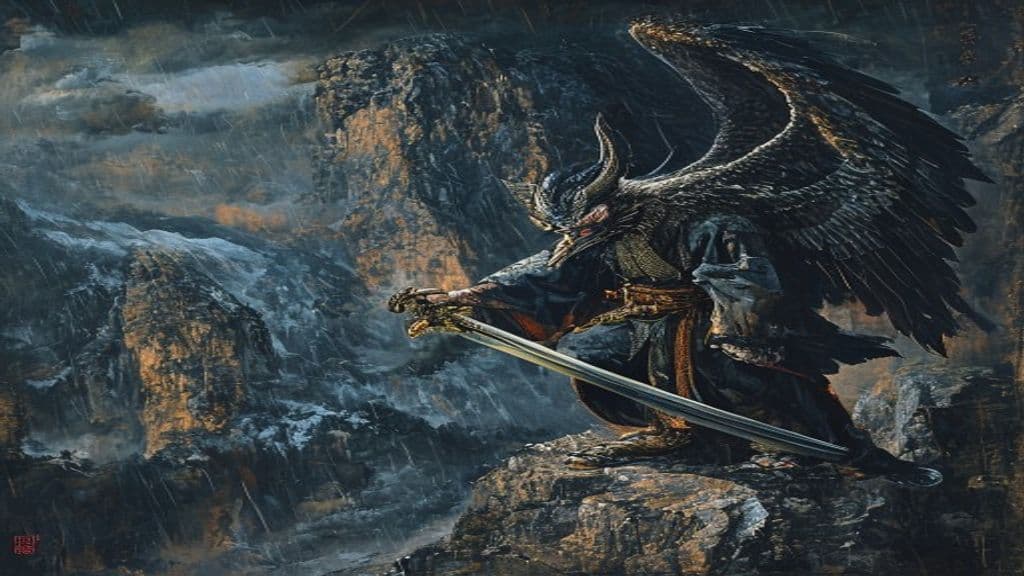
Tengu
Proud, warrior-like mountain spirits of Japan, associated with martial arts, pride, and the wild mountains. Neither fully good nor evil — they test and train warriors and monks, but punish the arrogant.
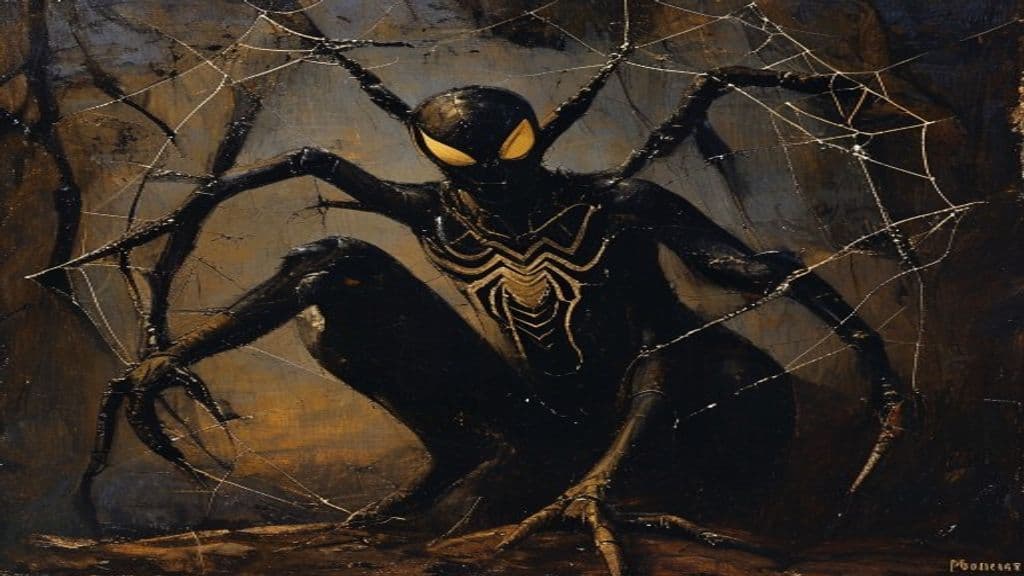
Anansi
The spider trickster god of Akan folklore — cunning, mischievous, and wise. Keeper of stories and teacher of human beings, brought through the slave trade into Caribbean and African-American tradition.

Kitsune
Fox spirits of Japanese mythology — intelligent, long-lived beings who gain additional tails (up to nine) as they age and grow in power. They serve as messengers of the god Inari and as powerful tricksters.
3-D Man
3-D Man is a Marvel Comics superhero identity associated with a 1950s-era origin in which the body of Chuck Chandler can materialize in three-dimensional existence when activated by his brother Hal via a pair of glasses. The mantle was later assumed by Delroy Garrett (formerly Triathlon) in modern continuity.
5 Ronin
5 Ronin is a 2011 Marvel Comics five-issue limited series that reimagines five Marvel superhero archetypes as rōnin (masterless samurai) in a fictionalized post‑Sekigahara feudal Japan. The work places Wolverine, Hulk, Punisher, Psylocke, and Deadpool analogues into period roles to explore displacement, revenge, and identity in an era of political upheaval.
A Elbereth Gilthoniel
An Elvish hymn in Sindarin addressed to Elbereth (Varda) from J. R. R. Tolkien's legendarium. Presented in The Lord of the Rings and later musical and dramatic adaptations, the hymn functions as devotional poetic language that evokes Elvish reverence for the star-kindler rather than an independent supernatural agent.
A.R.G.U.S.
A.R.G.U.S. is a fictional clandestine United States government agency in the DC Comics universe that investigates, contains, and manages superhuman, meta-human, and supernatural incidents and assets. Introduced in The New 52 continuity, it functions as an institutional actor providing intelligence, logistical support, covert task forces (notably Task Force X / the Suicide Squad), and a dedicated magic division across comics and media adaptations.
Abin Sur
Abin Sur is a fictional extraterrestrial Green Lantern from the planet Ungara in DC Comics. A former history professor turned Green Lantern of Space Sector 2814, he discovered and investigated a prophecy tied to the "Blackest Night," died wounded on Earth and chose Hal Jordan as his ring-successor, and was later reanimated as a Black Lantern in the Blackest Night storyline.
Absolute Green Lantern (tradition)
A modern comic-book reinterpretation in DC's Absolute Universe in which a giant green lantern-shaped vessel appears above Evergreen, Nevada, generates an impenetrable green dome, judges townspeople and sends the judged into the Lantern to await further adjudication in OA (Omega‑Alpha). The story reframes Green Lantern mythos as cosmic/religious horror with an "Enlightenment Spectrum" of flames (Qard, Rao, Sur, Aur) stewarded by Oans such as Abin Sur.
Absorbing Man
A fictional Marvel Comics character (Carl "Crusher" Creel) whose body acquires the physical properties of materials or energies he touches. Debuting in Journey into Mystery #114 (March 1965), created by Stan Lee and Jack Kirby, he is presented as a mortal supervillain/occasional antihero who challenges heroes such as Thor, Hulk, Spider-Man, and the Avengers.
Ace West
Ace West (Wallace Daniel "Ace" West) is a contemporary American comic-book character in DC Comics continuity, a young speedster who channels the metaphysical Speed Force and occupies legacy-hero roles such as Kid Flash and Ace. Introduced in New 52-era stories as a biracial reinterpretation of Wally West and later retconned in DC Rebirth as a distinct Wallace West, son of Daniel West (Reverse-Flash), he appears across present-day and alternate/future timelines and participates in team and sacrifice narratives tied to the Speed Force.
Acoetes
Acoetes is a proper name applied to multiple mortal figures in classical Greco‑Roman mythic narratives. Most famously, an Acoetes is a fisherman who recognizes and testifies to the divinity of Bacchus/Dionysus and recounts how blasphemous sailors were transformed into dolphins; other bearers of the name appear as a Trojan genealogical figure (father of Laocoön), an aged former squire of Evander, and a frightened soldier in Statius' Thebaid.
Adam X the X-Treme
A fictional Shi'ar–human mutant hybrid from Marvel Comics, created in the 1990s X-Men milieu. Portrayed as a genetically engineered offspring tying the Summers mutant bloodline to Shi'ar royalty, he appears in Earth- and Shi'ar-centered storylines and exhibits both Shi'ar physiology and a mutant heat/blood ability.
Adite
Adite (Ancient Greek: Ἀδίτη, Aditē) is one of the fifty Danaïdes, daughters of Danaus, who—excepting Hypermnestra—killed their husbands on their wedding night. In classical-derived accounts she is punished in Tartarus, condemned to carry water in a leaky vessel to fill a bottomless tub for eternity.
Admeto (Admetus)
Admeto is the legendary King of Thessaly from classical myth as transmitted into European opera (notably Handel's Admeto, HWV 22). Portrayed as a mortal tragic protagonist, his fate in the narrative is determined by divine oracular decree and by the actions of other mythic figures (Alceste, Apollo, Hercules) rather than by any innate supernatural power.
Community Record
- [1]Hipermestra (Wikipedia). Wikipedia: 'Hipermestra is an opera in a prologue and 3 acts by Francesco Cavalli... first performed at Florence on 12 June 1658. The plot is based upon the ancient tale of Hypermnestra...'wiki
- [2]Descrizione della presa d'Argo e de gli amori di Linceo con Hipermestra : festa teatrale (Archive). Archive description: details of the Florence festivities, June 1658, including scenarios of Pier Francesco Cavalli's opera L'Hipermestra and accompanying ballets.other
- [3]Las Belides (1687) — Fabula de Hipermestra y Linceo (Archive). Archive imprint/content: 'Zarzuela que se escrivio para celebrar el dia de los años de la reyna madre... y se representó à sus magestades ... el dia ... veinte y dos de diziembre del año mil seiscientos y ochenta y seis.' Contains 'Fabula de Hipermestra y Linceo.'other
- [4]BBC Radio 3 archive: Cavalli: Hipermestra (Glyndebourne 2017). Archive entry for BBC Radio 3 broadcast of Glyndebourne's 2017 production of Cavalli's Hipermestra (conducted by William Christie; production by Graham Vick).other