
Admeto derives from the classical Greek mythic figure Admetus/Admeto, best known from traditions surrounding Euripides' Alcestis. In the operatic adaptation by George Frideric Handel (libretto by Nicola Francesco Haym), first performed in London in 1727, the story frames Admeto as the King of Thessaly whose life is subject to an oracle of Apollo: he may live only if a close relative dies in his stead. The opera adapts and stages this ancient plot, emphasizing sacrificial love, divine mandate, and heroic intervention (notably by Hercules) as the mechanisms that determine Admeto's destiny.
Operatic and librettistic sources present Admeto primarily through dramatic situation and stage business rather than fixed physical detail. He is consistently titled King of Thessaly and typically costumed and staged as a monarch. At the opening of Handel's Admeto he is portrayed as ill or dying within a palace room dominated by a statue of Apollo and tormented by dreams; subsequently he is shown grieving beside Alceste's corpse after her sacrificial death. Productions and cast lists across recordings and revivals treat the role as that of a noble tragic male lead for a principal singer, and stage directions place him in palace rooms, gardens, and the surrounding woods and, by narrative consequence, in relation to the underworld sequences of Act 2.
As presented in the sources, Admeto possesses no supernatural powers. His salient narrative 'abilities' are instead social and relational: he is the recipient of divine pronouncement from the statue/oracle of Apollo, the subject of Alceste's voluntary substitutionary death to preserve his life, and the petitioner who requests Hercules' aid to recover Alceste from Hades. Dramatically, his actions and responses (grief, acceptance, appeals to others, and participation in courtly and domestic exchanges including the subplot involving Antigona/Rosilda) drive the opera's emotional and moral stakes, but all miraculous or heroic outcomes are effected by gods or heroes rather than by Admeto himself.
Weaknesses
- conditionMortality and dependence on others
- conditionSubject to Apollo's oracle (must be spared only if a close relative dies in his place)
- otherReliance on external heroic/divine intervention (e.g., Hercules' descent to Hades)
Wards
- otherNone (no protective rites or wards are described in the operatic and libretto sources)
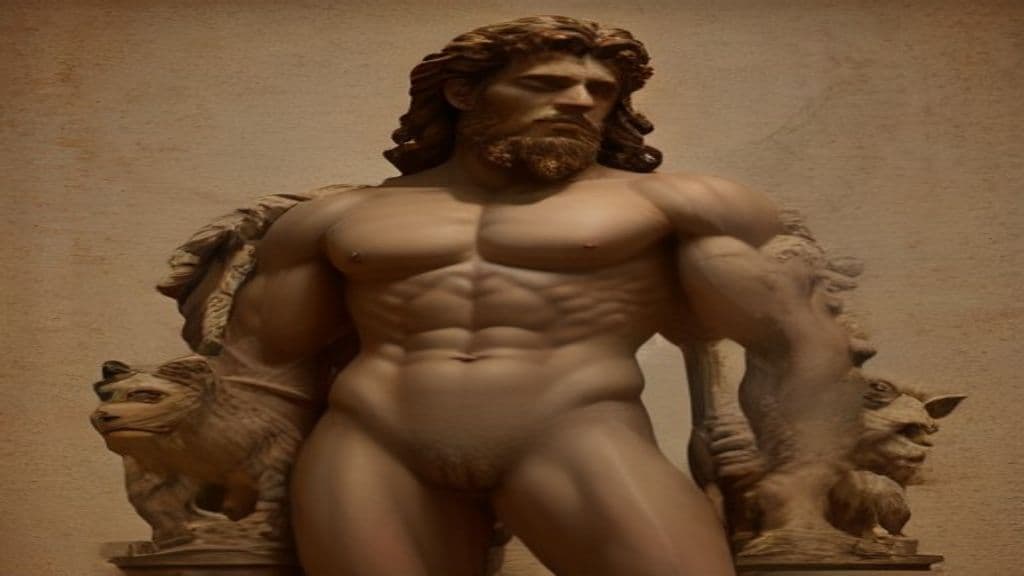
Hercules
Hercules (Latin: Hercules) is the Roman reception of the Greek divine hero Heracles: a semi-divine, divinized heroic figure son of Jupiter and the mortal Alcmena who was widely venerated across Italy. Represented in cult, votive art, and literature, he functions as a protector and martial champion whose identity was adapted through Etruscan and local Italic contexts.
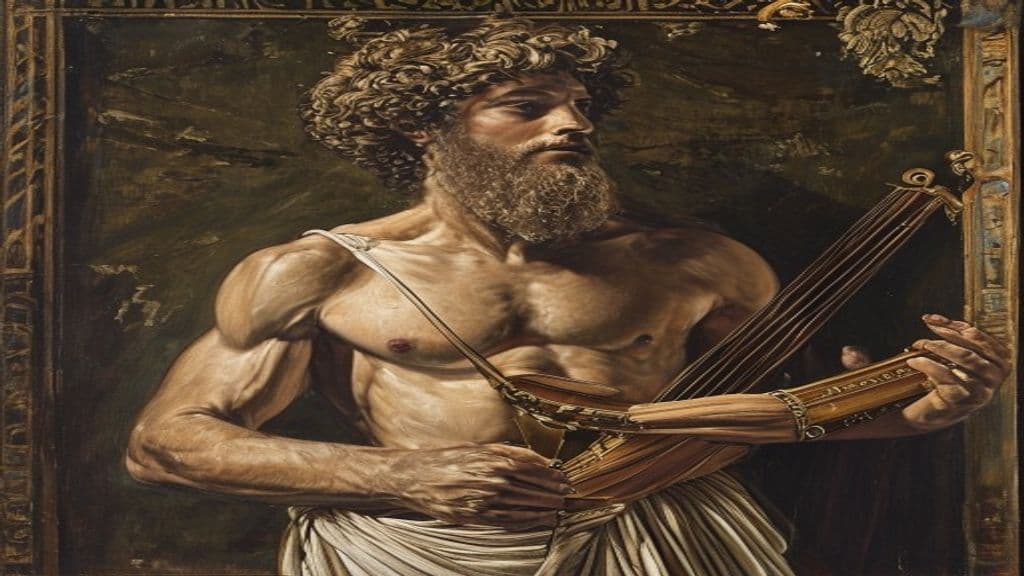
Apollo
Olympian deity of ancient Greek religion associated with prophecy, healing, music, archery, purification, and civic order. Principal patron of the Delphic oracle, protector of youth and flocks, and ambivalently both healer and bringer of plague.
Adils
Adils (Old Norse Aðils; also Eadgils, Adillus, Athisl, Adhel) is a semi‑legendary sixth‑century Swedish king attested in Old Norse saga material and later medieval traditions. He appears in saga episodes as a storied royal figure involved in warfare, court acts, and marriage suits rather than as a supernatural being.
Adim (Egyptian Mythology)
In Egyptian mythology, Adim is a king and son of Budasheer who appears after the Great Flood. He has problem-solving skills and consults with his father's ghost for guidance. (Note: 1. The power tier should be Lesser (local spirit) as Adim is described as a king of Egypt, but not as having deity-level abilities. 2. Add sensory cues such as "consulting his father's ghost" and poss)
Aditi
Aditi is a major Vedic goddess in Hindu tradition who personifies the boundless, infinite cosmic principle and functions as the maternal matrix from which many celestial deities (the Ādityas and other groups) are born. In the Vedic hymns she is invoked as a protective liberator who guards petitioners, provides wealth and safety, and frees devotees from hindrances such as sin and sickness.
Adjassou-Linguetor
Adjassou-Linguetor is a loa in Haitian Vodou associated with spring water. The limited cited sources describe her as having protruding eyes and a bad temper; beyond these points, the available documentation (Wikipedia and Wikidata) is minimal.
Adlet
A category of non-human peoples in Inuit narrative tradition (also rendered Erqigdlet/Irqigdlit) that functions both as a mythic ancestor-race and as dog‑legged antagonists; the term can denote inland native American peoples or half‑canine humanoids depending on regional usage.
Admete (Admeta)
Admete (Ancient Greek: Ἀδμήτη) is a mortal princess of the house of Eurystheus in the Heraclean cycle and, in alternate local tradition, a priestess of Hera associated with the transfer and purification of a cult image to Samos. She functions in surviving accounts as a named requester whose wish prompts one of Heracles' labors and as the human custodian of a sacred image in a Samian foundation story.
Admetus
Admetus is a mortal king of Pherae in Thessaly in the Greek tragic tradition (notably Euripides' Alcestis). His life becomes the subject of a divine bargain in which Apollo intervenes to delay his appointed death, a bargain that requires another to die in his stead — most famously his wife Alcestis.
Admetus of Pherae
Admetus of Pherae is a mortal king of Thessaly in Greek myth whose household and fate intersect with Olympian gods (notably Apollo and Artemis), the Fates, the personification of Death (Thanatos), and the hero Heracles. He is celebrated for hospitality and justice and is best known from the tragic cycle surrounding his wife Alcestis, who dies in his stead and is later recovered.
Adonai
Adonai (אֲדֹנָי) is one of the sacred Hebrew names used in Judaism to refer reverently to the singular God. It functions as a liturgical and devotional substitute or form for the divine Name and is treated with linguistic and ritual care in Jewish practice; it also appears in Christian liturgy (e.g., the Advent antiphon “O Adonai”).
Adonay
Adonay (אֲדֹנָי, often transcribed Adonai or Adonay) is a sacred Hebrew appellation meaning roughly "Lord" or "Master," used in Jewish liturgical and scriptural language as a reverent name for the divine. In the provided sources it functions as a theological title within Judaism rather than a personified folkloric being; discussions around it center on reverent usage and the communal care taken with divine names.
Adonia
The Adonia festival is a ritual mourning celebration for Adonis, the consort of Aphrodite in ancient Greek mythology. (Note: 1. The draft claims that the article is about a "ritual mourning celebration", but the source only mentions the festival as a mourning celebration. 2. Power tier should be Primordial or Ancient since )
Adonijah
Adonijah (Hebrew: אֲדֹנִיָּה, ’Ǎḏōnīyyā, "my lord is Yah") is presented in the Hebrew Bible as the fourth son of King David who made a bid for the throne during David's final illness, secured some elite support, took sanctuary at the altar, was pardoned conditionally, and later executed after petitioning Solomon to marry Abishag.
Community Record
- [1]Admeto - Wikipedia. Wikipedia: 'Admeto, re di Tessaglia...' and synopsis (statue of Apollo, oracle, Hercules' descent).wiki
- [2]Admeto (Wikidata). Wikidata entry for Admeto.other
- [3]Handel: Admeto recording (Anthony Lewis, 1968) - Archive.org. Archive.org listing of a recorded performance used for documentation of production and casting history.other
- [4]Alceste : tragedia lirica in 3 atti : tratta dalla mitologia - Archive.org. Libretto archive illustrating the operatic/librettistic treatment of the Alcestis narrative.literary
- [5]IMSLP: Admeto, HWV 22 (Handel). Score and operatic material for Handel's Admeto (HWV 22).other
- [6]Operadis discography entries (Admeto/Alceste). Operadis discography documenting performance and recording history.other
- [7]Admeto LP / performance notes. Archival performance and LP notes providing additional production context.other