The name Acoetes appears in multiple, distinct mythic roles in classical sources rather than denoting a single supernatural origin. In Ovidian and related Bacchic tradition, Acoetes is a fisherman who recognizes Bacchus/Dionysus and recounts how the god transformed impious sailors into dolphins — his tale functions as a witness exemplum about recognition of a deity. Separately, classical genealogical and epic summaries list an Acoetes as father of the Trojan priest Laocoön; another source identifies an aged Acoetes as the former squire of Evander in Arcadian/Italian foundation myths; and Statius' Thebaid briefly names an Acoetes as a terrified soldier. These attestations come from the sampled literary summaries and reference material rather than a single unified origin narrative.
Sources do not provide a consistent supernatural appearance because Acoetes is presented as mortal men in varied roles. The fisherman Acoetes is described functionally as a fisherman and helper/witness to Bacchus (Ovid summaries) with no sustained physical detail. The Evander‑associated Acoetes is explicitly described in one account as an aged man (Virgilian tradition summarized in secondary sources). The Thebaid Acoetes appears briefly as a soldier reacting fearfully to a severed arm (Statius, per summaries). Genealogical mentions (father of Laocoön) are purely relational without physical description.
No supernatural powers are attributed to any Acoetes in the provided materials. Their narrative function is human: the fisherman Acoetes acts as a recognizer and storyteller whose testimony communicates Bacchus' metamorphic power (e.g., sailors turned into dolphins). Other Acoetes figures behave as ordinary mortals (fathering Laocoön, serving as a squire, fighting in battle). Any display of power in these narratives is the action of gods (notably Bacchus/Dionysus), which Acoetes reports or witnesses.
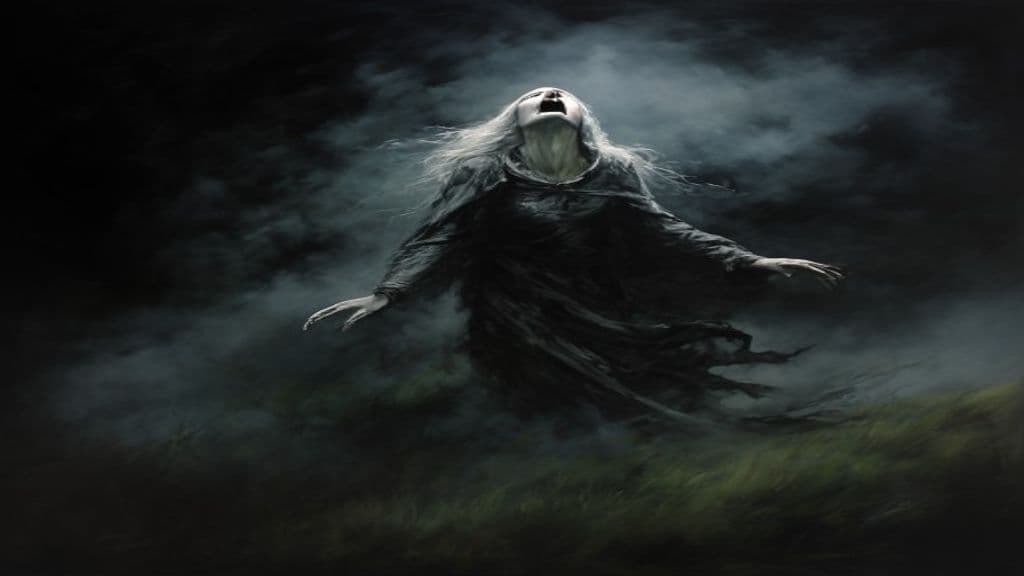
Banshee
A female spirit of Irish and Scottish folklore whose wail heralds an impending death in a family of Gaelic descent. Not a cause of death — a witness to it.

Dionysus
Dionysus (Ancient Greek: Διόνυσος) is a major ancient Greek deity associated with wine and winemaking, vegetation and fertility, festivity and theatre, ritual ecstasy and possession, and liminal links with death and the underworld. He is an epiphany-god who travels between worlds, whose cult includes ecstatic rites and mystery initiation.
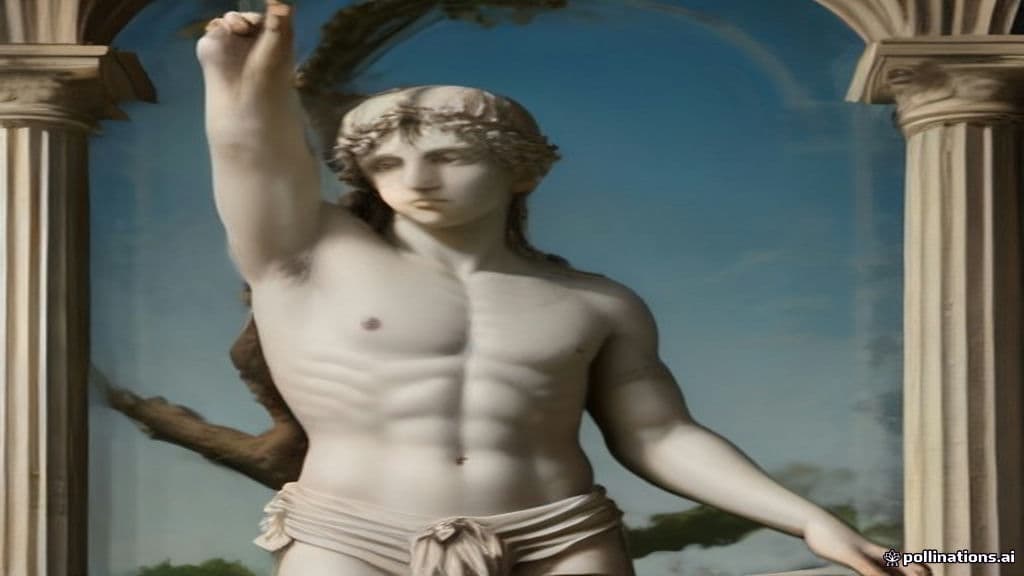
Bacchus
Bacchus is the Roman identification of the Greek god Dionysus, a deity associated with wine, vegetation and fertility, ritual ecstasy and theatrical performance. In Roman religion he is conflated with the Italic Liber and known for rites that induce possession, frenzy (baccheia), and group revelry.
*Péh₂usōn (reconstructed)
Péh₂usōn is a hypothetical Proto‑Indo‑European pastoral guardian reconstructed by comparative scholars from parallels in Greek and Vedic traditions. Proposed as a Graeco‑Aryan ancestor‑figure, the reconstruction describes a protector of flocks, roads, and travellers rather than an attested historical cultic personality.
3-D Man
3-D Man is a Marvel Comics superhero identity associated with a 1950s-era origin in which the body of Chuck Chandler can materialize in three-dimensional existence when activated by his brother Hal via a pair of glasses. The mantle was later assumed by Delroy Garrett (formerly Triathlon) in modern continuity.
5 Ronin
5 Ronin is a 2011 Marvel Comics five-issue limited series that reimagines five Marvel superhero archetypes as rōnin (masterless samurai) in a fictionalized post‑Sekigahara feudal Japan. The work places Wolverine, Hulk, Punisher, Psylocke, and Deadpool analogues into period roles to explore displacement, revenge, and identity in an era of political upheaval.
A Elbereth Gilthoniel
An Elvish hymn in Sindarin addressed to Elbereth (Varda) from J. R. R. Tolkien's legendarium. Presented in The Lord of the Rings and later musical and dramatic adaptations, the hymn functions as devotional poetic language that evokes Elvish reverence for the star-kindler rather than an independent supernatural agent.
A.R.G.U.S.
A.R.G.U.S. is a fictional clandestine United States government agency in the DC Comics universe that investigates, contains, and manages superhuman, meta-human, and supernatural incidents and assets. Introduced in The New 52 continuity, it functions as an institutional actor providing intelligence, logistical support, covert task forces (notably Task Force X / the Suicide Squad), and a dedicated magic division across comics and media adaptations.
Aba (disambiguation / name-form)
Aba is a polyvalent name-form attested across many unrelated contexts (place names, personal names, animal names, and brief mythological listings). The provided sources do not support a single, coherent supernatural entity called "Aba" and offer no descriptive or ritual material for such a being.
Abandinus
Abandinus is a locally attested Romano‑Celtic theonym known from a single inscribed bronze feather (votive object) dedicated at Godmanchester (the Roman fort Durovigutum) in Cambridgeshire. Scholars interpret him as a local god or male spirit tied to a specific place and possibly associated with a nearby spring or stream; this association is tentative and based on etymological readings of the name.
Abarbarea
Abarbarea is a name attested in classical Greek and Roman sources for freshwater nymphs (naiads). The name appears for at least two individual mythic figures — a naiad wife of Bucolion and a naiad counted among ancestors of the Tyrians — and Hesychius records plural forms that may indicate the name was also used as a class-name (Abarbareai / Abarbalaiai).
Abas
Abas (Ancient Greek: Ἄβας, gen.: Ἄβαντος) is not a single mythic being but a recurring personal name borne by multiple mortals and minor mythic figures in Greek epic and genealogical traditions — kings, founders, seers, warriors, attendants, a centaur, and a youth transformed by a goddess. The name is glossed in the sources as 'guileless' or 'good-hearted' and appears across Argive, Theban, Trojan, Euboean, and other local cycles.
Abderus
Abderus (Ancient Greek: Ἄβδηρος, romanized Ábdēros) is a mortal heroic figure in Greek myth closely associated with Heracles, remembered as the youth left in charge of the Mares of Diomedes who was killed by them. He functions as an eponymous local/divine-hero ancestor for the city of Abdera and received funerary commemoration and athletic agones at his tomb.
Abellio
Abellio is a theonym attested in Roman‑period inscriptions from the Comminges area of the Pyrenees and reported as worshipped in the Garonne Valley of ancient Gallia Aquitania. Surviving evidence is limited to a small number of inscriptions; scholars have variously hypothesized solar or arboreal associations and compared the name to forms of Apollo or to Celtic Belenus, but the deity's precise role in local cosmology remains uncertain.
Abin Sur
Abin Sur is a fictional extraterrestrial Green Lantern from the planet Ungara in DC Comics. A former history professor turned Green Lantern of Space Sector 2814, he discovered and investigated a prophecy tied to the "Blackest Night," died wounded on Earth and chose Hal Jordan as his ring-successor, and was later reanimated as a Black Lantern in the Blackest Night storyline.
Community Record
- [1]Acoetes — Wikipedia. Wikipedia contributors, 'Acoetes,' Wikipedia, The Free Encyclopedia.wiki
- [2]Ovid, Metamorphoses, Book 3 (summaries and commentary resources). Archive.org — Ovid, Metamorphoses, 3.511-733 (Latin text with introduction and commentary) — summary materials referencing Acoetes and the sailors-into-dolphins episode.literary
- [3]Ovid, Metamorphoses, Book 3 (archive copy). Archive.org — Ovid, Metamorphoses, 3.511-733 — teaching text and commentary summarizing the Bacchic episode involving Acoetes.literary
- [4]Revision of the aphroditoid polychaetes... (taxonomic use of Acoetes). Archive.org — taxonomic revision noting the genus name Acoetes (demonstrates later scientific reuse of the name).other
- [5]Wikidata: Acoetes. Wikidata entry for Acoetes (includes note of biological genus reuse).wiki