
The Huay Chivo is a creature with no known origin story. It is mentioned as an evil sorcerer in Maya mythology.
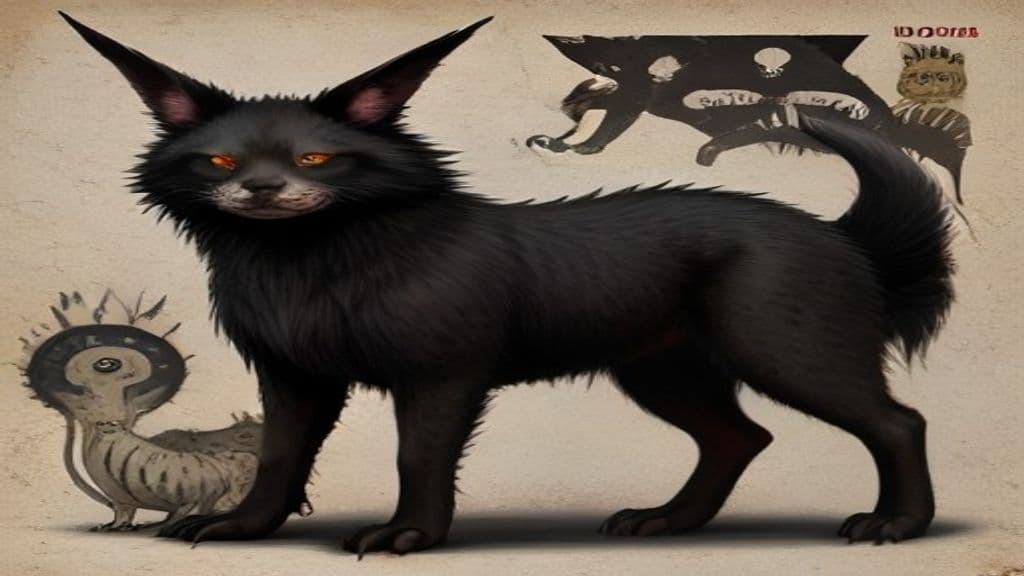
It has burning red eyes and is described as half-man, half-beast. It can transform into animals such as goats, dogs, or deer.
The Huay Chivo can transform itself into various animal forms to prey on livestock, indicating a connection to shamanic or magical powers. This behavior suggests a malevolent entity that feeds on domesticated animals.
Tata Duende
A caring spirit that protects animals and the jungle in Maya tradition. (Note: 1. The power tier should be adjusted to "Minor Spirit" based on the description of Tata Duende being a powerful regional entity does not align with its local and caring nature. 2. The sensory cues sec)
Hrym (Hrymr)
Hrym (also attested Hrymr) is a jötunn in Norse myth who, at Ragnarök, leads the legions of the jötnar toward the battlefield of Vígríðr. He is attested only in eschatological passages that present him as a commander-figure approaching from the east "with his shield before him."
Hua Po (Flower Demon)
The provided source corpus contains no attestation of a supernatural being named 'Hua Po' or 'Flower Demon.' Materials in the corpus instead reference unrelated names and topics (e.g., Hua Mulan, modern literature, opera conventions), and do not document a flower‑associated demon figure.
Huacas (Mountain Deities)
In the Quechua mythology, Huacas are mountain deities revered as protectors of regional ethnicities and central figures in myths. (Note: 1. Power tier: Primordial seems too high given that Huacas are mountain deities and not cosmic entities. 2. Appearance: Should be added that there is no physical description provided for the Huacas, b)
Huanca
Huanca refers to two related Andean referents in the supplied sources: (A) an ethnonym for a Quechua people of the Junín region of central Peru, and (B) huanca/wanka, a sacred elongated vertical standing stone (monolith) in Andean ritual practice that is worshipped and given offerings and is believed to represent chiefs and ancestors.
Huang Shigong
Semi-mythological Taoist hermit and legendary scribe who imparted knowledge and wisdom through written texts. (Note: - Power tier: Primordial (since he's semi-mythological and a figure from ancient Chinese culture, but not explicitly stated as deity-level) - Appearance: "No physical description is provided in the so)
Huangmei Dawang
A formidable supernatural being in the Buddhist tradition associated with immense power and strength. (Note: - Summary: Inaccurate. Huangmei Dawang is a major antagonist, not associated with "immense power and strength". - Power tier: Possibly incorrect. Although it has significant spiritual authority and ca)
Huayna Pacha
Deity in Inca mythology associated with the upper world or sky, connected to weather and natural phenomena. (Note: - Power tier: Should be Ancient, not Greater, as a deity is typically on a higher power level than regional. - Sensory cues, wards, and weaknesses: None mentioned in source material; should be deleted)
Hudoq
Hudoq are ritualized pest-figures in Dayak agricultural cosmology of East Kalimantan: a group of thirteen crop‑destroying pests (in the traditions of Bahau, Busang, Modang, Ao’heng, and Penihing) that are personified in masked dance during the Erau harvest‑thanksgiving cycle and ritually expelled to secure abundant rice harvests.
Huecuva
A fictional undead monster attested in Dungeons & Dragons and Pathfinder bestiaries, depicted as the reanimated corpses of former religious practitioners who violated vows or embraced heresy. Bestiary entries describe it as a robed, decaying corpse with abilities and auras tied to the corruption of faith.
Hug (Norse Tradition)
In Norse tradition, the Hug represents various aspects of human consciousness, encompassing spirit, will, prudence, thought, understanding, reason, and the soul as the seat of thoughts, feelings, and will. (Note: - The Power tier should be revised to Ancient (Hug is a concept related to human consciousness, not cosmic or deity-level). - The Origin story, Appearance, Sensory cues, Weaknesses, and Wards sections)
Huitaca
Huitaca is a female deity in modern secondary accounts of the Muisca (Chibcha) tradition, described in those sources as a goddess associated with pleasure, arts, dance, music, sexual freedom and—in some modern summaries—the Moon. She is commonly portrayed in retellings as a rebellious figure whose diversion of humans from labor leads to punishment and transformation into an owl in the narrative tradition preserved in secondary sources.
Community Record
- [1]Wikipediawiki