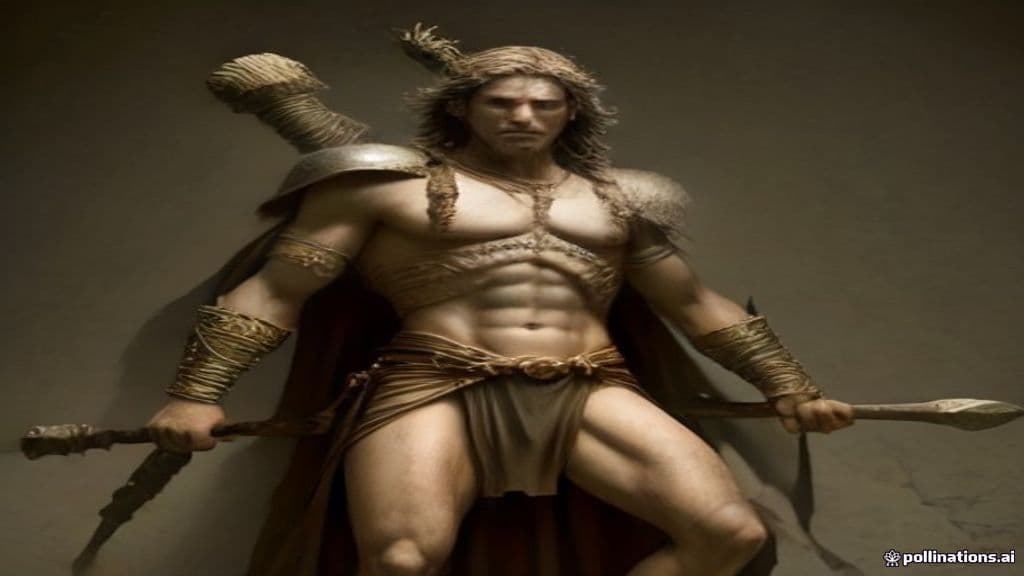
Iolaus (Ancient Greek Ἰόλαος) appears in Greek myth as a Theban-born hero and the nephew/companion of Heracles. In narrative tradition he serves as Heracles' charioteer and squire and accompanies him on labors and ventures; some later authorities relate that Heracles sent Iolaus with companions to Sardinia where he was associated with founding settlements (the Iolians) and with tombs that gained cultic significance.
Surviving texts provide only sparse physical cues: Iolaus is attested in roles that imply the garb and accoutrements of a warrior and charioteer (requests for harness, spear, and support in a dramatic fragment), but no sustained iconographic or bodily description is preserved in the provided sources. He is presented in narratives as an armed companion and charioteer.
Iolaus functions as a skilled and practical assistant to heroes: he acts as Heracles' charioteer and squire, fights alongside him, and performs technically decisive actions such as cauterizing the severed necks of the Lernaean Hydra with firebrands to prevent regeneration. He is also recorded as a participant in colonizing ventures (traditions of Sardinian settlement) and as a named figure around whose tombs athletic festivals (Iolaea/Iolaia) and incubation/oracular practices were conducted.
Hercules
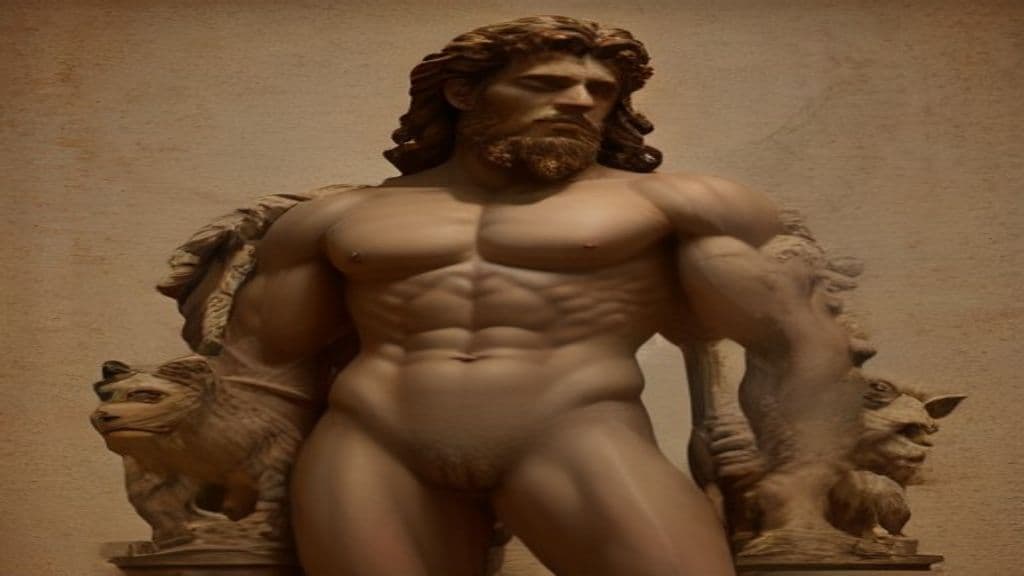
Hercules (Latin: Hercules) is the Roman reception of the Greek divine hero Heracles: a semi-divine, divinized heroic figure son of Jupiter and the mortal Alcmena who was widely venerated across Italy. Represented in cult, votive art, and literature, he functions as a protector and martial champion whose identity was adapted through Etruscan and local Italic contexts.
Heracles
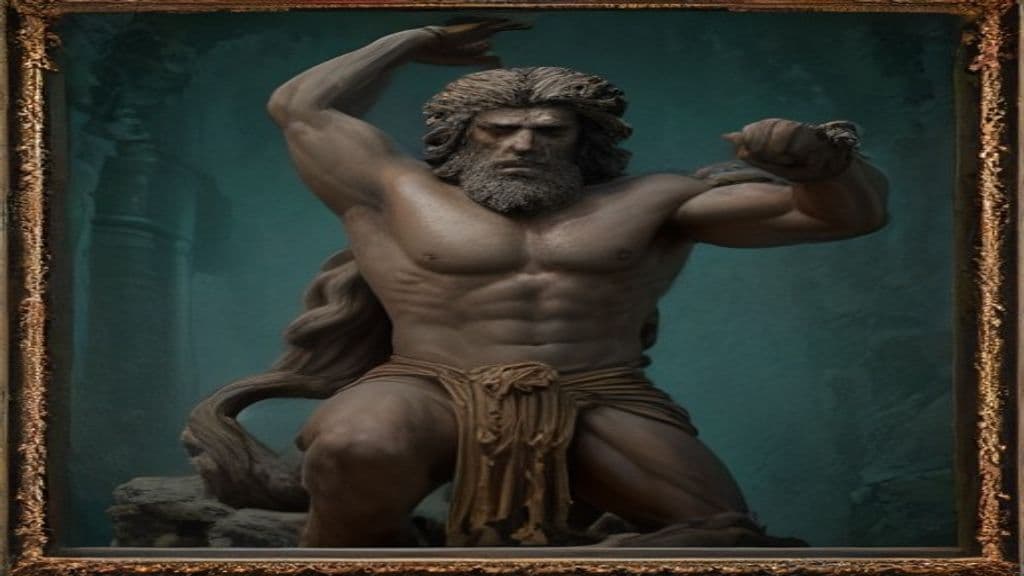
Heracles is the greatest hero of Greek myth whose career bridges mortal hero-cult and full divinization. Celebrated for his Twelve Labours, martial prowess, and travels between the mortal world, the underworld, and Olympus, he functioned as a civic patron, ancestor of royal lines (the Heracleidae), and object of cult that treated him both as chthonic hero and as god.
Argonauts
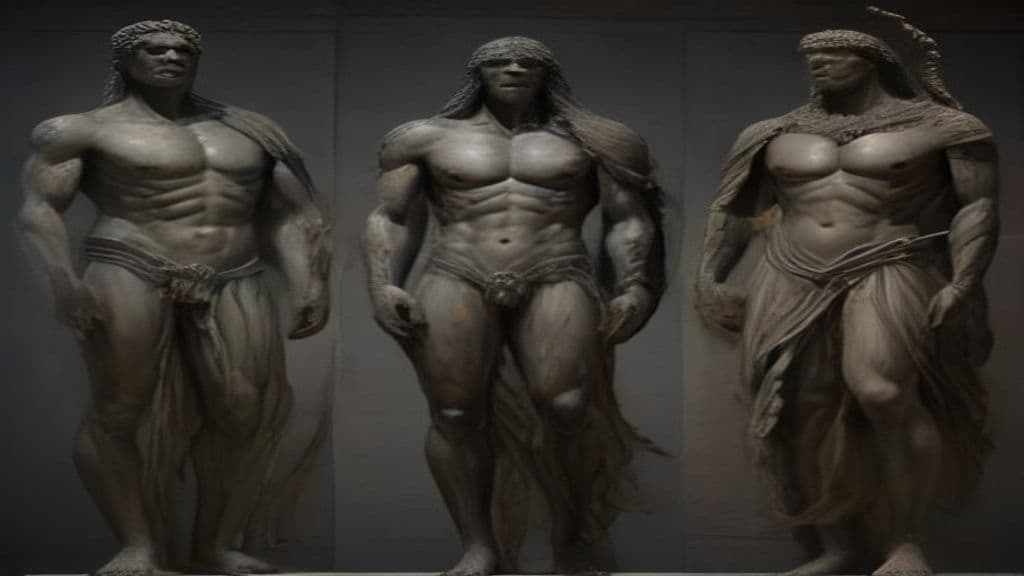
A band of human heroes in Greek myth who sailed aboard the ship Argo under Jason to Colchis to retrieve the Golden Fleece. Their identity is defined by membership in the celebrated voyage and by shared heroic lineages; membership lists and details vary by source.
Inugami Gyōbu
Inugami Gyōbu (隠神刑部), also called Gyōbu-danuki, is a named bake-danuki figure from the Matsuyama (Iyo Province) folk tradition. In local narrative cycles he functions as an individualized, powerful leader of a household of tanuki associated with Kumayama cave and is portrayed variously as a protector of Matsuyama Castle, a recipient of vassal faith, and an active supernatural agent in the O-Ie Sōdō (domain disturbance) narratives.
Inzak
Inzak is the principal deity of the ancient Dilmun pantheon and the tutelary god of the place called Agarum (also attested as Akarum/Failaka in some sources). He functions as a municipal and royal patron whose cult legitimized rulers of Dilmun and who was integrated into Mesopotamian and Elamite religious contexts where he was sometimes equated with or associated with foreign gods.
Io
Io is an Argive princess and cult figure of Greek mythology who, as a priestess of Hera, becomes entangled in the actions of Zeus and Hera, is transformed into a heifer and driven to wander the world, and is remembered as an ancestress of several important lineages and in ritual commemoration at the Heraion of Argos.
Iobates
Iobates (Greek Ἰοβάτης; Latinized Iobates or Jobates), also named Amphianax in some traditions, is a mythological Lycian king who appears in the Bellerophon cycle. He functions as a political actor who, constrained by the ritual norms of hospitality (xenia), assigns Bellerophon the Chimera‑slaying as a supposedly fatal task rather than murdering him outright.
Iobes (Greek Demigod)
Demigod son of Heracles and Certhe, daughter of King Thespius of Thespiae. (Note: * Power tier: Should be Greater (powerful regional) due to his demigod heritage. * Abilities: The draft should specify inherited abilities from Heracles' divine nature, such as superhuman strength or )
Iodame
Iodame (Ἰοδάμη / Ἰοδάμα) is a Thessalian princess and priestess associated with the temple of Athena Itonia at Iton in Phthiotis. Her myth explains a local cult practice: after an encounter with Athena that results in her death or petrifaction, a priestess lights the altar fire daily and proclaims that 'Iodame lives and demands fire.'
Ion
The provided sources do not attest to a mythological or supernatural entity named 'Ion.' The term is documented as a scientific concept (an atom or molecule with a net electrical charge) and as a male given name in modern metadata.
Iphianassa
Iphianassa (Ancient Greek: Ίφιάνασσα, Īphianassa or Iphiánassa, lit. 'strong queen') is a personal name applied to several distinct female figures in Greek mythic genealogies and narratives: a Nereid (sea-nymph), a consort/queen in royal genealogies (notably linked to Endymion), one of the Proetid daughters cured of madness by the seer Melampus, a possible alternative name for Agamemnon’s sacrificed daughter (Iphigenia) in some traditions, and a minor maternal figure in a localized filial episode. The attestations are primarily literary and genealogical rather than cultic or ritualistic.
Iphianeira
Iphianeira (Ancient Greek Ἰφιάνειρα) is a personal name borne by at least two mortal women in Greek mythic genealogies connected to Argive heroic families. She appears as (a) a daughter of Megapenthes who marries the seer Melampus and bears children, and (b) a later-generation woman associated as daughter of Oicles and Hypermnestra and sister to Amphiaraus in the Catalogue tradition.
Iphiboe
Iphiboe (Greek: Ἰφιβώη) is a named maternal figure in Greek mythographic genealogies, attested in some traditions as the mother of Augeas. She appears in scholia and later mythographic compilations as one variant among several given for Augeas’s mother, and in at least one tradition (Tzetzes on Lycophron) is linked to Crete.
Iphiclus
Iphiclus (Ancient Greek: Ἰφικλῆς; Latinized Iphiclus) is an anthroponym in Greek mythology borne by several distinct mortal figures — notably a Phylacian associated with the seer Melampus, the father of Protesilaus described as a 'lord of many sheep,' and a Pleuronian prince, son of Thestius, linked to the Calydonian narratives. The name recurs across genealogical lists and rosters of heroes rather than denoting a single supernatural being.
Iphiloche
Iphiloche is a named mortal woman in Greek mythic genealogies, attested as the bride of Megapenthes (an illegitimate son of Menelaus). She functions as a genealogical connector in classical sources and later scholia, with variant name-forms attested in the manuscript tradition.
Community Record
- [1]Iolaus - Wikipedia. Wikipedia article 'Iolaus' (summary of ancient sources and later reception)wiki
- [2]The Heracleidae by Euripides (Internet Classics Archive). Euripides, stage directions and fragments indicating Iolaus' role as charioteer/armed companionliterary
- [3]LP0006 The First Olympics / Hydra excerpt (archive). Excerpt citing Diodorus on Heracles commanding Iolaus to sear the Hydra's wounds with a burning brandother
- [4]Archive: Hydra (poem) reference. Archive materials concerning the Hydra episode and Iolaus' involvementother
- [5]Archive: Protesilaus (Hyginus reference). Fragmentary commentary noting a commentator's conjecture that Protesilaus may originally have been called Iolaus (reported as uncertain)other
- [6]Iolaus (butterfly) - Wikipedia. Modern taxonomic use of the name Iolaus noted in modern receptionwiki
- [7]Fanlore: Iolaus. Documentation of modern popular-culture reception and fan works referencing the mythic characterother