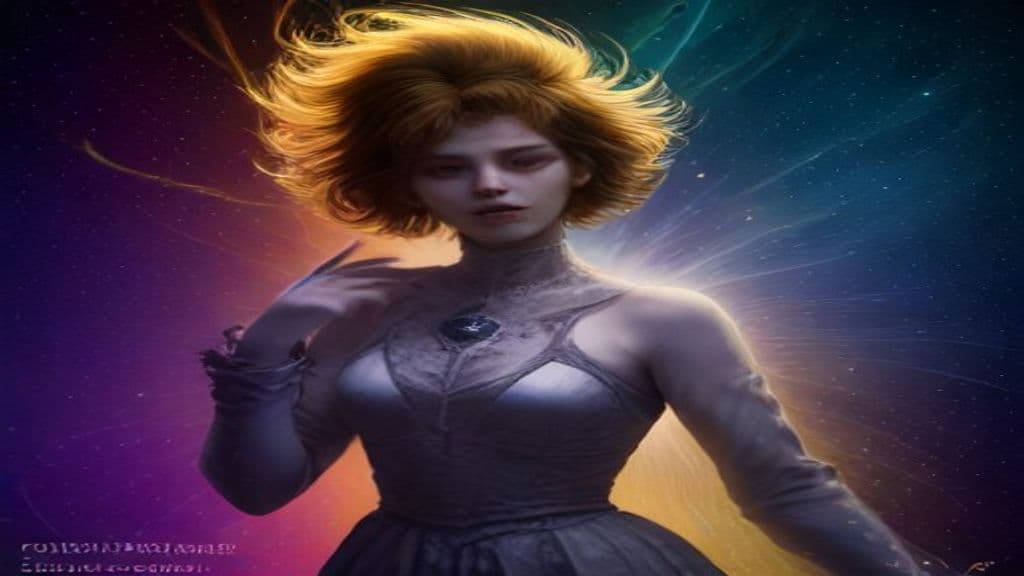
Jerry Cornelius originates in the fiction of English author Michael Moorcock. Introduced in a sequence of novels and stories often grouped as the Cornelius Quartet (including The Final Programme, A Cure for Cancer, The English Assassin, and The Condition of Muzak) and related texts, Cornelius is presented not as a single consistent person but as a recurring, mutable incarnation of Moorcock's Eternal Champion idea. Across stories Moorcock deliberately treats Cornelius as a metafictional, multiform persona who appears in different guises, roles, and timelines rather than having a single mythic origin.
Descriptions of Jerry Cornelius vary by story and are intentionally non-fixed. In The Final Programme, after fusion with Miss Brunner, Cornelius emerges as a radiantly charismatic hermaphroditic being whose presence overwhelms observers; in A Cure for Cancer he is described in a sustained section as appearing with black skin and white hair. Other texts portray him variously as a Pierrot/Harlequin figure, a teenager in Notting Hill, a 'hipster' of ambiguous and polymorphous gender, a shivering wreck, or an urban adventurer. Moorcock's texts emphasize gender ambiguity and continual variation rather than a single canonical look.
Within the fiction, Cornelius functions as a protean, shapeshifting archetype: he assumes different genders, social roles, and identities across narratives, and operates as an urban adventurer engaging in assassination-like actions, time-travel–like or multiverse-spanning episodes, scientific or occult transmutation, and cultural provocations. The Final Programme depicts a literalized fusion with Miss Brunner producing a transcendent being; A Cure for Cancer depicts Cornelius operating a clandestine transmogrification service that helps others 'cast off their old selves, flesh and all.' These are literary/metafictional capacities within Moorcock's stories rather than empirically described supernatural mechanics.
Weaknesses
- otherNone specified in sources (identity is narrative/ metafictional and not described as vulnerable to conventional supernatural weaknesses)
Wards
- otherNone specified in sources
Jengu
No focused information on Jengu is present in the supplied sources. The materials available discuss water spirits and aquatic spirit traditions generally (including Mami‑Wata) and Bantu religious frameworks, but do not provide primary or detailed descriptions, rituals, or origins specific to Jengu (Sawa sea spirits).
Jenny Greenteeth
A figure of northern‑English folklore personifying dangerous still and slow freshwater. Presented as a green‑skinned river‑hag who lures or seizes children and the elderly into ponds, rivers, and lakes; stories function primarily as cautionary warnings about aquatic hazards.
Jentil
In Basque mythology, the Jentil are a race of giants associated with pre-Christian civilizations and megalithic monument builders. (Note: - Power tier should be Primordial because the text suggests they are associated with pre-Christian civilizations and megalithic monument builders, but doesn't imply cosmic powers. - Summary should cla)
Jentilak (the Jentil / Gentiles)
Jentilak are a Basque folkloric race of enormous, hill‑dwelling humanoids traditionally credited with shaping the landscape and building megalithic monuments. Conceptually they are framed as pre‑Christian or 'gentile' ancestors whose disappearance is associated in folklore with the spread of Christianity.
Jeonggamnok
The Jeonggamnok is a compilation of prophetic works describing a messianic figure known as the 'True Man' with the surname Jeong, expected to bring about a new utopian dynasty. (Note: - Power tier: Primordial (due to the "messianic figure" and the scope of its prophetic works) - Origin story: missing - Appearance: missing - Abilities: should describe how it is believed the 'True Ma)
Jerahmeel (archangel)
Jerahmeel (Hebrew Yəraḥməʾēl) is a theophoric Hebrew personal name meaning roughly 'May God have mercy' that, in later apocryphal/deuterocanonical and devotional materials, appears also as the name of a heavenly being rendered Jeremiel/Eremiel/Remiel and sometimes listed among named archangels in varying traditions.
Jersey Devil
The Jersey Devil (also Leeds Devil) is a regional legendary creature or cryptid of South Jersey and the Pine Barrens, framed variously as the monstrous offspring of a Leeds family matriarch or as a folkloric personification of local social disputes. It is best known in popular accounts as a flying, hoofed biped that emits a blood-curdling scream and figures in both oral legend and cryptozoological catalogues.
Jessica Jones
Jessica Jones is a modern fictional character from Marvel Comics: a woman whose exposure to radioactive chemicals granted her limited superhuman powers. She is portrayed as a former costumed hero who becomes a private investigator and a narrative focus for stories about trauma, recovery, and street-level superheroics in New York City.
Jesus son of Damneus
Jesus son of Damneus (Greek: Ἰησοῦς του Δαμναίου; Hebrew: ישוע בן דמנאי, Yeshua ben Damnai) is attested in Josephus as a Herodian-era High Priest of Judaea in Jerusalem who was appointed after the removal of Ananus son of Ananus and was deposed in less than a year. Sources treat him as a historical officeholder within the first-century Judean priestly and political framework rather than a supernatural being.
Jesus, son of Fabus
Jesus, son of Fabus (also rendered Jesus son of Phabet, Jesus son of Phiabi, Joshua ben Fabus) is attested in secondary summaries and priestly lists as a historical holder of the Jewish high priesthood in late Second Temple Judea. Sources present him as a human officeholder whose tenure and removal occurred within the political influence of Herodian and Roman authorities; precise dates and family relations are inconsistent across sources.
Jewish Mythological Entities
A collection of mythological beings from Jewish mythology, including angels, demons, and divine entities. (Note: 1. Power tier is not supported by source material (no description of entities with cosmic powers). 2. No mention of "primordial" or specific power levels. 3. Sensory cues, wards, and weaknesses are al)
Jhakar / Phansigar (no attestation as supernatural being)
The names 'Jhakar' (and variants like 'Jhakari') appear in available sources as toponyms and a personal/surname in Indian records; the supplied materials contain no folkloric or ethnographic attestation of a forest or guardian spirit called Jhakar or Phansigar. This entry documents what the sources do and notes the absence of any supernatural description.
Community Record
- [1]Jerry Cornelius. Wikipedia: 'Jerry Cornelius' articlewiki
- [2]Jerry Cornelius (Wikidata). Wikidata entry for Jerry Corneliuswiki
- [3]The Lives and Times of Jerry Cornelius. Wikipedia: 'The Lives and Times of Jerry Cornelius' articlewiki
- [4]Why is Jerry Cornelius coloured negative in 'A Cure for Cancer' (discussion). Scifi.Stackexchange discussion addressing appearance in A Cure for Cancerother
- [5]Rise of the Irregulars: The Radical Potential of Fantasy from Jerry Cornelius to Downloadable Characters. Mark P. Williams, Interfictions essay on Jerry Cornelius' radical potentialacademic
- [6]‘The Lives And Times Of Jerry Cornelius’ – Moorcography.org. Moorcography essay on the Cornelius collectionother
- [7]Rambles: Michael Moorcock, The Lives & Times of Jerry Cornelius: Stories of the Comic Apocalypse. Rambles review and commentaryother
- [8]Jerry Cornelius, a queer hero? – The Queerness. Essay discussing queer aspects and gender ambiguity in Corneliusother
- [9]Book review of Jerry Cornelius: His Life and Times by Michael Moorcock. Book review and synopsisother
- [10]Archive: A Comedy Animal's Life. Archive resource referencing related materialsother
- [11]Archive: CIA Reading Room document (Letter referencing Jerry Cornelius archive item). Archive document linking to cultural referencesother
- [12]Glenn Cole Russell: The Lives and Times of Jerry Cornelius (blog). Blog essay on the Cornelius collectionother