
In classical Kabbalistic texts (e.g., Sefer ha-Bahir, Zohar) Keter is presented not as a created creature but as the first sefirah or emanation issuing from the Ein Sof (the Infinite). It is the initial arousal of divine desire and will — the point at which the Infinite begins to manifest potential for distinct being. The metaphor of a "crown" situates Keter above the other sefirot: it is causally prior to Chokmah and Binah and sits at the top of the Tree of Life while still remaining beneath the Ohr Ein Sof. Medieval and early modern Kabbalists (e.g., Moses ben Jacob Cordovero; Lurianic material) elaborate Keter's role in the chain of emanation and its place in partzufim (divine personifications) without narrating a biographical or anthropomorphic origin story.
Sources do not present Keter as a visible, corporeal being. Instead it is described through metaphors: a crown placed above the head of the sefirotic configuration, "the Hidden Light" (Or HaGanuz), "Nothing" (Ayin), and "air that cannot be grasped." The Bahir emphasizes that the crown denotes what lies above the mind's ability to comprehend; the Zohar calls it "the most hidden of all hidden things." Where later literature personifies aspects of Keter, those are theological partzufim (e.g., Arik Anpin and Atik Yomin) rather than sensory appearances recorded in the provided sources.
Keter's 'ability' is metaphysical and causal: it is the source of the initial divine impulse or will that leads to creation. It contains undifferentiated potential that gives rise to Wisdom (Chokmah) and Understanding (Binah) and thereby enables the flow of divine energy through the remaining sefirot. Kabbalistic authors attribute ethical valences to Keter — notably absolute compassion and an association with the Thirteen Attributes of Mercy — and link it to moral exhortation (e.g., purity of thought, avoidance of anger) in ethical writings such as those of Cordovero. The literature also treats Keter as the seat of two partzufim, Arik Anpin (the "Vast Countenance," linked to boundless mercy and bliss) and Atik Yomin (the "Ancient of Days," representing primal roots of divine consciousness and will), indicating internal, relational dynamics within the divine configuration.
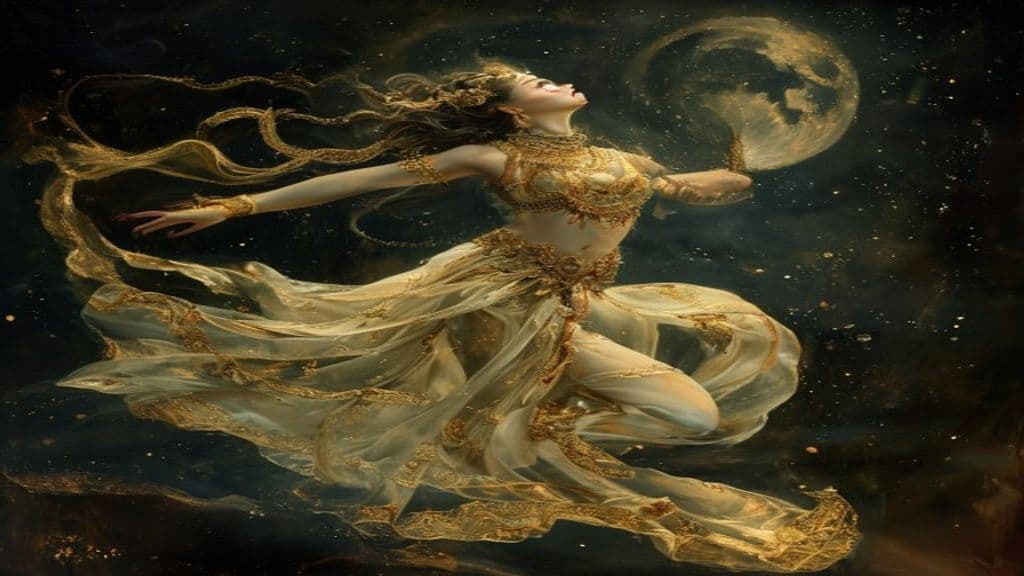
Apsara
Celestial dancers and water nymphs of Hindu cosmology — beautiful semi-divine beings who dance at the court of Indra and, by his command, descend to earth to distract sages from excessive asceticism.
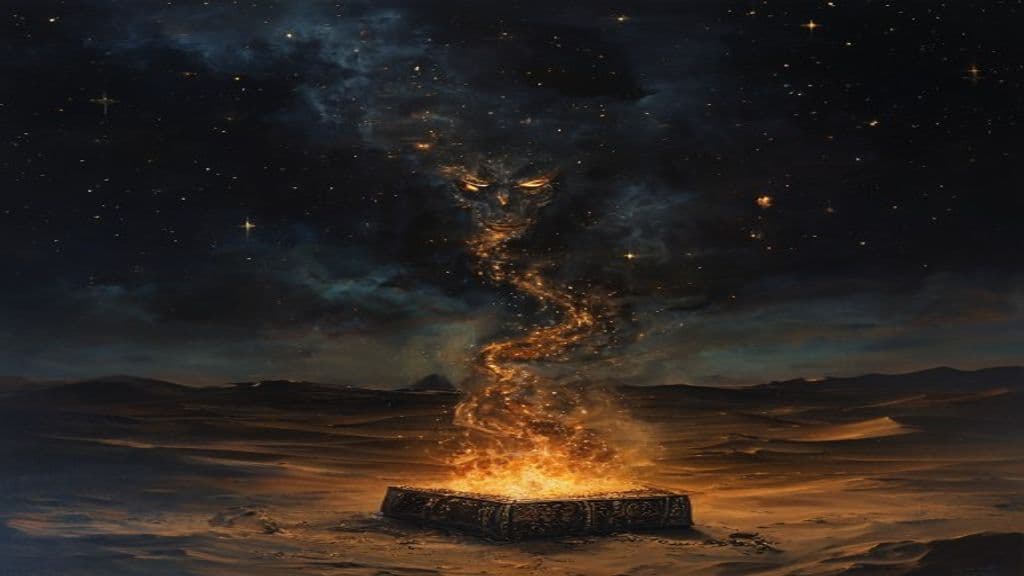
Djinn
The class of supernatural beings created from smokeless fire in Islamic cosmology — a parallel civilization to humanity, capable of belief or unbelief, with their own prophets, society, and judgment before God.
Jann
The weakest class of djinn in Islamic tradition, associated with desert winds and taking the form of snakes or whirlwinds, dwelling in empty wilderness and posing little threat to those who know the proper invocations.
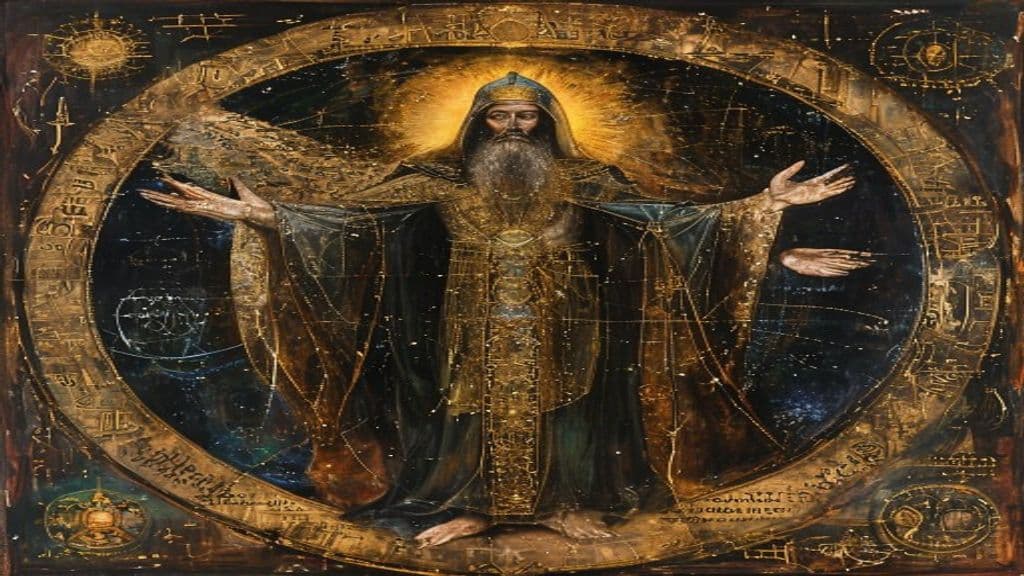
Metatron
An exalted heavenly figure in postbiblical Jewish literature, often identified with the transformed patriarch Enoch in later mystical texts and portrayed as a celestial scribe and high court official in merkabah and Kabbalistic writings.
Ariel
Ariel is named in the provided materials as an angel appearing primarily in Jewish and Christian mysticism and apocrypha. The supplied sources give the Hebrew form אֲרִיאֵל (romanized ʾÁrīʾēl) and identify Ariel as an angelic figure but do not provide further doctrinal, narrative, or ritual detail.
Barachiel
Barachiel (Hebrew: בַּרַכְאֵל, Baraḵʾēl, 'God has blessed') is an archangelic figure in Jewish mystical literature and in Byzantine Catholic and Eastern Orthodox Christian devotion, traditionally associated with blessings, guardianship of family and married life, and as chief of guardian angels. Mystical texts place him over the second heaven and attended by a vast retinue of ministering angels; Christian iconography portrays him with symbols of blessing such as a white rose, rose petals, a bread basket, or a staff.
Binah (בינה)
Binah (Hebrew: בִּינָה Bīnā, "understanding") is the third sephirah on the Kabbalistic Tree of Life, a non-personal divine attribute that receives, contains and structures the undifferentiated creative impulse (Chokmah). It functions as an intellectual/metaphysical principle in Kabbalistic cosmology and psychology rather than as an independent, anthropomorphic spirit.
Chochmah
Chochmah (Heb. חָכְמָה; also Chokmah/Chokhmah) is a metaphysical principle in Jewish Kabbalistic thought: the second of the ten sefirot, described as the primordial point of divine wisdom — the first flash of conscious intellect that issues from Keter and becomes intelligible through Binah.
Chokmah
Chokmah (חָכְמָה, 'wisdom') is the second sefirah on the Kabbalistic Tree of Life, described in classical kabbalistic texts as the primordial point of divine wisdom that emerges from Keter and precedes differentiation by Binah. It functions as an abstract metaphysical principle and cognitive archetype rather than a personified spirit in the provided sources.
Daʻat
Daʻat (Hebrew: דַּעַת, "knowledge") is a Kabbalistic locus or mystical state on the Tree of Life in which the sefirot are united; it functions as a mediating point between the transcendent Keter and the manifest sefirotic structure and as a correlate of certain human cognitive-emotional capacities.
Ein Sof
Ein Sof (אֵין סוֹף, ʾēn sōf) is the Kabbalistic designation for the pre‑manifest, nameless divine principle—literally “no end” or “infinite”—from which the Ohr Ein Sof (Infinite Light) and the ten sefirot are said to emanate. It is described apophatically: beyond names, attributes, form, space and time.
Ein Sof Aur
A Kabbalistic metaphysical formulation linking Ein Sof (the Infinite) with ʾOr (divine 'light'), used to discuss divine emanation and the manifestation of revealed divine names (e.g., YHWH Elohim) rather than a personified folkloric being.
Gevurah
Gevurah (Hebrew: גְּבוּרָה, Găḇūrā) is the fifth sephirah on the Kabbalistic Tree of Life, an emanation representing the divine principles of judgment, limitation, and disciplined strength. It functions as a structural attribute within Jewish mystical cosmology rather than an individual personal spirit.
Haniel
Haniel is an angelic figure in Jewish and later Western angelology, traditionally counted among the seven archangels. The figure is associated with the planet Venus and is described as the governing archangel of the Kabbalistic sephirah Netzach, embodying qualities of grace, charm, and joy and appearing in later Renaissance esoteric apparatus such as John Dee's Sigillum Dei Aemeth.
Malkuth (מַלְכוּת)
Malkuth is the tenth sefirah on the Kabbalistic Tree of Life, the lowest sphere representing the manifest world or 'Kingdom'. It functions as the receiving endpoint of the divine emanations, the realm of material existence (the World of Assiah), and a symbolic locus for humility, embodied action, and the Shekhinah in Zoharic material.
Metatron
An exalted heavenly figure in postbiblical Jewish literature, often identified with the transformed patriarch Enoch in later mystical texts and portrayed as a celestial scribe and high court official in merkabah and Kabbalistic writings.
Community Record
- [1]Keter. Wikipedia: Keterwiki
- [2]Keter (Wikidata). Wikidata: Q16277883wiki