
In Sumerian creation narratives Ki (the sign 𒆠, 'earth') functions as the terrestrial counterpart and chief consort of the sky god An (Anu). From the union of Ki and An are born the Anunnaki, most prominently Enlil. The birth of Enlil effects a cosmic separation: prior to his birth heaven and earth were united until Enlil 'cleaved the heavens and earth in two', leaving An with the heavens and Ki with the earth. In some versions Ki is paired maritaly with Enlil such that their union produces plant and animal life. Scholarly traditions note that Ki appears primarily in a limited set of Sumerian creation texts and that she was later correlated with other mother-earth figures in Mesopotamia (notably Ninhursag in some interpretations and later the Akkadian/Babylonian Antu).
The sources provide no attested pictorial or descriptive iconography for Ki. The figure functions primarily as the personification of the material earth—the Sumerian cuneiform sign 𒆠 denotes both the physical earth and a female divine principle. Surviving references treat Ki as an elemental, relational figure within cosmological prose rather than as a temple cult statue or described divine form, and no specific physical attributes, garments, or animal associations are recorded in the cited materials.
Ki's primary powers and functions recorded in the sources are procreative and cosmogonic: as earth-sustainer and consort of An she is progenitor of the Anunnaki, and through familial relations (notably the birth and actions of Enlil) she participates in the ordering of the cosmos—specifically the separation of heaven and earth and the generation of plant and animal life. Beyond these generative and relational roles, the provided texts do not attribute further specialized powers, magical functions, or hostile behaviors to Ki; she appears chiefly as an ontological principle and mother-earth figure rather than an active cultic or magical agent in the surviving accounts.
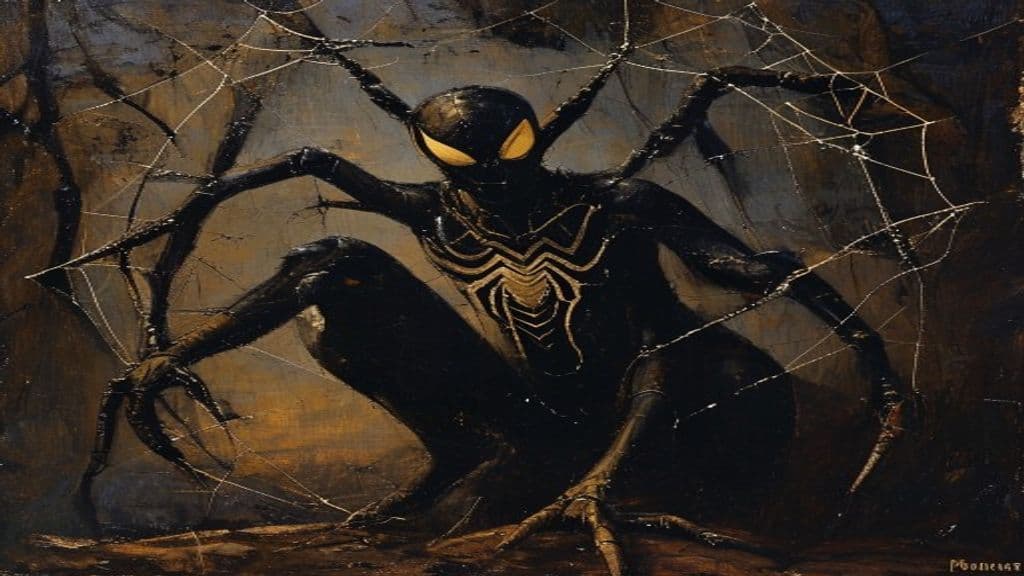
Anansi
The spider trickster god of Akan folklore — cunning, mischievous, and wise. Keeper of stories and teacher of human beings, brought through the slave trade into Caribbean and African-American tradition.
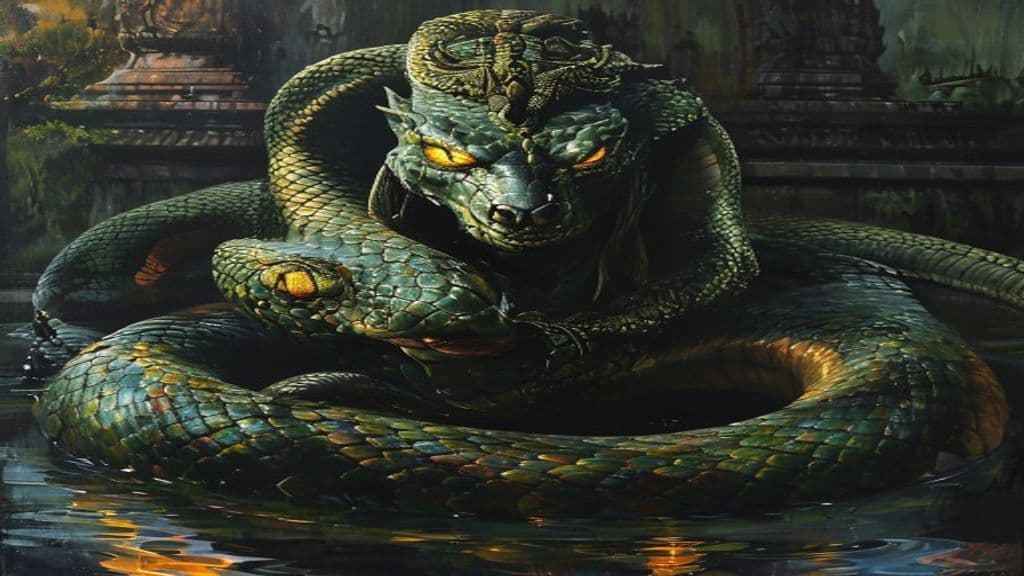
Naga
Divine serpent beings of Hindu, Buddhist, and Jain cosmology — powerful guardians of water, earth, and underground treasures. Revered as deities in South and Southeast Asia.
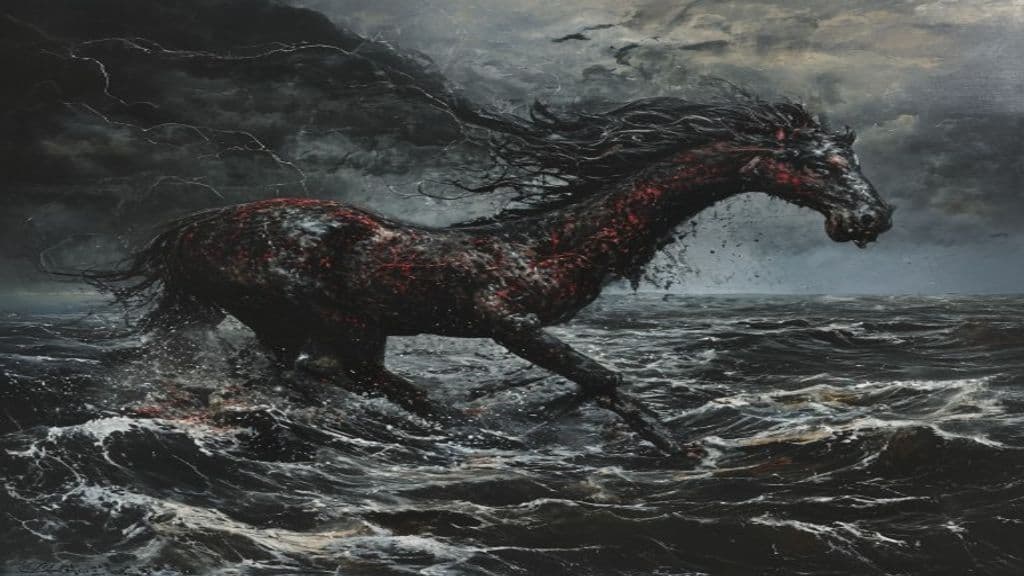
Nuckelavee
The most terrifying creature of Orcadian folklore — a skinless, horse-headed demon of the sea whose breath spreads plague and whose presence causes crops to wither. It cannot cross fresh water.
Abzû
Abzû (Sumerian abzû; Akkadian Apsû) is the primordial freshwater abyss in Sumerian–Akkadian cosmology: the deep fresh waters that underlie and surround the earth, source of springs, rivers and ritual holy waters, and a creative principle whose mingling with the salt sea (Tiamat) figures in Mesopotamian cosmogony.
Ashnan (Ezina)
Ashnan (Sumerian Ezina) is the Mesopotamian divine personification of grain: a goddess whose being is identified with the cereal harvest and the category 'grain' itself. Attested from the Uruk and Early Dynastic periods, she appears in hymns, cult lists and disputation literature and is invoked in civic and medical contexts.
Damu
Damu is a Mesopotamian deity attested from the Ur III period onward whose character shifts over time from an early 'dying/vegetation' figure to a later, better-documented role as a healing god associated with medicine-goddesses and cult centers such as Isin.
Enki (Ea)
Enki, also known by the Akkadian form Ea, is a major Mesopotamian deity associated with wisdom, crafts, magic and incantations, and the freshwater deep called the Abzû. Centered at the cult-city Eridu (temple E‑Abzû), he functions in myths as a crafty counsellor, culture‑hero and creator figure who aids humans and orders aspects of the world.
Enlil
Enlil is a principal deity of ancient Mesopotamia, originally preeminent in the Sumerian pantheon as a supreme lord who orders the world by separating heaven (An) from earth (Ki). His principal cult center was the E-kur temple at Nippur, and his cult practices focused on daily offerings and priestly care of his cult statue; mythic traditions portray him as both benefactor and punisher in the administration of cosmic and social order.
Gidim / Eṭemmu (Mesopotamian ghost)
The gidim (Sumerian) or eṭemmu (Akkadian) is the shade or continuing personal spirit of a deceased person in Mesopotamian religion. Created at death and received into the ordered netherworld (Irkalla) by the Anunnaki court, these spirits depend on funerary offerings and are implicated in a Mesopotamian causal world where neglect can produce illness and misfortune among the living.
Gugalanna
Gugalanna is a named figure in Sumerian religion associated with the Mesopotamian underworld, attested as the first husband of Ereshkigal and as the deceased whose funeral occasion motivates the poem Inanna's Descent into the Underworld. Modern scholarship sometimes links the name to administrative titles or equates the figure with Ennugi or with the Bull of Heaven motif from the Gilgamesh cycle, though these identifications are interpretive.
Hendursaga
Hendursaga (Sumerian Dḫendur-saŋ) is a Mesopotamian deity described in hymnic and god-list sources as a divine night watchman who patrols city streets, bears an insignia (staff or torch), and protects nocturnal travelers from hostile supernatural beings. He is attested in connection with the state of Lagash and is equated with the Akkadian Išum in later bilingual contexts.
Inanna
Inanna is a major ancient Mesopotamian goddess, primarily worshipped in Sumer and later identified with the Akkadian Ishtar. Her domains include love, sex, war, political power, divine law and procreation; she is a principal cult figure of Uruk and bearer of the mes, the decrees of civilization.
Inanna of Zabalam
A city-tutelary manifestation (hypostasis) of the Mesopotamian goddess Inanna/Ishtar associated with the city of Zabalam (Sumerian Sugal). Attested from the Uruk period through later Mesopotamian historical phases, she appears in temple hymns, royal inscriptions, and theophoric names and could be treated either as a distinct local goddess or as a local aspect of the pan-regional Inanna.
Magilum Boat
Supernatural vessel in Mesopotamian tradition associated with the god Ninurta, representing a transitional space between life and death. (Note: * Power tier should be Lesser, as the boat's abilities don't match those of a Primordial entity. * Sensory cues: The sinking of the boat is an implicit cue indicating death has occurred; add this to t)
Mušḫuššu
The Mušḫuššu (Sumerian MUŠ.ḪUŠ; Akkadian mušḫuššu) is a named Mesopotamian hybrid creature — a composite serpentine monster — attested in Sumerian and later Babylonian art and myth. It functions primarily as a sacred emblem and mythic adversary-turned-attendant of major gods (notably Marduk) and appears in cultic, monumental, and astral contexts (e.g., the Ishtar Gate and the Bašmu/Hydra constellation).
Community Record
- [1]Ki (goddess) - Wikipedia. Wikipedia, 'Ki (goddess)'wiki
- [2]The Quest of Ki - Wikipedia. Wikipedia, 'The Quest of Ki'wiki
- [3]Notes and quotations compiled from supplied research extracts. Research notes supplied by user (compilation of Sumerian textual summaries and scholarly commentary, incl. Samuel Noah Kramer references)other