
In Ugaritic literary cycles Kothar‑wa‑Khasis appears as the professional divine artisan retained by greater gods to provide technical works. In the Baal Cycle El summons him to build a temple for Yam and later Kothar constructs Baal’s palace and furnishes Baal with the weapons needed in Baal’s conflict with the sea god. In the Epic of Aqhat Kothar makes the hero Aqhat’s bow. In later Phoenicianizing accounts (e.g., Philo of Byblos) a mortalized inventor figure, Chousor, credited with inventing arts and crafts, is often read as a euhemerized reflection of Kothar.
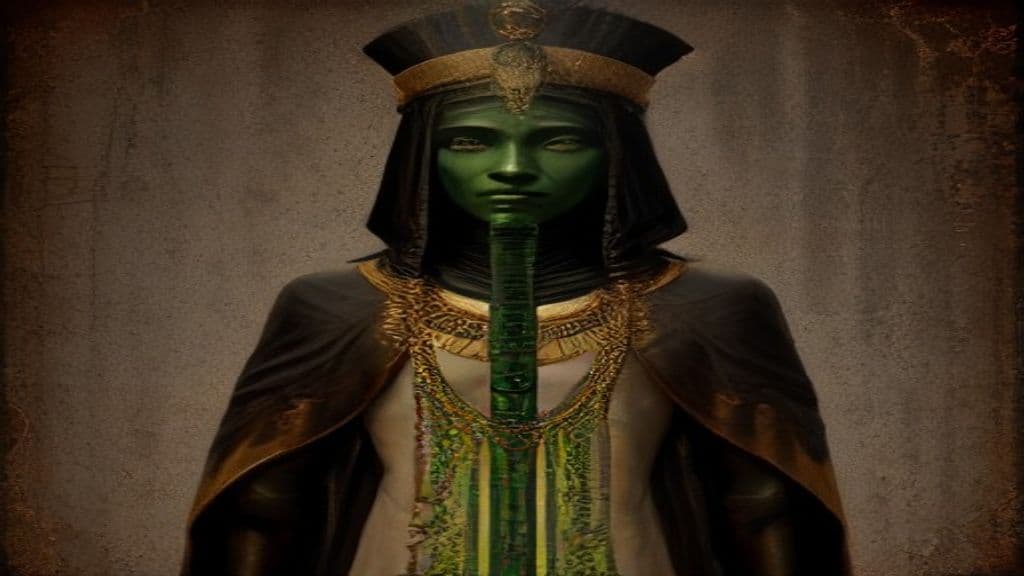
Surviving Ugaritic texts do not preserve a standardized iconography for Kothar‑wa‑Khasis; descriptions emphasize his functions—craftsman, smith, architect, musician—rather than a fixed physical form. The binomial name (Kothar‑wa‑Khasis, literally “skilled and wise” or hendiadys “wise craftsman”) is integral to his identity. Comparative scholarship has sometimes connected him to Egyptian craftsmen deities such as Ptah (and to an Egyptian Keserty figure) in older proposals, but the textual record from Ugarit supplies no consistent anthropomorphic or iconographic portrayal in the provided sources.
Kothar‑wa‑Khasis is attested as an architect and builder of divine structures (temples, palaces), a smith who forges weapons (for example, Baal’s arms in the Baal Cycle and the bow of Aqhat in the Epic of Aqhat), a maker of ritual and prestige objects, and a musician associated with ritual performance. He is also described in source summaries with the epithet or role of magician or possessing technical knowledge with ritual efficacy, insofar as items he crafts in myth enable gods’ actions and victories. Textual attestations also indicate cultic/locational associations (residence in Memphis and Caphtor) rather than suggesting supernatural locomotion as an ability.
Adamma
Adamma is an ancient north‑Syrian goddess attested in Eblaite palace records ca. 2400 BCE and later incorporated into Hurrian and Emar contexts. She functioned as a named cultic deity with an institutional priesthood, a month and festival bearing her name, and documented offerings from the royal palace.
Asherah
Asherah is a major ancient Northwest Semitic mother-and-fertility divine figure closely associated with sacred trees and wooden cult poles. Attested across Ugarit, Canaanite/Phoenician, Israelite, Akkadian and related Levantine contexts, her cultic presence is debated in later Israelite texts where references are often recast as objects (asherah poles, groves) and subject to iconoclastic reform.
Ashtart
Ashtart (also Astarte, Athtart, ʿAṯtart) is a major Northwest Semitic goddess of the Ancient Near East attested from the Bronze Age through classical antiquity. She functions in regional pantheons alongside deities such as Baal, Anat, and the East Semitic parallel Ishtar, and is evidenced in Ugaritic mythic texts and Levantine temple archaeology (notably a 4th-century BCE chapel at Sidon).
Astarte
Astarte (Ancient Northwest Semitic ʿAṯtart; Hellenized Ἀστάρτη) is a major Bronze–Iron Age Levantine goddess worshipped in Canaanite and Phoenician contexts and widely syncretized across the ancient Mediterranean. Sources portray her with martial, erotic, and civic associations and attest organized cultic worship (temples, shrines, coin iconography) rather than folkloric anti‑spirit traditions.
Aštabi
Aštabi is an ancient Near Eastern deity attested in Eblaite, Hurrian, Ugaritic, and Hittite contexts. In later Hurrian and Hittite sources he functions as a war god and participant in divine assemblies and mythic combat; in the earliest Eblaite documents his precise original character is unresolved though he had named cult centers and cultic statues.
Baal
Baal (bāʿal) is a Northwest Semitic title meaning 'owner' or 'lord' that served as a theonym in the ancient Levant; in Ugaritic and Canaanite texts it appears as the name/title of a prominent storm and fertility god (often rendered Baʿal Haddu) who features centrally in the Baal Cycle and in regional cults tied to rain, fertility, and kingship. In later monotheistic literatures the term becomes a polemical label for rival or foreign deities and is reinterpreted in various receptions.
Baʿal Zephon
An epithet/localized form of the Canaanite storm god Baʿal (Hadad) associated with Mount Zaphon (Jebel Aqra) and with the north; worship of Baʿal Zephon served protective and maritime functions and was widely syncretized in neighboring cultures.
Hadad (Haddu / Adad / Iškur)
Hadad is the ancient Near Eastern storm and rain deity attested across Levantine and Mesopotamian traditions (Ugaritic Haddu, Akkadian Adad, Sumerian Iškur). He is a high-ranking weather-lord associated with rain, thunder, fertility of fields, and a dual capacity to nourish crops and to unleash destructive storms; he plays central roles in temple cult, royal ideology, and mythic battles (notably the Ugaritic Baal Cycle).
Hauron (Haurun / Horon / Hawran)
Hauron (also Haurun, Horon, Hawran) is an ancient Near Eastern deity attested in Egyptian sources (worshiped at Giza) and identified by scholarship as the Egyptian form of a West Semitic god worshiped in Canaan and at Ugarit. In Egypt his name was closely associated with Harmachis and could be used as a designation of the Great Sphinx of Giza.
Išḫara
Išḫara is a polyvalent ancient Near Eastern goddess first attested at Ebla in the third millennium BCE, later incorporated into Mesopotamian, Hurrian, Hittite and other regional religious traditions. She functioned as a tutelary royal deity, an authority over love and the institution of marriage, an oath- and divination-linked divine figure, and was associated symbolically with reptiles and, in some Mesopotamian contexts, scorpions.
Kotharat
A collective of Northwest Semitic goddesses attested in Bronze Age texts (chiefly at Ugarit, Mari and Emar) associated with conception, pregnancy, birth and the blessing of marriages; conventionally treated as a heptad and etymologically linked to a Semitic root meaning 'skill' or 'to achieve.'
Mot
Mot is the Ugaritic/Phoenician personification and divine power of death; in mythic texts he appears as a son of ’El whose residence is a pit and whose appetite for the living brings sterility and conflict with the storm-god Baal.
Community Record
- [1]Kothar‑wa‑Khasis — Wikipedia. Wikipedia: Kothar‑wa‑Khasis (summary of name, roles, myths, and reception)wiki
- [2]Kothar‑wa‑Khasis — Wikidata. Wikidata entry for Kothar‑wa‑Khasis (classification as Ugaritic deity)wiki
- [3]Baal Cycle — Wikipedia. Summary of the Baal Cycle (provides attestations of Kothar's activities: temple building for Yam; crafting for Baal)literary
- [4]Epic of Aqhat — referenced (Wikipedia summary). Epic of Aqhat (summary in linked materials noting Kothar as maker of Aqhat's bow)literary
- [5]Philo of Byblos — Chousor (summary). Wikipedia summary noting Philo of Byblos' Chousor as a later Phoenician euhemerized reflection of Kotharliterary
- [6]Archive: Simonetti Walter La Psicosi del capro espiatorio (archival reference listed). Archive reference included among provided research notes (contextual/comparative material)other