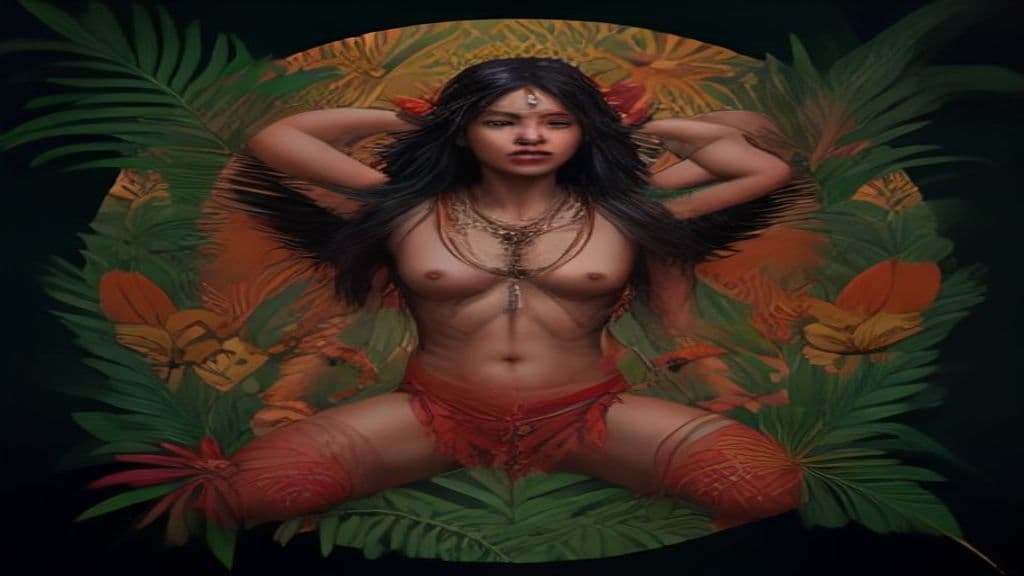
In the cosmological framework recorded in the sources, Lono is one of four principal gods who existed before the world was created (alongside Kū, Kāne, and Kanaloa). Traditional narratives link Lono with voyaging figures from Kahiki (Tahiti), such as Laʻa‑mai‑kahiki, who is associated with bringing Lono's musical instruments and festival practices to Hawaiʻi; such genealogical and voyaging tales situate Lono as both a primordial akua and a figure remembered through ancestral and chiefly lines.
The supplied sources record no fixed, standardized iconography for Lono. Mythic accounts describe symbolic modes of arrival—e.g., descending to Earth on a rainbow to marry Laka—and narratives also recount human embodiments or ritual representatives (legendary voyagers such as Laʻa‑mai‑kahiki and named aliʻi who bear the Lono name). Sources emphasize that an akua may be an invisible spirit or manifest in living persons rather than providing a single anthropomorphic description.
Sources attribute to Lono the power to bring rain and dispense fertility for food plants, patronage of music and hula (linked in tradition to instruments such as a small hand-drum and a flute introduced by Laʻa‑mai‑kahiki), and institutional authority over a season of ritualized peace during Makahiki when war and unnecessary work are kapu (taboo). Hawaiian weather terminology and seasonal practice sometimes link Lono to winter Kona storms that bring rain to leeward areas. Lono functions both as a natural agent of fertility and as a social principle enforcing ordered sacred time through priestly and chiefly regulation.
Weaknesses
None recorded.
Wards
- ritualMakahiki observance (kapu prohibitions and festival practices)
- conditionCompliance with priestly and chiefly enforcement of kapu law during Makahiki
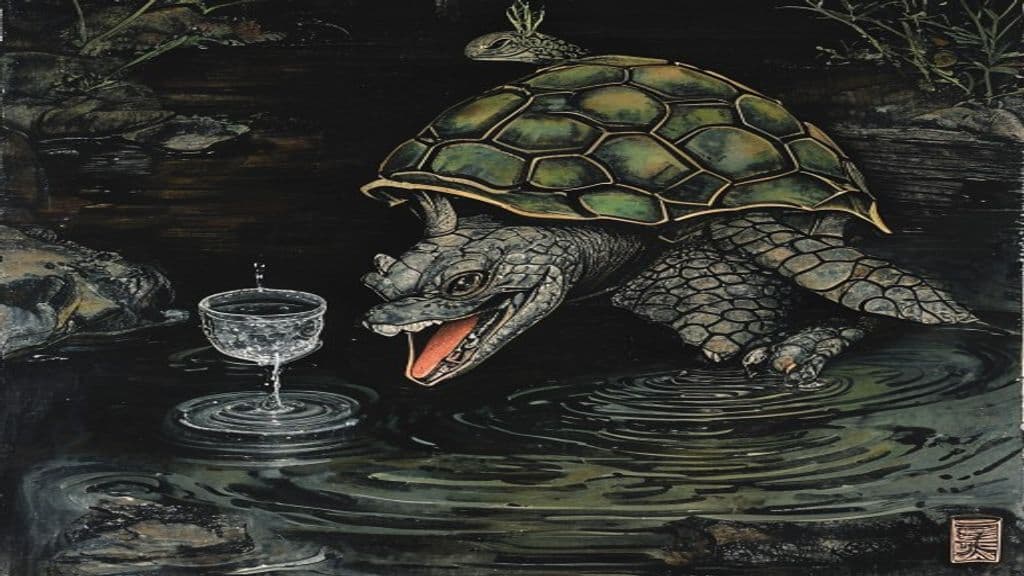
Kappa
A water-dwelling imp of Japanese folklore with a bowl of water on its head. Mischievous but bound by strict codes of politeness; dangerous near rivers.
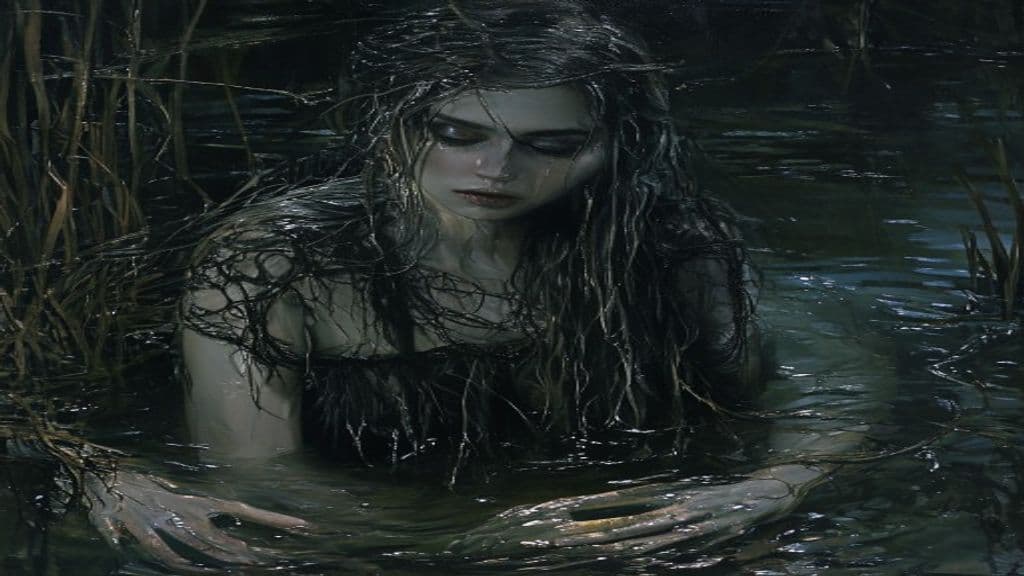
Rusalka
Water spirits in Slavic folklore — the spirits of young women who died by drowning or suicide, bound to rivers and lakes. Beautiful and dangerous, they can bewitch men to their deaths.
Kāne
Kāne is a principal Hawaiian divine personage and creator figure associated with light, life, procreation, and ancestral origin. He occupies the highest position among the triad Kāne–Kū–Lono and is invoked in daily, domestic, and productive acts such as morning prayers and canoe-building.
Loch Ness Monster
A persistent anomalous large animal-like presence said to inhabit Loch Ness in the Scottish Highlands, popularly nicknamed 'Nessie'. It occupies a space between older Celtic water-beast motifs and a modern media-amplified cryptid and tourist symbol, with episodic sightings, disputed photographs, and sonar claims since the early 20th century.
Lohiʻau
Lohiʻau (also spelled Lohiau) is a mortal beloved figure in Hawaiian myth whose relationship with the goddesses Pele and Hiʻiaka drives episodes of the Pele–Hiʻiaka cycle. He functions as the human object of desire and the narrative catalyst for Hiʻiaka's quest to bring him to Kīlauea.
Loki
A complex figure in Old Norse myth: son of a jötunn and the female figure Laufey, resident among the Æsir, a shape‑changing trickster whose cunning alternately aids and undermines the gods and who is bound for his role in Baldr's death before breaking free to fight at Ragnarök.
Long Horse (Trevor Henderson)
A fictional creature created by Canadian horror artist Trevor Henderson, depicted as a horse-skull-headed entity with an apparently infinite, highly flexible neck. Unlike many horror creations, it is commonly portrayed in fandom sources as benevolent and protective toward humans.
Longma (龍馬)
The longma is a mythological Chinese dragon-horse: a horse-bodied, dragon-scaled creature (sometimes winged) that appears as a portent, most famously bearing the Hetu (Yellow River chart) from the river to culture-heroes and sage-rulers. It functions as a liminal, quasi-divine sign linking rivers, Heaven, and legitimate rulership in classical Chinese sources.
Longnü (Buddhist Tradition)
Companion and acolyte of the bodhisattva Guanyin, associated with salvific aspects. (Note: 1. Power tier should be Ancient, as she is an acolyte and companion of a bodhisattva, implying significant spiritual authority. 2. Add sensory cues (e.g., sound of gentle waves or soft chanting) that )
Lord Drinian
Lord Drinian is a human nobleman and sea-captain in C. S. Lewis's Narnia. He serves as captain of the Dawn Treader under King Caspian X, later becoming a trusted advisor and attendant in the king's later years.
Lorelei
Lorelei is both a steep slate rock on the right bank of the River Rhine at Sankt Goarshausen and a literary-derived legendary woman associated with that place; the name (from German lureln + ley) evokes the rock's murmuring/echoing, and 19th‑century poems and songs personified that place as an enchanting woman who distracts boatmen and became a widespread cultural motif.
Lorsch Bee Blessing
A Christian prayer invoking a benevolent entity to bring good health to honey bees and their hives, reflecting Germanic folklore's appreciation for nature and balance. (Note: 1. Power tier should be reassessed, as the entity's influence on bee health and guidance may indicate a Greater power level. 2. The source material does not support the claim that the Lorsch Bee Bless)
Lost Comet
A technical astronomical designation for a previously observed periodic comet that was not detected at its most recently predicted perihelion return. The status reflects observational, dynamical, or physical causes that prevented recovery rather than supernatural agency.
Lotis
Lotis is a named nymph in Greek mythology attested in modern reference works and represented in visual art, most notably in scenes pairing her with the fertility god Priapus. Surviving references in the supplied sources identify her as a mythic female nature-being but provide no extended ancient narrative, ritual tradition, or etymology.
Community Record
- [1]Lono — Wikipedia. Wikipedia contributors, 'Lono,' Wikipedia, The Free Encyclopedia.wiki
- [2]Makahiki—Codes for Regeneration (Ke Ola Magazine). Ke Ola Magazine, 'Makahiki—Codes for Regeneration.'other
- [3]Curse of Lono — Wikipedia (discussion of cultural reception). Wikipedia contributors, 'Curse of Lono,' Wikipedia, The Free Encyclopedia.wiki