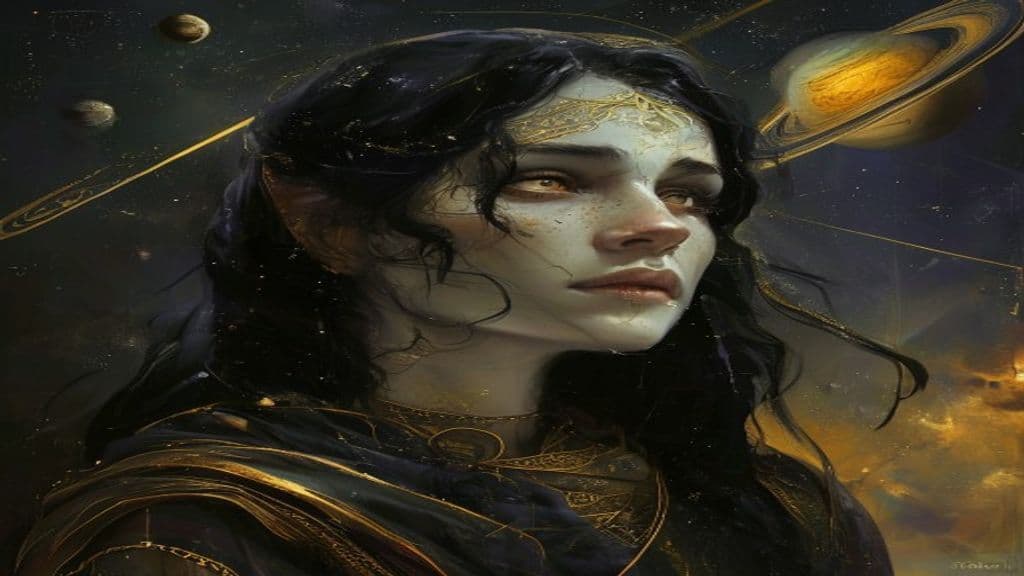
In classical mythographic sources Lysithea (Λυσιθέα / Λυσιθόη) appears in genealogical lists as a daughter of Oceanus and is also attested in lists of women said to have been lovers of Zeus; the supplied sources state that very little else is known about her mythic biography. Independently, the modern astronomical object named Lysithea is described as one of Jupiter's irregular satellites, believed by planetary scientists to be a fragment of a captured C- or D-type asteroid following a collisional disruption. Additional unrelated uses of the name include a genus of red algae in the family Bangiaceae and contemporary fictional uses such as the Fire Emblem character Lysithea von Ordelia.
Mythological references provide no physical description for Lysithea beyond her genealogical identity. The Jovian Lysithea is described in astronomy sources as an irregularly-shaped satellite (the eleventh known satellite of Jupiter); no detailed surface-coloration or morphology beyond its irregular shape is provided in the supplied materials. Taxonomic sources list Lysithea as a genus of red algae (family Bangiaceae). Modern fictional portrayals (e.g., Fire Emblem: Three Houses) present a named playable character, but the supplied fandom sources include only character name and affiliations rather than canonical physical description.
Classical mythographic entries supplied contain no accounts of deeds, powers, or agency for Lysithea beyond genealogical placement; no supernatural abilities or behaviors are recorded in the provided mythological sources. The astronomical Lysithea has no agency; scientific sources discuss its likely origin as a captured asteroid fragment rather than any powers. Fictional fan-derived excerpts describe character traits (for a game character) such as fear of darkness in fanworks, but those are narrative character details rather than traditional supernatural abilities.
Weaknesses
- otherNo mythic weaknesses recorded
- otherAstronomical vulnerability: physical fragility consistent with being an asteroid fragment (non-agent)
Wards
- otherNo wards or cultic protections attested in supplied sources
Oceanus
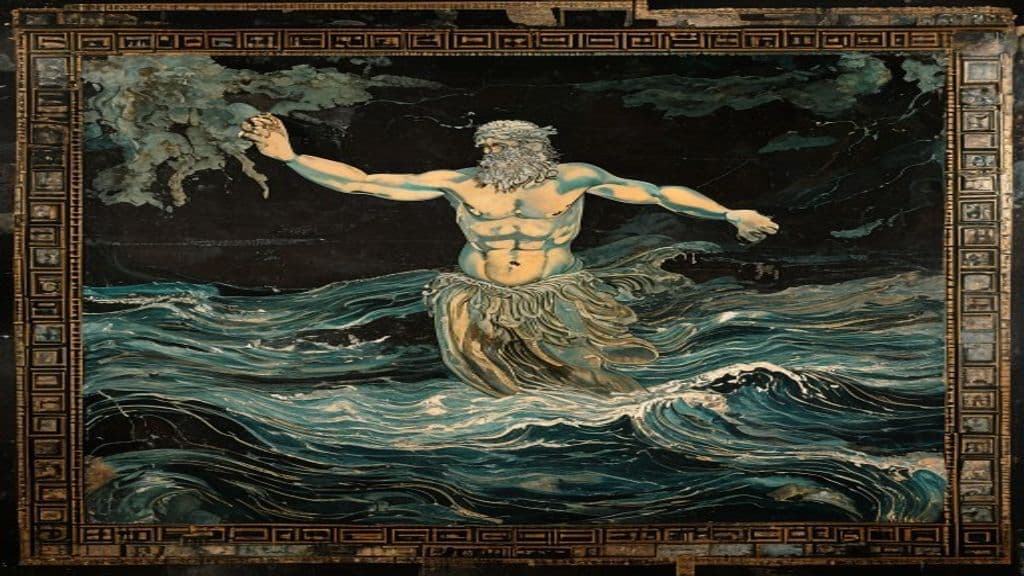
Oceanus (Greek: Ὠκεανός) is a primordial Titan in ancient Greek cosmology who personifies the great river that encircles the world and is named as father of the river gods (potamoi) and the Oceanids. He functions as a cosmological boundary-stream and genealogical progenitor in multiple Greek traditions and appears in literary theogonies and Greco-Roman art.

Zeus
Zeus (Ancient Greek: Ζεύς) is the supreme deity of the classical Greek pantheon, a sky-and-thunder god who rules as king of the gods on Mount Olympus and functions as a sky‑father who assigns roles among the immortals.
Amphidocus
Amphidocus (Ancient Greek: Ἀμφίδοκος) is attested in classical sources as a son of Orchomenus of Minyan Orchomenus and brother to Clymenus and Aspledon. He appears in genealogical lists tying local eponyms and founders to a royal lineage in Boeotia; beyond this genealogy the sources provide no sustained myths, cult, or ritual around him.
Anaxo
Anaxo (Ancient Greek Ἀναξώ) is a proper name applied to mortal women in ancient Greek mythic genealogies and narratives. Attested figures named Anaxo appear as a Mycenaean princess—daughter of Alcaeus, wife of Electryon, and mother of Alcmene—and as a young woman from Troezen who was carried off by the hero Theseus. The name carries a lexical sense of female authority in Greek but denotes human participants in dynastic and abduction cycles rather than a supernatural class.
Astydameia
Astydameia (Ancient Greek Ἀστυδάμεια) is not a single supernatural being but an ancient Greek personal name borne by several mortal women in mythic tradition — queens, wives, and mothers who appear as genealogical and narrative nodes in the heroic age (figures associated with Peleus, Heracles, Acastus, Pelops, etc.). The name literally evokes civic rulership, and the bearers act within social and political roles rather than as spirits or deities.
Atlantia
Atlantia is not a single folkloric supernatural being in the provided sources but a modern proper name applied to multiple, independent referents — including a brief classical name-form (Atlanteia/Atlantia) listed as a Hamadryad in Greek mythic genealogies, a contemporary YA novel's underwater city, names of vessels in science-fiction media, a Society for Creative Anachronism regional designation, and a biological genus entry in a taxonomic database. The sources do not present a unified mythic ontology or associated rituals for an entity called 'Atlantia.'
Capella
Capella (α Aurigae) is the brightest star in the northern constellation Auriga, historically named for a goat (Latin Capella, Greek Aix) and treated across cultures as a calendrical and weather sign as well as an architectural orientation marker. Astronomically it is a quadruple star system composed of two close yellow-giant primaries and a distant pair of red dwarfs and is one of the sky's brightest X-ray sources.
Cercetes
Cercetes (Ancient Greek: Κερκέτης) is a named Egyptian prince in Greek mythic genealogy, recorded as one of the fifty sons of King Aegyptus who married (and was slain by) one of the Danaïdes. He is attested in mythographic catalogues such as the Bibliotheca and preserved in modern summaries like Wikipedia.
Ceteus
Ceteus (Ancient Greek Κητεύς, romanized Kêteus) is a name borne by at least two mythic figures in Greek literatures: an Arcadian prince counted among the sons of King Lycaon and a commander listed among the Lamian Centaurs who join Dionysus in his Indian campaign. The name appears in genealogical catalogues and epic lists rather than as a recurring supernatural class.
Cyllen
Cyllen (also attested as Cyllene in place-name forms) is an eponymous figure in Greek mythographic and topographic tradition credited with giving his name to Mount Cyllene in Arcadia. He appears in genealogical lists of Arcadian heroes and functions primarily as an etiological ancestor in local myth rather than as a richly characterized deity or monster.
Demonassa
Demonassa (Ancient Greek: Δημώνασσα) is not a supernatural being in the supplied sources but a personal name attested to several mortal women in Greek mythographic and literary traditions and later reused in biological taxonomy. Attestations include multiple mythic genealogical figures, a rhetorical anecdote of a Cypriot lawgiver, and later literary stock-character uses (notably Corinthian sexualized roles). The same lexical form is also applied in modern zoological nomenclature (a beetle genus and insect species epithets).
Dione
Dione is primarily a proper name attested in ancient Greek myth (Διώνη, 'she who is under the authority of Zeus') borne by multiple mythological women, and is also used in modern taxonomy and astronomy (notably a moon of Saturn). The supplied sources do not present Dione as a single, consistent folkloric supernatural being with rituals or warding traditions.
Dotia
Dotia (Ancient Greek: Δωτίας; variants Δωτίς/Δωτίδος) is an eponymous ancestress in Greek mythic-genealogical tradition, cited as the name-source for the Dotian plain and the city Dotion (Dotium) in Thessaly. Surviving references present her as an etiological figure — a mythic ancestor who explains a place-name — not as an independently acting deity, spirit, or cult figure.
Eleius
Eleius (Ancient Greek Ἠλεῖος, Ēleîos) is a legendary eponymous king in Greek myth who functions as the ancestral founder of the Eleans and the region of Elis. Attested in mythographic traditions summarized in Pausanias and later compilations, Eleius appears in genealogical sequences linking local dynastic identity to divine and heroic lineages.
Community Record
- [1]Lysithea (mythology) - Wikipedia. Wikipedia, Lysithea (mythology)wiki
- [2]Lysithea - Wikipedia. Wikipedia, Lysitheawiki
- [3]Jupiter's Moon Lysithea - Solarviews. Solarviews, "Jupiter's Moon Lysithea"other
- [4]Lysithea: Asteroid Moon of Jupiter - Go-Astronomy. Go-Astronomy, "Lysithea: Asteroid Moon of Jupiter"other
- [5]Wikidata: Lysithea. Wikidata entry for Lysitheaother
- [6]Lysithea - Fire Emblem Wiki. Fire Emblem Wiki, "Lysithea von Ordelia"wiki
- [7][Podfic] How To Chase Away Your Fears - Archive.org. Archive.org podfic excerpt referencing a character named Lysitheaother
- [8][FE3H] One At A Time - Archive.org. Archive.org fanwork referencing Lysitheaother
- [9]When Lysithea Was My Fire Emblem Tank · The New Leaf Journal. The New Leaf Journal, article on Fire Emblem character Lysitheaother
- [10]Lysithea (taxon) - Wikidata / biological mentions. Wikidata notes Lysithea as a genus name used in biological taxonomy (red algae)other
- [11]The Lemonade Cafe - When Darkness Falls (Fire Emblem: Three Houses). Fan site referencing narrative character detail for Lysitheaother