
During the performance of a Me ritual, the respective deity incarnates itself in the person performing the ritual, suggesting that the Me serves as a conduit for divine energy.
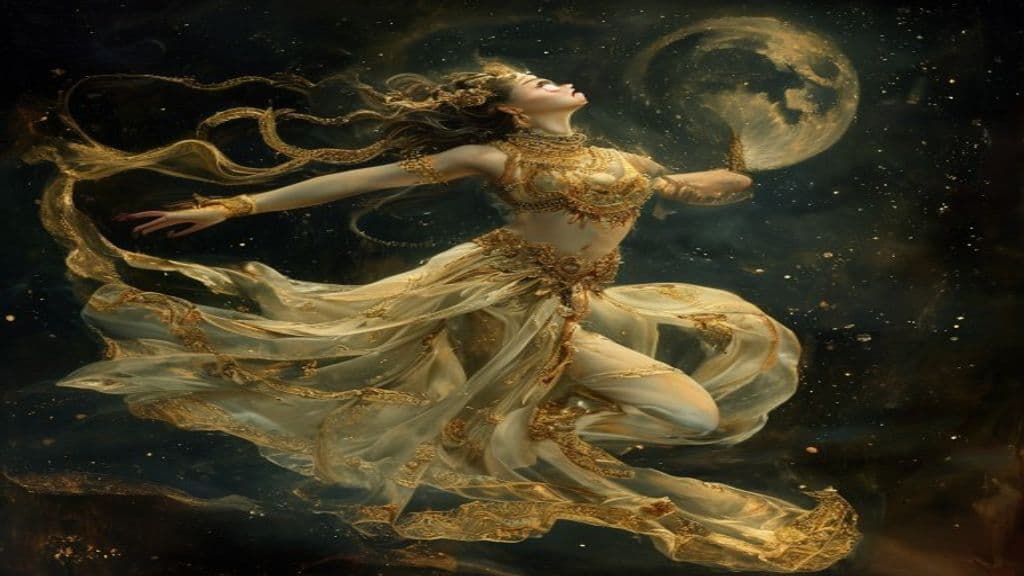
Hursag
In Mesopotamian tradition, Hursag refers to a geographical feature, specifically a mountain or hill. (Note: - Power tier: Hursag is a geographical feature, not a being with primordial power; correct tier to be Lesser (local spirit) or Minor Spirit (weak), as it's a natural landform. - Abilities: Remove stat)
Mazu
Mazu (媽祖) is a deified female protector of seafarers originating in Fujianese popular religion as the historical/legendary Lin Moniang. Venerated across Chinese folk religion, Taoist and Buddhist registers, and in coastal and diasporic Chinese communities (notably Taiwan), she functions as a tutelary sea goddess whose cult includes temples, imperial honorific titles, and large popular pilgrimages.
Mazzikin
In Jewish mythology, mazzikin are described as invisible demons that can cause harm or danger to individuals. (Note: - Power tier: change to Lesser (mazzikin cause "minor annoyances") - Weaknesses & Wards: list should be more specific, e.g., "Incantation bowls made by Aramaic-speaking inhabitants of Mesopotamia and )
Mañjuśrī
Mañjuśrī is a central Mahāyāna bodhisattva who personifies transcendent wisdom (prajñā). He appears as an authoritative figure in sutras, in esoteric mantra/dharani collections, and widely in Buddhist art and temple ritual contexts across South, Central and East Asia.
Mbielu-mbielu-mbielu
A mysterious animal reportedly seen in the Likouala River, Central African Republic/Democratic Republic of the Congo border. (Note: * Power tier: Not specified; needs to be determined based on available information. * Origin story: Omitted entirely; needs to be included if known. * Abilities: No information provided; needs to be e)
Mbombo (Bumba)
Mbombo, also called Bumba, is the creator god of the Kuba people (in what is now the Democratic Republic of the Congo). In Kuba creation myth Mbombo brings the sun, moon, stars, animals and people into being by vomiting them from his body, teaches humans craft (fire), and then retreats to the heavens, leaving an earthly representative (Yima/Loko Yima).
Mbwiri
Central African demon believed to possess people, causing neurological disorders. (Note: * Power tier: Given that the primary behavior of Mbwiri is possession, which seems more in line with a lesser or local spirit, it's unlikely to be classified as Greater. * Origin story: No information)
Meander
A meander is a geomorphological feature: a series of regular sinuous curves in the channel of a stream or river. The term derives from the river name Maiandros (Greek Μαίανδρος) and in classical usage came to denote anything winding or convoluted.
Mechho Bhoot
The fish-eating ghost of Bengal — the spirit of a fisherman or a person obsessively fond of fish in life, condemned to haunt river banks and fishing boats, stealing the catch and causing boats to capsize. Distinctly Bengali: a ghost shaped by the culture of a river civilization.
Mecho Bhoot
No verifiable information about an entity called "Mecho Bhoot" is present in the single provided source. The supplied source (a Wikipedia entry for the animated series Bantul The Great) does not define, describe, or mention Mecho Bhoot; therefore the nature, attributes, and cultural context of Mecho Bhoot are unknown based on the available material.
Mecisteus
Mecisteus is a mortal heroic figure from ancient Greek tradition attested in genealogical lists and epic-cycle episodes. He appears in connections with the Theban cycle (Seven Against Thebes), Trojan War narratives, and Argive genealogies, primarily as a warrior and ancestor rather than a developed individual character.
Medb
Medb is the legendary queen of Connacht in the Irish Ulster Cycle, presented as a powerful royal figure and a sovereignty-woman who embodies the land's power to grant kingship. She is famed as the instigator of the Táin Bó Cúailnge and is etymologically associated with mead/intoxication and rulership.
Community Record
- [1]