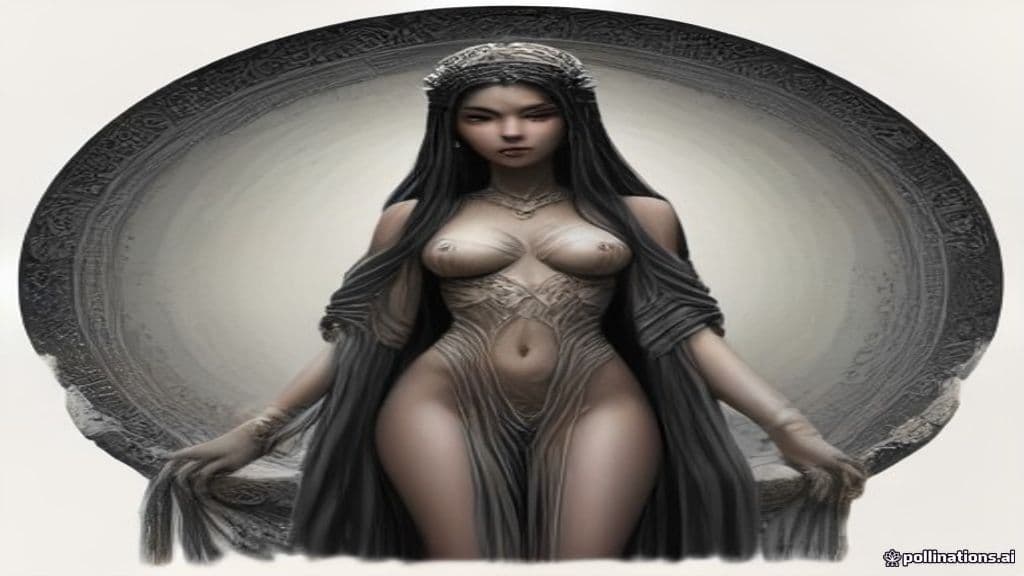
In the surviving accounts Mnesimache is presented as a daughter of Dexamenus (Dexamenos), king of Olenus. In the principal mythic episode she is promised or forced to marry the centaur Eurytion; when the centaur attempts to claim her Heracles intervenes, killing Eurytion and rescuing her. Genealogically she appears in variant traditions as mother of Diores by Amarynceus in one attestation, and in an alternative tradition (often noted as uncertain) she is listed alongside Polyxene as a possible mother of Menestheus by Peteos/Peteus. Some secondary summaries note that certain traditions conflate or equate her name with Deianira or Hippolyte, but those equivalences are variant and disputed in the source traditions.
Ancient and modern summaries supply no sustained physical description of Mnesimache. She is characterized in the sources by her familial relations (daughter of Dexamenus) and her narrative role (betrothed/forcibly promised, rescued by Heracles) rather than by bodily or costume detail. Consequently her 'appearance' in the tradition survives only as a relational portrait within genealogical lists and the Heraclean episode.
Mnesimache is portrayed as an ordinary mortal woman in the cited sources and is not attributed supernatural powers. Her recorded actions are limited to her roles within family and marriage narratives: daughter of a king, a woman threatened with forced marriage or abduction by the centaur Eurytion, and in some texts the mother of later figures (Diores; possibly Menestheus in variant accounts). The main behavioral motif connected to her is victimhood and the catalysis of heroic intervention rather than autonomous magical agency.
Weaknesses
- otherNo magical weaknesses recorded (mortal figure)
Wards
- otherNo wards applicable; sources record no protective rituals aimed at or against Mnesimache
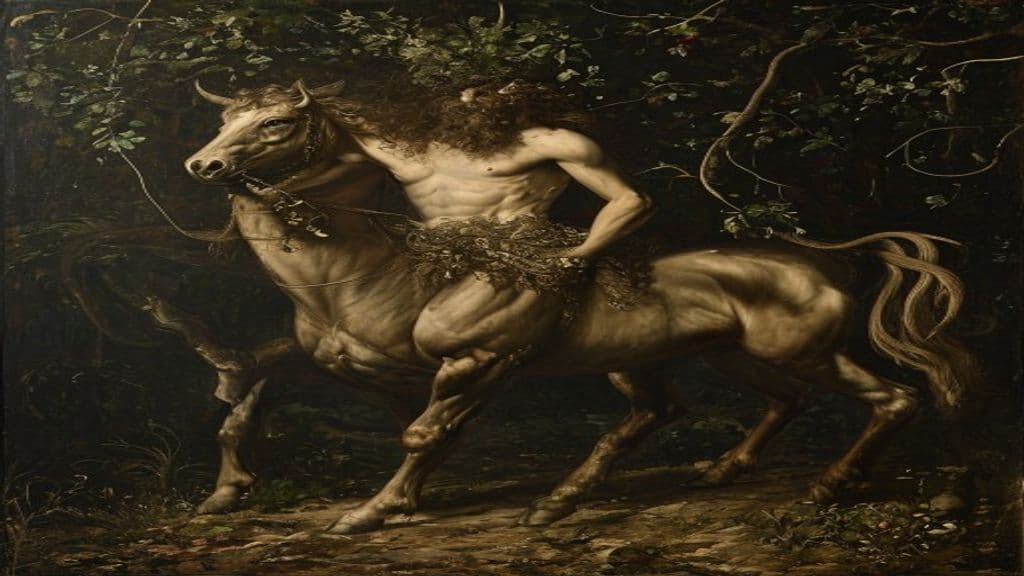
Eurytion
Eurytion is an ancient Greek personal name borne by several distinct mythic figures—centaurs, a herdsman guarding Geryon's cattle, a Trojan archer, a defender of Thebes, and in some accounts a Gigas. The name recurs across mythic cycles rather than denoting a single uniform being.
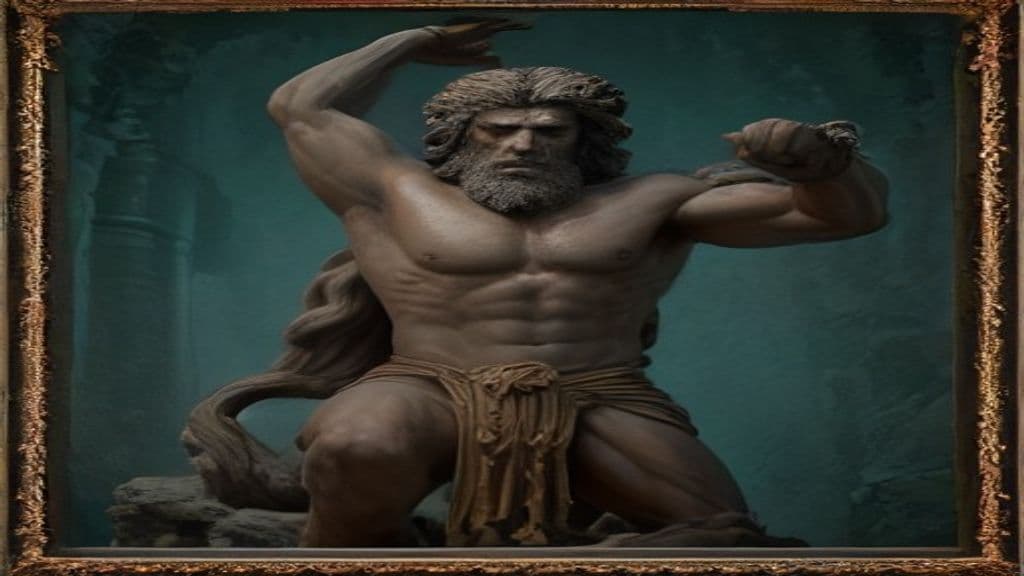
Heracles
Heracles is the greatest hero of Greek myth whose career bridges mortal hero-cult and full divinization. Celebrated for his Twelve Labours, martial prowess, and travels between the mortal world, the underworld, and Olympus, he functioned as a civic patron, ancestor of royal lines (the Heracleidae), and object of cult that treated him both as chthonic hero and as god.
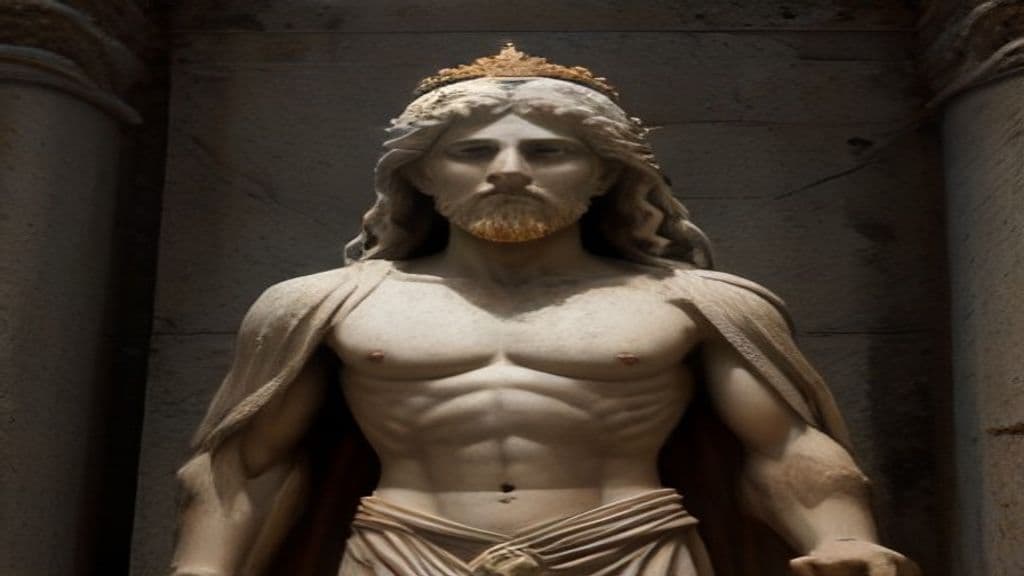
Dexamenus
Dexamenus (Ancient Greek Δεξάμενος) is a name applied to multiple mytho-historical mortal figures in Greek tradition—chiefly local kings or eponymous ancestors associated with Olenus and Ambracia—best known from tales in which Heracles rescues a daughter from the centaur Eurytion. The name literally means 'hospitable' or 'receiver' and functions as a host-figure and genealogical anchor in regional heroic narratives.

Amarynceus
Amarynceus is a mortal chieftain of Elis in the Greek mythic-historical tradition, presented as a regional leader of the Eleans connected to the heroic age. He appears in variant genealogies and in narratives linking Elis to the Trojan expedition, funeral games, and the dynastic politics involving Augeas and Heracles.
Acacallis
Acacallis (Ancient Greek: Ἀκακαλλίς; also Acalle) is a mythological princess of Crete in Greek tradition, daughter of King Minos and Pasiphae. She functions primarily as a dynastic and etiological figure: in varying accounts she is mother, by gods such as Hermes (Mercury) or Apollo, of eponymous or founder-figures like Cydon (founder of Cydonia), Miletus, or Lydon/ Lydus.
Acanthis
Acanthis is a young woman in Greek myth, daughter of Autonous and Hippodamia, who is transformed into a thistle finch by the gods as an etiological explanation for the bird's name. The story is preserved chiefly in Antoninus Liberalis' Metamorphoses and summarized in modern reference works.
Acaste
Acaste (Ancient Greek: Ἀκάστη) is a named Oceanid — one of the daughters of the Titans Oceanus and Tethys — recorded among the companions of Persephone at the moment of her abduction; the name also appears separately as a nurse of the daughters of King Adrastus of Argos in later genealogical lists.
Achaeus
Achaeus (Ancient Greek: Ἀχαιός, Akhaiós) is an eponymous personal name borne by three mythological human figures in Greek tradition; best attested is Achaeus, son of Xuthus and Creusa, brother of Ion and grandson of Hellen, who is named as father of Archander and Architeles in Pausanias. The name is glossed as meaning "griever," from ἄχος (achos, "grief, pain, woe").
Aegle
Aegle (Ancient Greek: Αἴγλη, 'brightness' or 'dazzling light') is a name applied to several distinct female figures in Greek myth: a daughter of Asclepius associated with health, a Naiad mother of the Charites by Helios and Neaera, one of the Heliades transformed into a poplar after Phaeton's death, a named Hesperid, an alternate name for Coronis in some traditions, a daughter of Panopeus beloved by Theseus, and a nurse of Dionysus. The recurrence of the name links these figures by the themes of brightness, beauty, and filial or nymph-like status rather than by a single unified identity.
Aello
Aello (Ancient Greek: Ἀελλώ) is a named figure in Greek myth primarily attested as one of the Harpies—winged female personifications of storm-wind who harry, snatch, and torment. The name also appears in variant lists as applied to an Actaeonian hunting dog, showing onomastic fluidity in the tradition.
Agaptolemus
Agaptolemus (Ancient Greek: Ἀγαπτόλεμος) is a mythic Greek prince, one of the fifty sons of King Aegyptus, best known as the husband of the Danaid Pirene who, like most of the Danaids, slew her husband on their wedding night at the command of her father Danaus.
Agave
Agave (Ancient Greek: Agaue/Agaúē) is a personal name borne by at least two distinct figures in Greek myth: a Nereid (one of the fifty sea-nymph daughters of Nereus) and a Theban princess, daughter of Cadmus, who appears in myths connected with Dionysus. The name is glossed in Greek sources as 'illustrious', 'noble', or 'high-born'.
Agrius
Agrius (Ancient Greek: Ἄγριος, 'wild') is an onomastic figure in Greek myth whose name is applied to multiple distinct personae—including a Giant, a centaur, a bear‑born twin, a princely son, a suitor of Penelope, and one of Actaeon's dogs—rather than a single unified supernatural being. Each attestation places an Agrius in different narrative registers (Gigantomachy, Heracles' labors, heroic genealogies, the Odyssean cycle, and the Actaeon hunt).
Agron
Agron (Ancient Greek: Ἄγρων, 'wild' or 'rustic') is a human/mortal figure attested in the summary of Antoninus Liberalis' Metamorphoses (as presented on Wikipedia) who, because of impiety toward certain gods, is transformed by Hermes into a plover. The tale functions as an etiological metamorphosis and moral exemplum about observing cult obligations.
Aitolos
Aitolos is a name that appears in Greek-language traditions referring to two distinct figures: Aetolus, a mythic genealogical ancestor in classical Greek myth (son of Endymion, descendant of Deucalion), and Kosmas Aitolos (St. Cosmas of Aetolia), a historical/hagiographic Orthodox teacher whose collected writings emphasize pastoral and ascetical themes. The sources do not present Aitolos as a single folkloric supernatural being.
Alcestis
Alcestis (Ancient Greek: Ἄλκηστις, Álkēstis) is a mortal princess of Greek myth famed for voluntarily dying in place of her husband Admetus and being temporarily returned from the underworld through Heracles’ intervention. Her story highlights conjugal devotion, substitutive death, and the need for purification after contact with chthonic powers.
Community Record
- [1]Mnesimache - Wikipedia. Wikipedia: 'Mnesimache (Ancient Greek: Μνησιμάχη) ... Mnesimache was nearly abducted by the Centaur Eurytion.'wiki
- [2]Peteus - Wikipedia. Wikipedia: 'By Polyxene or Mnesimache, Peteos became the father of Menestheus.'wiki
- [3]Mnesimache (person entry) - UVic Mythology. UVic Mythology person entry: 'Mnesimache. Description: Almost forced to marry. Eurytion.'other
- [4]Event: Hercules kills Eurytion rescuing Mnesimache - UVic Mythology. UVic Mythology event entry: 'Hercules kills Eurytion rescuing Mnesimache from forced marriage to him. People: Place: Olenus.'other
- [5]Mnesimache | Facts, Information, and Mythology - Pantheon. Pantheon summary noting Heracles' intervention and variant readings about her promises and rescue.other
- [6]Dexamenus - Theoi.com. Theoi: entry on Dexamenus and related daughters and episodes (context for Mnesimache as a daughter of Dexamenus).other
- [7]Dexamenus in Greek Mythology - Greek Legends and Myths. Summary of Dexamenus' family and the centaur episode linking to Mnesimache.other
- [8]Arcival: Who's Who in Classical Mythology (archive). Who's Who in Classical Mythology (reference compilation noting Mnesimache in genealogical entries).other