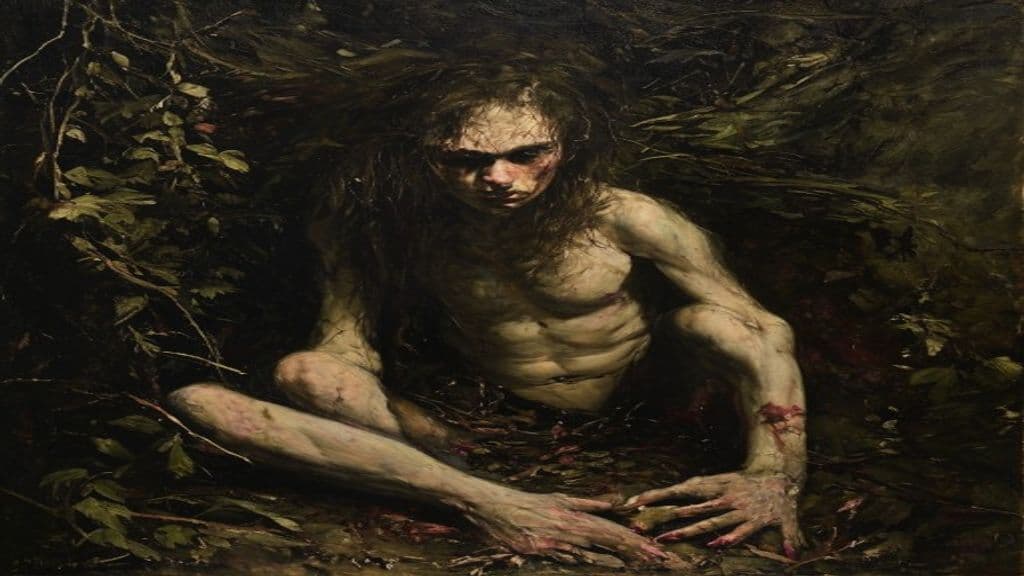
Accounts vary by locality. In Romanian folkloric taxonomy the moroi belongs to a family of revenant and witchlike beings including strigoi, pricolici and bosorcoi. Some traditions describe moroi as spirits of the dead that return from graves; other strands identify them with infants who died before baptism or as the offspring of supernatural unions. The collector Wlislocki recorded a version in which a woman impregnated by a nosferat would bear an extremely ugly, hairy child that would quickly become a moroi. Etymological commentary (Romanian Academy; Éva Pócs) links the word to Old Slavonic mora, a term for a nightmare‑causing spirit, which situates the moroi in a broader Indo‑European set of nocturnal, oppressive beings rather than a single fixed origin.
Descriptions are inconsistent across sources, reflecting local variation. One attested motif (Wlislocki) depicts the moroi as an ugly, thickly haired infantlike body born from a supernatural impregnation; other accounts simply treat moroi as phantomlike or revenant figures without a single canonical form. The feminine form moroaică and plural moroaice are recorded, and grammatical formation with the -oi suffix groups it morphologically with other augmented/pejorative revenant terms such as strigoi and bosorcoi.
Sources attribute nocturnal emergences and energetic predation to moroi: in some versions they are "phantoms of a dead person which leave the grave to draw energy from the living," linking them to vampiric or ghostly feeding on the living. Genealogical explanations (offspring of two strigoi or of a nosferat) frame moroi as inheritors of malefic tendencies. They are also associated with unbaptized infants whose unsettled deaths place them at the birth/death liminal zone. In Hungarian regional usage morák/norák function as a bogeyman — a socialized threat invoked to frighten children — indicating a cultural behavioral role as much as an account of supernatural power.
Weaknesses
- conditionproper rites (baptism and correct burial)
Wards
- ritualensuring proper baptism of infants
- ritualcorrect burial practices
Strigoi
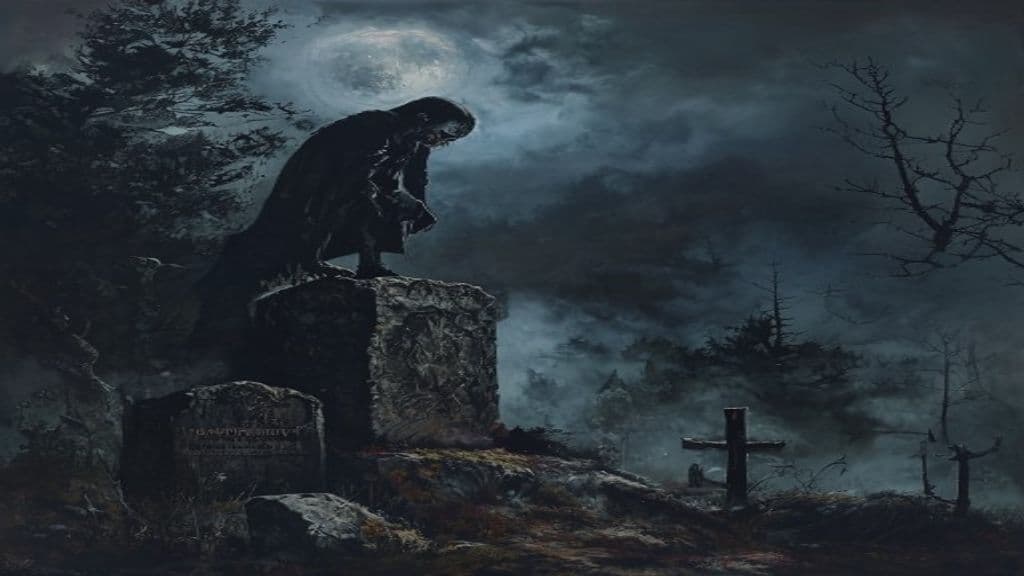
The vampire of Romanian folklore — either a living witch (strigoi viu) or an undead blood-drinker (strigoi mort). The source tradition from which the literary vampire emerged.
Kikimora
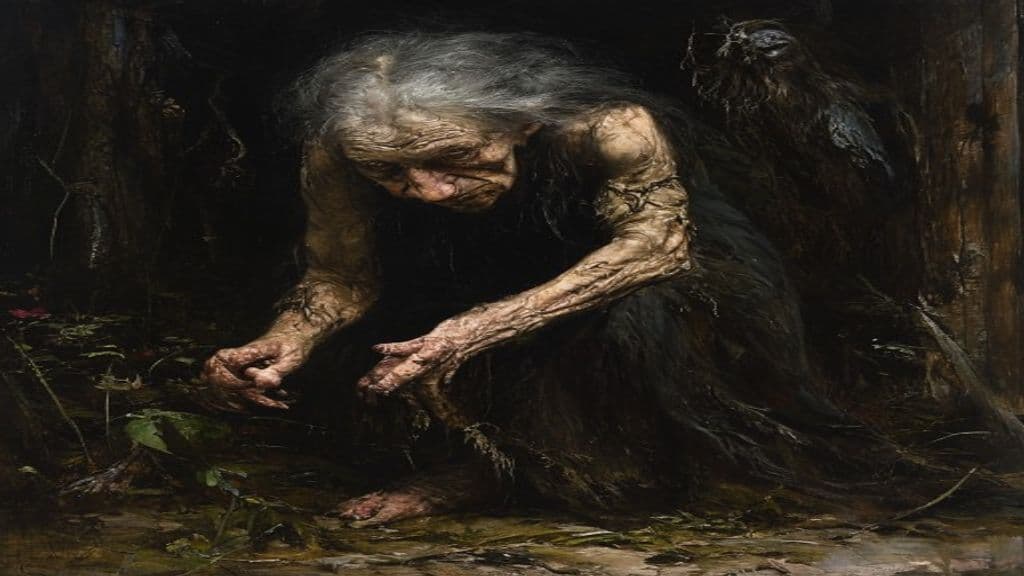
A female house spirit in Slavic folklore that functions as a domestic agent: helpful in well-kept homes and disruptive or dangerous where household morals or order fail. Variants include a domestic (house) kikimora paired with the domovoy and a swamp (bolotnaya) kikimora associated with marshland spirits.
Căpcăun
A monstrous antagonist in Romanian folktales, the căpcăun is typically depicted as a dog-headed ogre who kidnaps and eats people (especially children and young women). It functions narratively as an embodiment of evil alongside other Romanian monsters such as the zmeu and balaur.
Făt‑Frumos
Făt‑Frumos is the archetypal heroic youth in Romanian folktales: a princely, handsome knight-hero who undertakes superhuman trials, travels between the human world and the tarâmul celălalt, and restores order by defeating monstrous foes.
Ileana Cosânzeana
Ileana Cosânzeana is a central feminine figure in Romanian folklore, presented variously as an idealized beautiful princess and as a powerful fairy. She commonly appears as the heroic object of quests (kidnapped by a Zmeu and rescued by Făt‑Frumos) and is associated with healing, floral/vegetal motifs, and astral/seasonal imagery in variant traditions.
Solomonari
Solomonari are weather-controlling magic-workers in Romanian folklore, described as human practitioners trained at a secret school who ride dragons (zmeu or balaur) and cause rain, thunder, or hail. They appear in 19th‑century ethnographic accounts from Transylvania, Bukovina, and adjacent Romanian regions and are associated with an institutionalized craft of magic (Scholomance/Şolomanţă) in several variants.
Morax
Morax is a named spirit in demonological listings described in secondary sources as a high-ranking infernal officer—styled a Great Earl and President of Hell—who commands many legions and is said to teach astronomy and the liberal sciences. The figure is also reused in diverse modern fictional and occult contexts where attributes are adapted.
Morgan le Fay
A mutable figure of the Arthurian tradition variously portrayed as an enchantress, healer, fairy-queen, or human noblewoman. Early accounts emphasize her role as a healer and leader of supernatural women at Avalon; later prose romances often recast her as an ambivalent or antagonistic sorceress in relation to Arthur and his court.
Moritasgus (Apollo Moritasgus)
Moritasgus is a Celtic epithet for a healing deity attested in four inscriptions at Alesia. In two of those inscriptions he is explicitly identified with the Greco‑Roman god Apollo, and his consort is named as the goddess Damona.
Mormo
A Greek child-eating bogeywoman used to frighten children into obedience, sometimes depicted as a shape-shifting female phantom who bit naughty children.
Morphe (μορφή)
Morphe (Greek: μορφή) is a lexical term meaning "form," "shape," or "outward appearance" attested in ancient Greek and discussed in New Testament exegesis. The provided sources show no coherent folkloric or mythic entity named "Morphe"; modern uses of the sequence "Morphe" in brand and project names are likewise non-mythic appropriations of the word or signifier.
Moryana
In Slavic folklore, Moryana is a complex sea spirit who rules the winds and poses a threat to ships. (Note: - The power tier is incorrectly assigned (Ancient) given that it only rules the winds and poses a threat to ships, which would be more consistent with a Greater power tier. - Sensory cues: coastal reg)
Mot
Mot is the Ugaritic/Phoenician personification and divine power of death; in mythic texts he appears as a son of ’El whose residence is a pit and whose appetite for the living brings sterility and conflict with the storm-god Baal.
Mothman
A modern American folkloric figure originating from a cluster of 1966–67 sightings around Point Pleasant, West Virginia. Described in press reports and later retellings as a large humanoid or winged creature with notable eyes, the Mothman legend has been variously interpreted as misidentified wildlife, hoaxing/sensationalism, or a paranormal omen linked in some retellings to the Silver Bridge collapse.
Community Record
- [1]Moroi (Wikipedia). Wikipedia: 'Moroi' entry (summary of Romanian folklore, etymology, variants, and Wlislocki material)wiki
- [2]Wlislocki account (as cited in compiled sources). Wlislocki report as summarized in secondary sources: description of child 'extremely ugly and covered with thick hair, very quickly becoming a moroi.' (cited in the compiled entry)folk
- [3]Etymology notes (Romanian Academy; Éva Pócs) as summarized. Summary noting Romanian Academy suggestion of Old Slavonic mora origin and Éva Pócs' comparison to mare/nightmare figuresacademic