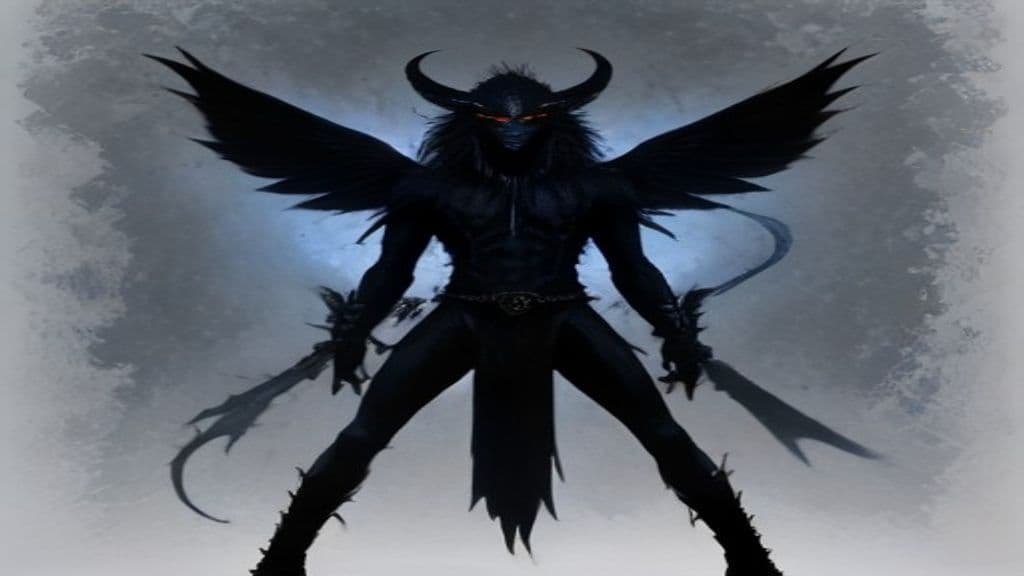
The supplied sources do not provide an origin myth. In the demonological summaries cited Morax appears as a named, ranked spirit in compiled lists of demons—given offices such as Great Earl and President—without a narrative origin provided in the available excerpts.
The provided traditional demonological summaries in the available sources do not give a consistent or authoritative physical description of Morax. Physical details appearing in modern roleplay and fiction are specific to those adaptations and are not corroborated by the classical demonology excerpts supplied.
According to the demonological summaries cited, Morax 'teaches astronomy and all other liberal sciences' and is described as commanding thirty (thirty-two in some accounts) legions of demons. Modern occult commentary repeats the teaching aspect (treating him as a teaching demon). Other detailed powers or behaviors and the truncated continuation in one excerpt are not present in the supplied materials.
Monster (tradition)
A broad cultural category for imagined creatures that transgress natural and social norms. In literature, mythology, religion, and popular culture, monsters mark otherness, danger, or omenatic significance rather than denoting a single, uniform being.
Monster Slayer (Nayenezgani)
Within the limited sources supplied, 'Monster Slayer' is used as an English label on a Wikipedia disambiguation page to refer to Nayenezgani, identified there only as "a character from the Navajo creation myth." The provided materials contain no narrative, descriptive, or ritual information about this figure beyond that single listing.
Moon Rabbit (Maya Tradition)
A mythical figure associated with lunar mythology, said to pound elixir or medicine for mortals and occasionally foodstuffs. (Note: 1. Power tier: Downgrade to Ancient, as while it's associated with lunar mythology, its abilities are not cosmic in scope. 2. Abilities: Add that the contents of the mortar differ among cultural tradi)
Moon god (lunar deity)
A lunar deity is a divine figure representing the Moon or aspects of it; across cultures such deities personify the Moon, its phases, and its governance of the night and may perform varied functions depending on local tradition.
Mopsus
Mopsus is a legendary seer of the Graeco-Anatolian tradition known from archaic Greek poetry and later Anatolian and Phoenician inscriptions. He appears in myth as a prophetic figure—sometimes son of Manto or of Apollo—and in epigraphic records as an eponymous ancestor (Muksa/Muksos) connected to early Iron Age dynastic houses in southern Anatolia.
Morana (seasonal goddess)
A pan-Slavic female figure personifying the death of winter whose ritual demise at winter's end is linked to the rebirth of spring goddesses such as Kostroma, Lada, or Vesna. Sources treat her as an ancient goddess associated with seasonal rites and with dreams.
Morgan le Fay
A mutable figure of the Arthurian tradition variously portrayed as an enchantress, healer, fairy-queen, or human noblewoman. Early accounts emphasize her role as a healer and leader of supernatural women at Avalon; later prose romances often recast her as an ambivalent or antagonistic sorceress in relation to Arthur and his court.
Moritasgus (Apollo Moritasgus)
Moritasgus is a Celtic epithet for a healing deity attested in four inscriptions at Alesia. In two of those inscriptions he is explicitly identified with the Greco‑Roman god Apollo, and his consort is named as the goddess Damona.
Mormo
A Greek child-eating bogeywoman used to frighten children into obedience, sometimes depicted as a shape-shifting female phantom who bit naughty children.
Moroi
A moroi is a revenant or undead spirit in Romanian and neighbouring Central/Eastern European folklore associated with failed birth/death rites and nocturnal harm. Traditions variously describe it as a phantom, a kind of vampire or ghost, or the spirit of an unbaptized infant or malformed child born of supernatural conception.
Morphe (μορφή)
Morphe (Greek: μορφή) is a lexical term meaning "form," "shape," or "outward appearance" attested in ancient Greek and discussed in New Testament exegesis. The provided sources show no coherent folkloric or mythic entity named "Morphe"; modern uses of the sequence "Morphe" in brand and project names are likewise non-mythic appropriations of the word or signifier.
Moryana
In Slavic folklore, Moryana is a complex sea spirit who rules the winds and poses a threat to ships. (Note: - The power tier is incorrectly assigned (Ancient) given that it only rules the winds and poses a threat to ships, which would be more consistent with a Greater power tier. - Sensory cues: coastal reg)
Community Record
- [1]Morax (demon) — Wikipedia (excerpted). 'Morax, also spelled ForaiiMarax, or Farax, is a Demon, Great Earl, and President of Hell, having thirty (thirty-two, according to other authors) legions of demons under his command. He teaches astronomy and all other liberal sciences, and g…' (excerpt)wiki
- [2]Wikidata: Morax. Wikidata summary: 'president of Hell in some demonologies.'wiki
- [3]List of demons in the Ars Goetia — Wikipedia. Reference to Morax within the milieu of named Goetic spirits and ranked demonological listings (listed among other named office-bearing spirits).wiki
- [4]May 2021 Tarotscope — demonolatry.org. Modern occult commentary: 'Morax is a teaching demon and one who takes lessons seriously. You should too or youre likely to see this problem again.' (Tarotscope entry paraphrase/quote as cited in research notes).other
- [5]Thar Shaddin — Morax (roleplay character sheet excerpt). Roleplay excerpt giving a modern fictional physical description ('Morax is thin, but noticeably muscular').literary
- [6]Wikiplot fragment (fictional excerpt). Fictional narrative excerpt: 'Morax attacks and kills Gavin.'literary