
In-universe, Mr. Tumnus is an established faun living near the lamp-post in the woods of Narnia. During the White Witch's reign he is subject to her decrees and lives as a social, civic creature within Narnia's ordered society: he entertains guests in his cave, is susceptible to arrest by the Witch's agents for fraternizing with humans, can be petrified by the Witch's magic, and is later restored when Aslan returns. Authorial/originary note: C. S. Lewis described the initial image that inspired the story as a faun carrying an umbrella and parcels through a snowy wood; this is the out-of-universe origin of the character's conception as recorded in the sources.
Lewis's text describes Tumnus as a half-human, half-goat figure with reddish skin, curly hair, brown eyes, a short pointed beard, horns on his forehead, cloven hooves, goat legs with glossy black hair, a tail, and as only a little taller than Lucy. He is first seen carrying an umbrella and parcels. Adaptations (film/TV) vary in coloration and small features (for example, the 2005 film depicts a shorter, stubbly tail and different coloration), but these are explicitly presented in the sources as variant portrayals of the core textual description.
Tumnus speaks, plays a flute, entertains and shelters guests in his cave, and shows complex moral agency: he confesses to Lucy that he is under order from the White Witch to hand over humans but cannot bring himself to do so and guides Lucy back to the lamp-post. He can be arrested (by Maugrim, the Witch's chief agent) and charged with high treason for harbouring humans, can be petrified by the White Witch's magic, and is later restored by Aslan. The sources do not attribute any individual magical powers to him beyond the capacities documented above and his status as an anthropomorphic Narnian creature.
Weaknesses
- conditionSubject to the White Witch's law and magic (vulnerable to arrest and petrifaction)
Wards
None recorded.
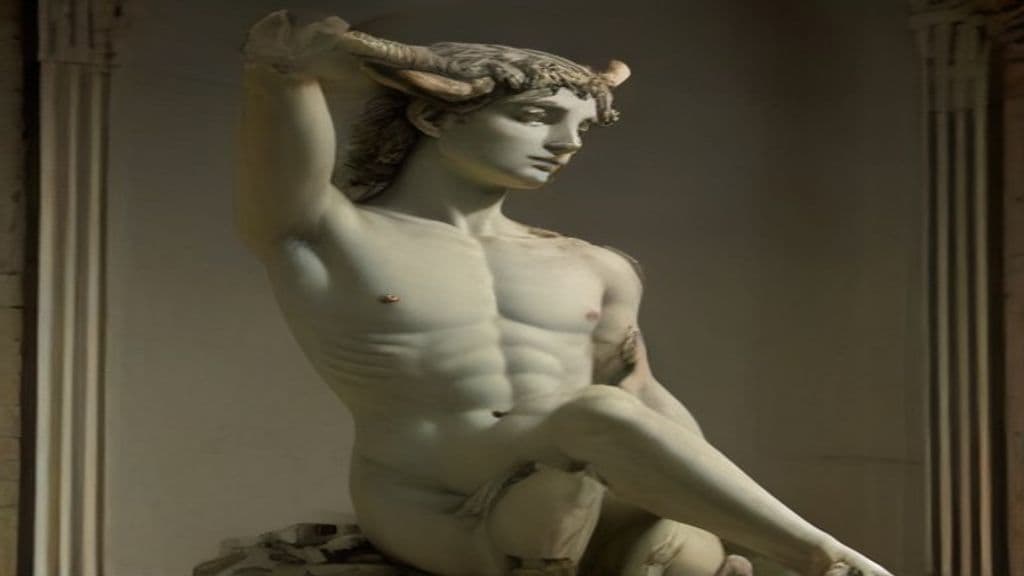
Faun
A faun is a Roman mythic being combining human and goat-like features, originally conceived as rustic local spirits (genii) of the countryside and later visually conflated with Greek satyrs and the god Pan; they are associated with pastoral fertility, revelry, and an ambivalent role toward travelers in wild places.
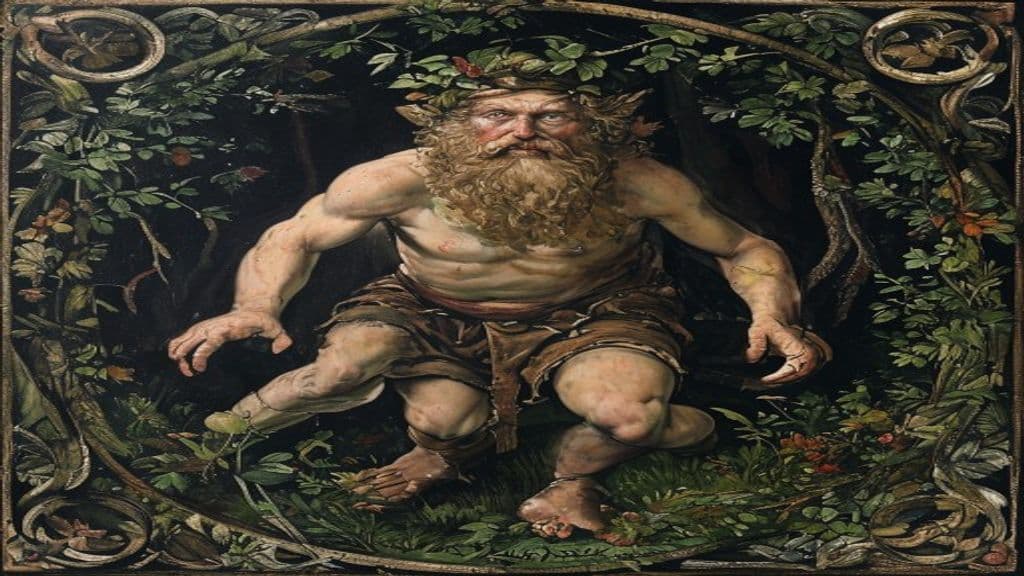
Puck
Puck is a northwest European liminal spirit occupying a space between household sprite and wild fairy trickster. Portrayed as a domestic helper who expects food offerings and as a nocturnal jester of the fairy court, Puck performs both useful chores and mischievous pranks in folklore and literature.
Lord Drinian
Lord Drinian is a human nobleman and sea-captain in C. S. Lewis's Narnia. He serves as captain of the Dawn Treader under King Caspian X, later becoming a trusted advisor and attendant in the king's later years.
Prince Rabadash
Prince Rabadash is a fictional human royal antagonist from C. S. Lewis's novel The Horse and His Boy. He is a Calormene prince who plans and attempts an invasion of Archenland during the Pevensie reign of Narnia, and is later depicted unfavorably in the narrative.
Moussa Gname
A revered culture hero of the Songhai people, celebrated for his pivotal role in shaping West African folklore and mythology. (Note: * Power tier: Unclear, but likely Lesser or Minor Spirit given the lack of specific abilities * Origin story: Should be revised to "Origin unknown" as no detailed origin story is found in the source m)
Mozagro
Mozagro is attested in the provided sources as a modern toponym and commercial name rather than a supernatural being. It appears as a geographic feature (Pico Mozagro referenced in pastoral/cattle imagery), a triangulation station in Cieza, Spain, and as the name of a contemporary digital agribusiness marketplace serving smallholder farmers. The supplied materials contain no folkloric, mythic, or supernatural descriptions of Mozagro.
Mozas del Agua
Mozas del Agua (literally "Water Lasses") are a named category of Cantabrian water-associated female supernatural beings appearing in regional folklore source lists. The supplied sources list them alongside other northern Iberian water-fairies (Anjanas, Xanas/Janas, lamias) but provide no independent narratives, iconography, or documented rituals specific to them.
Moʻo (example: Kihawahine)
Moʻo are identified in the supplied sources as Hawaiian lizard deities; the supplied material gives Kihawahine as an exemplar, described as a shapeshifting lizard goddess whose deification originated when the bones of a chiefly daughter were deified and whose home was the wetland pond Mokuhinia on Mokuʻula.
Mr. Beaver
Mr. Beaver is a fictional anthropomorphic beaver character who appears in the secondary world of C. S. Lewis's The Chronicles of Narnia. The provided sources identify him only as a character entry in lists/databases of Narnia characters.
Mtskhetos
Epic hero and legendary founder of the city of Mtskheta in Georgian mythology, son of Kartlos. (Note: - Power tier: Minor Spirit (since there's no indication of deific or powerful regional abilities) - Abilities and behaviors: lack of specific information on his abilities and behaviors means they shou)
Muhnochwa
The 'face-scratcher' of Uttar Pradesh — in 2002 a mass panic gripped hundreds of villages as people reported waking with facial scratches from an invisible entity, triggering mob violence and one of modern India's most documented supernatural hysteria events.
Mujina (貉)
A Japanese folkloric shapeshifting creature associated with badger-like and tanuki-like animals; classed among yōkai, mujina perform transformations, illusions, and pranks, and in some tales repay kindness or enact retribution when harmed.
Muldjewangk
A water-creature of Ngarrindjeri tradition associated with the Murray River and Lake Alexandrina. Described variously as merfolk-like or a gargantuan monster, Muldjewangk figures appear in stories that warn of river dangers, wreck fishing gear, and in at least one account attack a steamboat.
Mullissu
Assyrian goddess and consort of Asshur, associated with fertility, marriage, and family. (Note: 1. Power tier: Based on her association with a major deity (Asshur) and potential identity with Ninlil, a goddess on par with Enlil, Mullissu's power tier should be Primordial or Ancient, not Greater.)
Community Record
- [1]Mr. Tumnus - Wikipedia. Wikipedia article 'Mr. Tumnus' (accessed as provided in research notes)wiki
- [2]The Lion, the Witch and the Wardrobe - Project Gutenberg Canada text. C. S. Lewis, The Lion, the Witch and the Wardrobe (Project Gutenberg Canada text as cited in research notes)literary
- [3]The Lion, the Witch and the Wardrobe (1988 TV serial) - Wikipedia. Wikipedia entry on 1988 TV serial adaptation (noting media portrayals cited in research notes)wiki
- [4]Mr Tumnus Plays Piano | ruk.ca. Adaptation/derivative references to musical portrayals of Mr. Tumnus as cited in the research notesother