
Within the Mahabharata narrative the Pandavas are the five sons of King Pandu by his two wives Kunti and Madri and—crucially—of different gods invoked by Kunti's boon from the sage Durvasa. Kunti, having been granted a mantra by Durvasa that allowed her to bear a son by any god she respected, used it to invoke Dharmadeva (father of Yudhishthira), Vayu (father of Bhima), and Indra (father of Arjuna); Madri invoked the Ashvins and bore the twins Nakula and Sahadeva. The patronymic Pāṇḍava literally marks them as 'sons/descendants of Pandu'. Their births occur against the background of Pandu's curse and the dynastic politics of the Kuru court; they are raised in Hastinapura under the guidance of elders and teachers such as Bhishma, Vidura, and Kripa.
Descriptions in the sources treat each brother individually and link physical features to moral or social qualities. Yudhishthira is slender, with a prominent nose, large eyes, and a complexion described as like 'pure gold'. Bhima is portrayed as tall and powerful—long-armed, plump, fair-golden (gaura) in complexion, and ferocious in expression. Arjuna is dark-complexioned (syama) and exceptionally handsome, famed as the greatest of archers. Nakula is praised for outstanding handsomeness (Draupadi calls him 'the most handsome person in the whole world'), and Sahadeva is noted for a heroic and wise bearing though his precise physical details receive less emphasis. These appearances are given in epic descriptive passages and are tied to each brother's character and social role.
The brothers are mortal princes whose exceptional qualities are attributed to their divine paternity and rigorous training. Yudhishthira, as son of Dharmadeva, embodies justice, ethical knowledge, and claims to rightful rule. Bhima, son of Vayu, is famed for prodigious physical strength and ferocity in battle. Arjuna, son of Indra, is the peerless archer and model of martial self-control and courage. The twins Nakula and Sahadeva, born of the Ashvins, are lauded for handsomeness, skill (Nakula as swordsman), wisdom, and counsel (Sahadeva for intelligence and eloquence). Behaviorally, they undergo royal education under Bhishma, Vidura, and Kripa; enter into the shared marriage with Draupadi; suffer exile after losing a game of dice (twelve years plus one year in hiding); and lead the Pandava cause in the climactic Kurukshetra War, aided politically and strategically by Krishna.
Weaknesses
- conditionhuman mortality and moral fallibility
- conditionvulnerability to political manipulation (e.g., loss in game of dice leading to exile)
Wards
- othernone (no canonical magical wards against the Pandavas are cited in the provided sources)
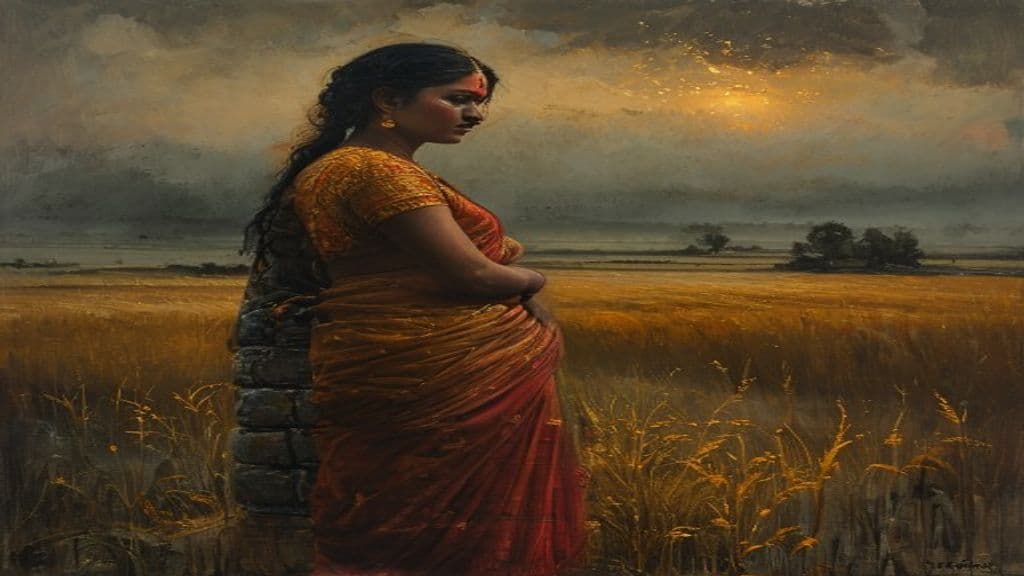
Bhunni
The female guardian-spirit of agricultural fields in Bihar and eastern UP — her presence ensures fertile soil and good harvest, but she is territorial and punishes those who plough without permission, steal crops, or use chemical methods that poison the soil she inhabits.
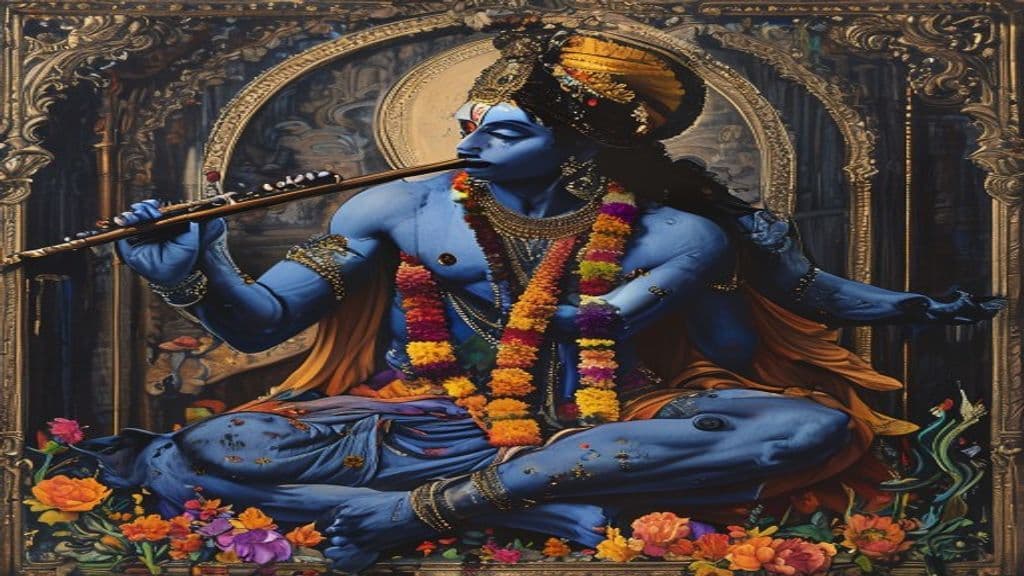
Krishna
Krishna (Sanskrit: Kṛṣṇa) is a major Hindu deity presented in the supplied sources both as the eighth avatāra of Vishnu and, in many traditions, as the Supreme Being (Svayam Bhagavān). He appears in a range of roles—child, cowherd, lover, charioteer, teacher and divine hero—and his life episodes (Krishna-līlā) are central to bhakti devotion, performance arts, and pilgrimage traditions.
Panagia Agiosoritissa (Maria Advocata)
The Panagia Agiosoritissa, known in Latin as Maria Advocata, is an iconographic type of the Virgin Mary in Byzantine and related Christian devotional art. It depicts the Theotokos alone, shown slightly in three-quarter view with both hands raised in a gesture of prayer or intercession, and functions as an image of Mary the intercessor rather than as an autonomous supernatural being.
Panakawan
A class of supernatural entities serving as clown servants to heroes in Javanese wayang, personifying qualities of humility and loyalty. (Note: - Power tier should be Ancient (deity-level) not Primordial (cosmic) - Summary could be more specific about the entity's role in Javanese wayang, e.g., "serve as clown servants to heroes" - Sensory cu)
Panbabylonism (Mesopotamian tradition)
A school of thought that emerged in Mesopotamia, emphasizing the idea that cultures and religions are derived from Babylonian myths. (Note: 1. The power tier should be Primordial, not Minor Spirit (since it's a philosophical/academic concept rather than a supernatural entity). 2. Origin story: incorrect - Panbabylonism actually emerged am)
Panchamukha
A Hindu deity or manifestation with five faces, representing the multifaceted nature and attributes of various divine beings. (Note: 1. Power tier should be Ancient (deity-level) to match the description of representing various divine beings. 2. Add sensory cues for detecting Panchamukha's presence, such as unusual iconography or m)
Pancratis
Pancratis (Ancient Greek Παγκρατίς / Παγκρατώ) is a woman in Greek myth, daughter of Aloeus and Iphimedeia and sister of Otus and Ephialtes. In surviving traditions she is captured by Thracian raiders during a Dionysian celebration; her beauty provokes rivalry among captors and her fate differs between accounts (marriage and later rescue in one version; the mutual killing of rival captors in another).
Pandareus
Pandareus is a mortal figure in Greek mythic tradition, son of Merops and a nymph, variously placed in Miletus, Ephesus or associated with Crete. He is best known in surviving accounts for stealing a sacred/golden dog that guarded the infant Zeus and for familial tragedies that in some variants end in divine punishment or metamorphosis (including transformation into a sea-eagle).
Pandion (hero)
Pandion is the eponymous Athenian hero of the Attic tribe Pandionis, venerated at a heroon in Athens and usually identified in ancient tradition with one or the other legendary kings called Pandion. He functions as a civic ancestor whose name anchors tribal identity and local cultic commemoration rather than as an actively described supernatural agent.
Pandion I
Pandion I is a legendary early king of Athens in Greek mythic-historical tradition, presented as a grandson of Hephaestus and a node in Athenian genealogies that link royal houses, priesthoods, and tribal eponyms to a mythic past.
Pandion II
Pandion II (Ancient Greek: Πανδίων) is a legendary king in Greek mytho-historical tradition, presented in Athenian royal succession lists as a heroic-age ruler and ancestral figure. He is portrayed as son of Cecrops II, father of Aegeus and others, exiled by rivals to Megara where he became king and received local hero-cult commemoration.
Pandubba
The 'water-drowner' of UP and Bihar — a jal pret (water ghost) that lurks in wells, ponds, and river bends, grabbing the ankles of swimmers and washing those who lean over still water. The most feared water-edge presence in Bhojpuri folk belief.
Pangatoru (Māori canoe)
A traditional Māori ocean-going canoe used in the migrations that settled New Zealand. (Note: 1. Power tier should be Minor Spirit or at least Lesser (it's not described as having supernatural abilities), and "Greater" is too high. 2. No information about sensory cues, wards, or weaknesses is )
Pania (Pania of the Reef)
Pania is a sea-dwelling maiden from a Māori narrative linked to the reef off Napier on the east coast of New Zealand's North Island. The story relates her secret marriage to a human, Karitoki, the loss of her right to return to the sea after being given cooked food, and the guardianship of the area by her son Moremore, a taniwha.
Community Record
- [1]Pandava (Wikipedia). Wikipedia contributors. 'Pandava.' Wikipedia, The Free Encyclopedia.wiki
- [2]Mahabharata Episode 53: The War Begins (archive summary). Archive.org: Mahabharata Episode 53: The War Begins (episode summary and assembly description).other
- [3]Prachand Pandava Natak Of Raj Shekhar Prefatory Material. Prefatory material to Prachand Pandava Natak (archive record).other
- [4]Pandava (Wikidata). Wikidata entry for 'Pandava' (notes alternate uses including a taxonomic homonym).other