Pandareus is presented in ancient sources as the son of Merops and a nymph and as descending in some accounts from Hermes-related lineage. Multiple localized traditions attach him to different cities (Miletus, Ephesus) or situate his notable deed on Crete: he is said to have stolen a sacred/golden dog that guarded the infant Zeus. Variants report either Pandareus alone or Pandareus together with Tantalus attempting the theft; in some tellings Hermes retrieves the dog for Zeus, and divine punishment follows. Other narrative strands place Pandareus in family episodes (as father of daughters including Cleothera and Merope and relation to Polytechnus and Aëdon) that end in metamorphosis or death.
Ancient sources provide no consistent description of Pandareus' human appearance. In the Polytechnus-linked variant he and members of his household are transformed into birds: Pandareus becomes a sea-eagle, his wife a kingfisher, and his son a hoopoe. No surviving detailed portrait of his ordinary human body (age, clothing, marks) is attested in the cited material.
Surviving accounts portray Pandareus as a human actor rather than an innate supernatural being. His notable behaviors include theft (the seizure of a sacred/golden dog), flight as a fugitive in some variants (fleeing to Athens and later Sicily), and decisions as paterfamilias that affect his daughters' fates. He is said in one detail to have been favored by Demeter, who granted him immunity to indigestion regardless of how much he ate; otherwise he is depicted as subject to divine intervention and punishment rather than possessing inherent magical powers.
Weaknesses
- conditionvulnerability to divine judgment
Wards
None recorded.

Tantalus
Tantalus is a figure of ancient Greek myth: a once-mortal king punished eternally in Hades/Tartarus as an exemplar of hubris and the consequences of violating divine law. His canonical image—standing in water beneath fruit that recedes or branches that elude him, or beneath a suspended rock—functions proverbially to signify unreachable gratification.
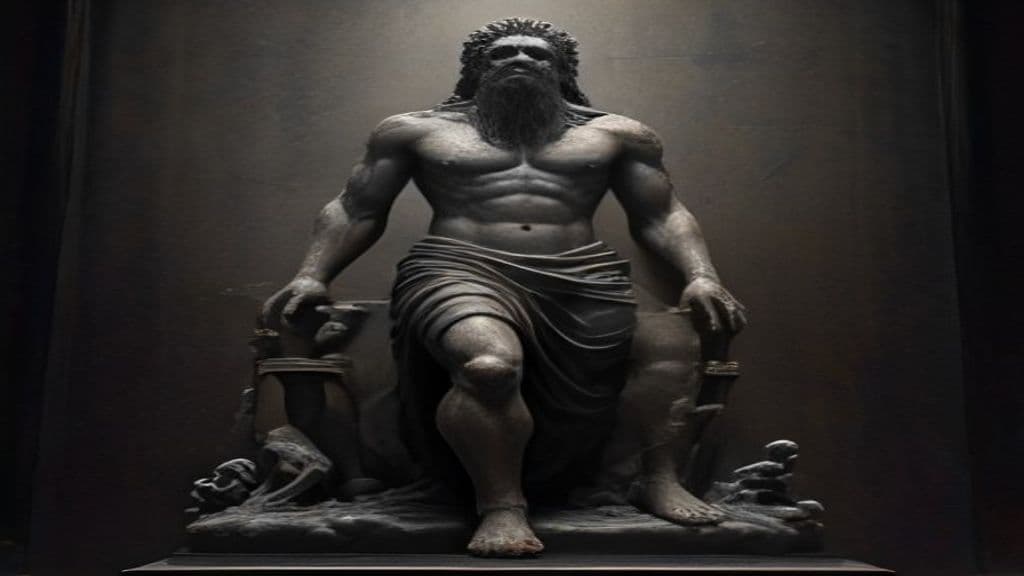
Hephaestus
Hephaestus is the Greek god and divine artisan of smithing, metalwork, controlled fire, and volcanism; he functions as the blacksmith of the Olympian gods, maker of their tools and weapons, and is the focus of localized cults associated with hearths and manufacturing centres (notably Lemnos and Athens).

Zeus
Zeus (Ancient Greek: Ζεύς) is the supreme deity of the classical Greek pantheon, a sky-and-thunder god who rules as king of the gods on Mount Olympus and functions as a sky‑father who assigns roles among the immortals.
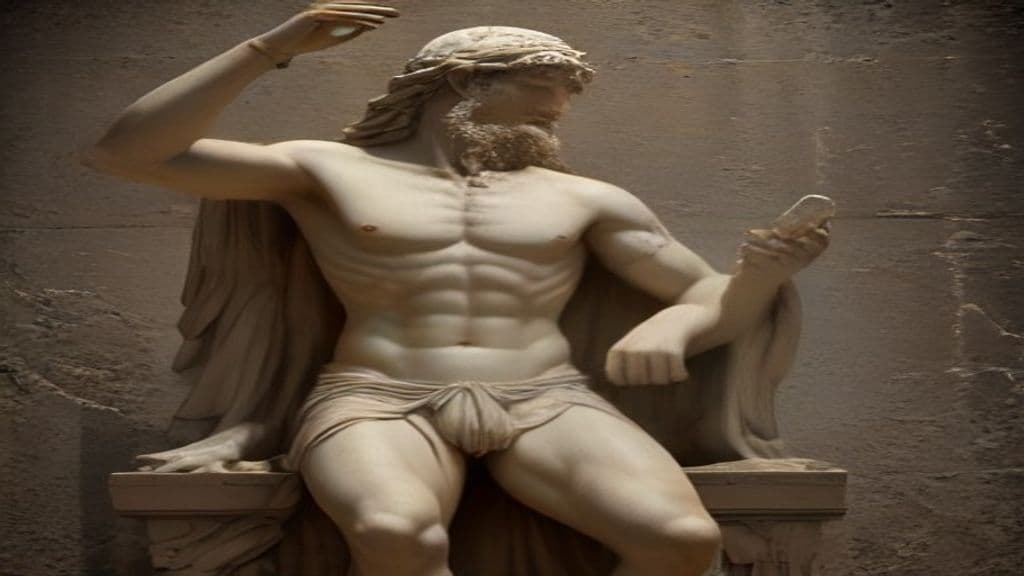
Hermes
Hermes is an Olympian god in ancient Greek religion who functions as the herald of the gods, an intermediary between mortal and divine realms, and a psychopomp guiding souls to the afterlife. He is associated with travel, boundaries, commerce, thieves, oratory, and liminality; in Hellenistic contexts he is syncretized with Egyptian Thoth as Hermes Trismegistus.
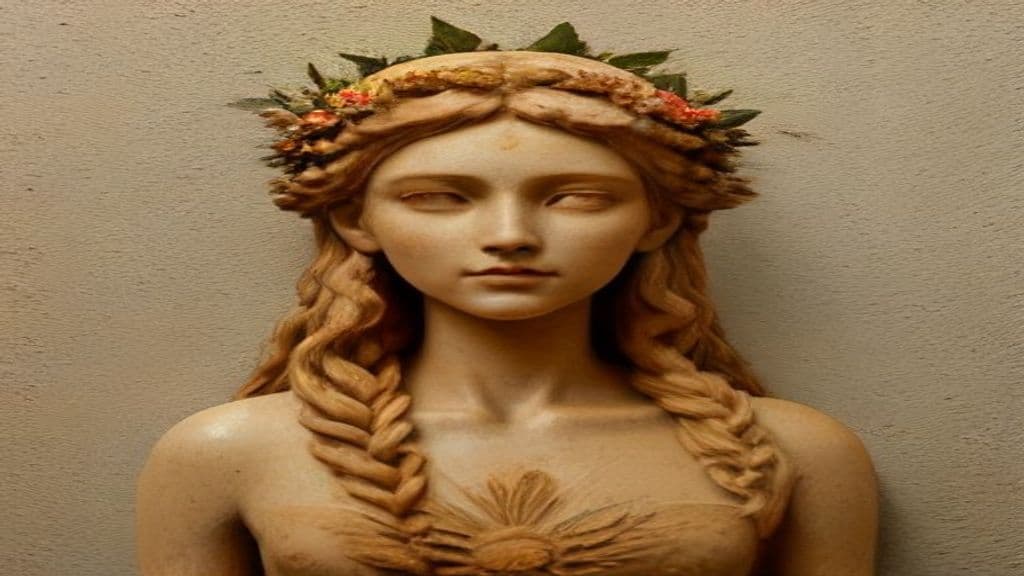
Demeter
Demeter is an Olympian goddess of ancient Greek religion who presides over agriculture, grain, and the fertility of the earth. She functions as a divine mother-figure and guardian of social customs, sacred law, and the cycle of life and death, and is central to the Eleusinian Mysteries alongside her daughter Persephone.

Aphrodite
Aphrodite is a major ancient Greek goddess associated with love, lust, beauty, pleasure, passion, procreation, and related social and cosmic forces. She is counted among the principal Olympian deities with major cult-centers (Cythera, Cyprus, Corinth, Athens), celebrated annually at the Aphrodisia, and syncretized with the Roman Venus.
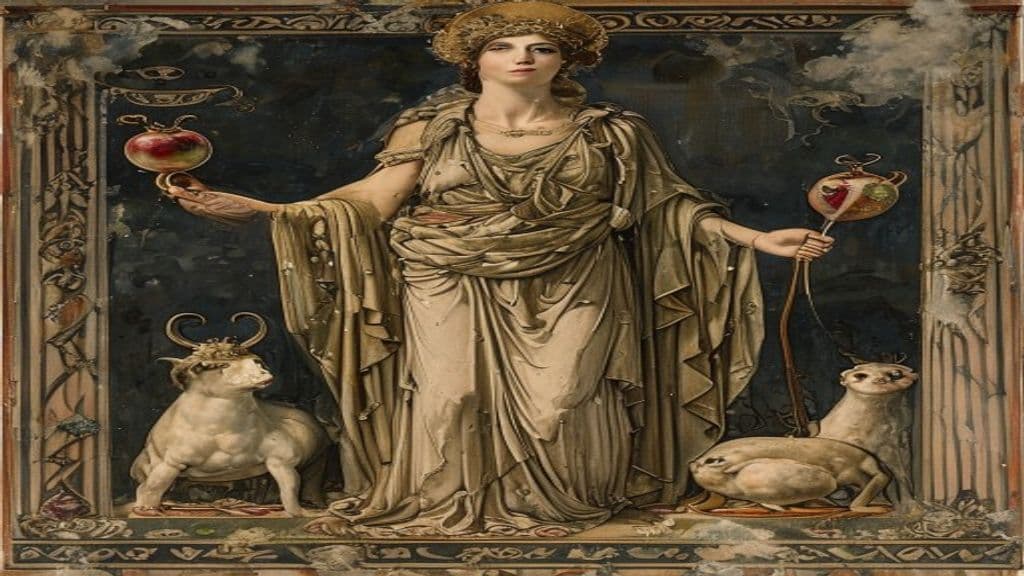
Hera
Hera is an ancient Greek goddess, queen of the Olympian gods, and a principal tutelary deity of marriage, women, and family. She functions in myth and cult as protector of lawful marriage and women in childbirth, a civic tutelary figure (notably of Argos), and a sometimes-jealous consort of Zeus with archaic fertility associations in certain local rites.

Athena
Athena is a major ancient Greek goddess associated with wisdom, handicraft (notably weaving), and warfare; she serves as a tutelary protector of cities—most prominently Athens—and is central to myth, cult, and civic identity in the Greek world.
Community Record
- [1]Pandareus — Wikipedia. Wikipedia contributors, 'Pandareus,' Wikipedia, The Free Encyclopedia.wiki
- [2]Pandareus — Wikidata. Wikidata entry Q1428276, 'Pandareus'.wiki