
In the Homeric tradition Asteropaios is presented as a mortal Paeonian leader, son of Pelagon and grandson of the river-god Axios. His lineage connects him genealogically to a river-divinity (Axios) but he is portrayed as a human warrior who arrived at Troy shortly before the events narrated in the Iliad and fought as leader of a Paeonian contingent allied with the Trojans.
Classical sources do not supply an extended physical portrait beyond martial details and possession of notable arms. Homeric narration highlights his role as a Paeonian leader and warrior; he is recorded as throwing two spears at once and as owning valuable equipment (a bronze-and-tin corslet and a silver-studded sword), the latter later awarded as prizes at Patroclus' funeral games. No detailed bodily description (height, facial features, or clothing beyond his corslet and sword) is given in the supplied sources.
Documented Homeric features emphasize martial skill rather than supernatural power. He is described as ambidextrous and capable of throwing two spears simultaneously; in Iliad Book XXI this ability allows one spear to strike Achilles' shield while the other grazes Achilles' forearm and draws blood. He functions as leader of a Paeonian contingent (participating in the assault in Book XII) and his courage in Book XXI is narrated as being stimulated by river-divine activity (the river-god Scamander/Xanthos, angered by Achilles, instills courage in him). Ultimately he is mortal and is slain by Achilles.
Weaknesses
- conditionmortality (can be slain in battle)
- conditionrecent arrival at Troy (sources note he had been at Troy less than two weeks)
Wards
None recorded.

Naga
Divine serpent beings of Hindu, Buddhist, and Jain cosmology — powerful guardians of water, earth, and underground treasures. Revered as deities in South and Southeast Asia.

Djinn
The class of supernatural beings created from smokeless fire in Islamic cosmology — a parallel civilization to humanity, capable of belief or unbelief, with their own prophets, society, and judgment before God.
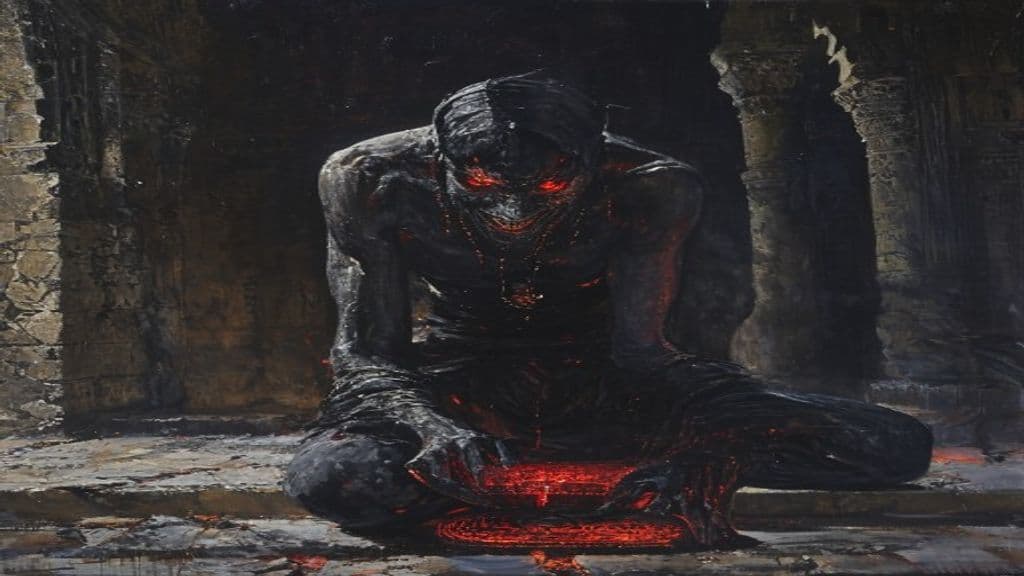
Shaitan
A class of corrupted djinn who follow Iblis and dedicate themselves to leading humans astray — distinct from Iblis himself, the Shayatin are a species of evil djinn who whisper doubts and temptations into the minds of the living.
Antenor
Antenor is a Trojan elder and counsellor in the epic tradition of the Trojan War. Portrayed in Homeric passages and later literature as a prudent diplomat and host, he advocates negotiation (notably advising the return of Helen) and participates in Trojan public councils and hospitable rites.
Automedon
Automedon (Ancient Greek Αὐτομέδων) is a named mortal charioteer in the Homeric epic tradition, best known as the trusted driver of Achilles who manages the immortal horses Balius and Xanthos and acts as a combatant in episodes of the Iliad. He appears in scenes surrounding Patroclus' death and in later Roman reference (Virgil's Aeneid).
Axylus
Axylus (Ancient Greek: Ἄξυλος) is a Trojan warrior featured in Homer's Iliad (Book VI). Portrayed as a wealthy and hospitable man from Arisbe, he is slain in battle by the Greek warrior Diomedes, a brief episode used by Homer to underscore themes of hospitality, mortality, and the costs of war.
Calesius
Calesius (Greek Καλήσιος) is a minor human figure in the Homeric epic: the attendant and charioteer of Axylus who is killed alongside his master on the Trojan battlefield in Book VI of the Iliad. He appears as a named mortal illustrative of loyalty and the human cost of war, with no supernatural attributes in the cited sources.
Cicones
The Cicones (Greek Κίκονες, Latinized Cicones or Ciconians) are a Homeric Thracian tribe associated with the town of Ismarus (Ismara) on the south coast of Thrace. In epic sources they appear as a martial human people who repel Odysseus' raiders after the sack of Ismarus (Odyssey Book IX) and are listed among allies in the Iliad; they are treated as a human ethnic/political group rather than as supernatural beings.
Dardanians (Trojan)
A named human people or subgroup in the Homeric Trojan tradition, repeatedly distinguished from the Trojans in epic formulae (e.g., the Iliad). Later Roman poets and classical writers used the ethnonym in genealogical and territorial discourse (Dardania, Dardanus).
Demoptolemus
Demoptolemus (Ancient Greek: Δημοπτόλεμος) is a mortal figure named among the suitors of Penelope in the Homeric epic tradition. He is listed as one of the suitors present in Odysseus’s hall and is reported in the narrative tradition to have been killed during Odysseus’s slaughter of the suitors (Odyssey Book XXII).
Euphorbus
Euphorbus is a named mortal Trojan youth in the Homeric epic tradition who wounds Patroclus and is later killed by Menelaus; in later classical anecdote he becomes a figure in stories of transmigration of souls in which his shield is said to be recognized in a temple.
Eurycleia
Eurycleia is a mortal household nurse and longtime attendant in the Homeric tradition, famed as the wet-nurse of Odysseus and a trusted domestic figure who recognizes Odysseus on his return by a scar and keeps his secret. She functions as an intimate caregiver, keeper of household memory, and an agent of domestic authority within Odysseus's household in Ithaca.
Eurycleia of Ithaca
Eurycleia is the aged wet-nurse and long-serving household attendant of Odysseus in the Homeric tradition. Portrayed as a loyal, discreet domestic servant, she functions as caretaker, keeper of household secrets, and intermediary within Odysseus's oikos on Ithaca rather than as a supernatural being.
Laertes
Laertes is the mortal father of Odysseus in the Homeric tradition, an aged Ithacan farmer/retired king who embodies ancestral authority, patronymic identity (Odysseus = Laertiades), and appears in the Odyssey's recognition and post-suitors conflict scenes.
Meriones
Meriones is a mortal Cretan hero of the Trojan War cycle in Greek epic tradition, known as a skilled warrior, charioteer and companion of Idomeneus. He appears in Homeric rosters and narratives (notably the Iliad) and was traditionally associated with a hero-tomb and local cult at Knossos (Cnosus).
Community Record
- [1]Asteropaios. Wikipedia entry 'Asteropaios' (summary of Homeric references, name etymology, ambidexterity, genealogy, funeral games prize)wiki
- [2]AXIUS (Axios) - Macedonian River-God of Greek Mythology. Theoi: entry on the river-god Axios quoting Asteropaios' self-identification (Paeonia origin and Axios lineage)literary
- [3]4805 Asteropaios (asteroid). Wikipedia entry noting modern astronomical naming after the Homeric herowiki
- [4]The mitoses of Akhilleus (Rutgers thesis excerpt). Rutgers thesis fragment referenced in notes for an interpretive claim about the narrative of Asteropaios' death (marked interpretive/uncertain in source material)academic