
The modern name Pillywiggin (plural pillywiggins) appears in late-20th-century folkloric compilations; Nancy Arrowsmith's 1977 Field Guide to the Little People is cited in available sources as the first documented printed appearance and Arrowsmith suggested (as a hypothesis) a Dorset origin for the name. Compilers and modern authors place pillywiggins within the broader British and Irish 'little people' tradition as a class of very small flower-fairies or nature-spirits that personify the 'divine essence of plants.' Later esoteric writers have incorporated the pillywiggin concept into elemental fairy taxonomies and fictional elaborations, but these are presented in the sources as modern expansions rather than as demonstrably older folk belief.
In the compiled descriptions pillywiggins are consistently characterised as very small, winged fae associated with flowers. Modern accounts and illustrations emphasize butterfly- or dragonfly-like wings and antennae, multicoloured/butterfly attributes, and portrayals that allow for variability in size (some modern sources note they are tiny and may be comparable to the size of a bee or subject to change). Pierre Dubois and other recent compilers describe them as 'wonderfully beautiful' and often depict them in children's plates and storybooks as diminutive, winged flower-spirits rather than as humanoid giants.
Folkloric and modern-compilation sources attribute largely ecological, social and seasonal behaviours rather than overt magical powers: pillywiggins eat dew and pollen, live in trooping groups, frolic and dance among wildflowers, and act as guardians or personifications of small flowering plants. They are described as indifferent to humans—ignoring people for the most part though sometimes joining human celebrations such as weddings. Some modern esoteric authors classify them among 'elemental fairies' and add narrative details (for example a named queen 'Ariel' or bat-riding) but such elements are treated in the sources as later additions and not as core traditional attributes.
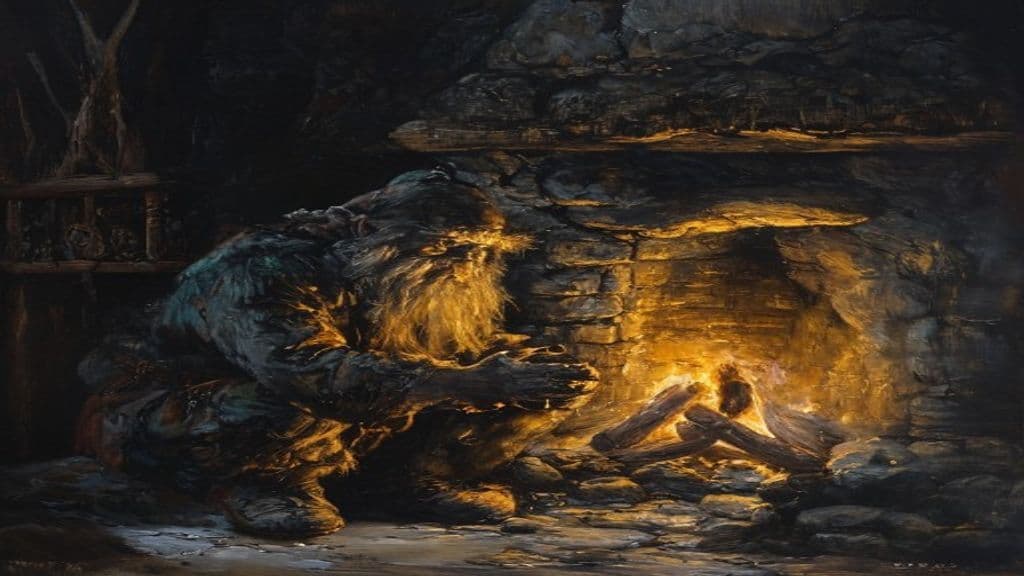
Domovoi
The house spirit of Slavic tradition — a small, invisible guardian of the home bound to a specific dwelling and its family. Protective when respected; dangerous when insulted or forgotten.
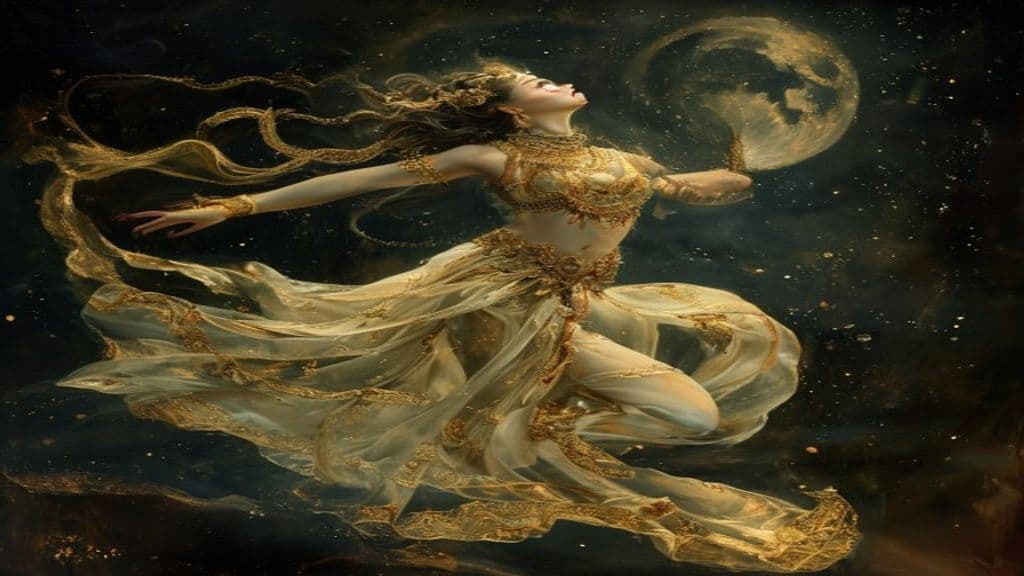
Apsara
Celestial dancers and water nymphs of Hindu cosmology — beautiful semi-divine beings who dance at the court of Indra and, by his command, descend to earth to distract sages from excessive asceticism.
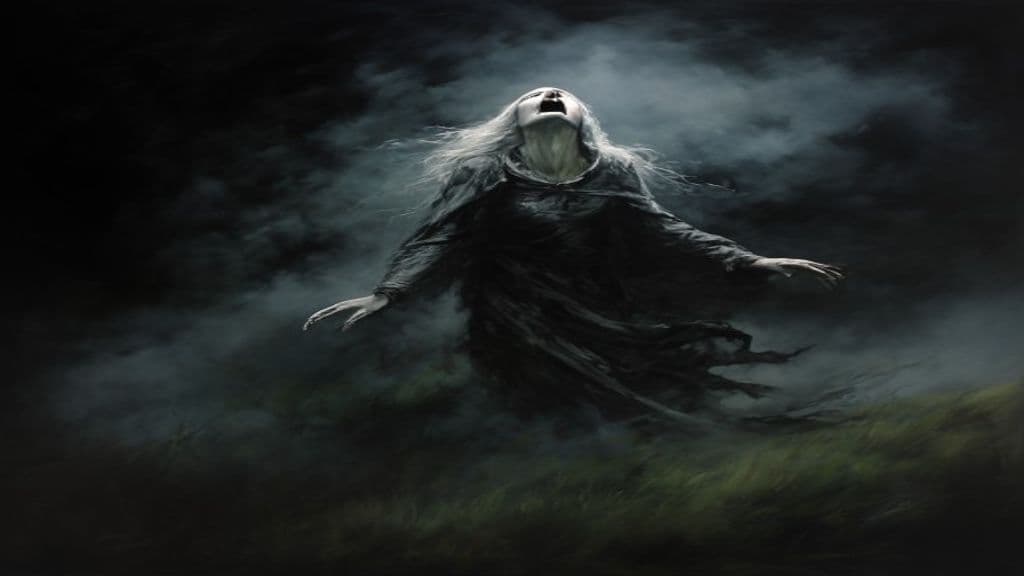
Banshee
A female spirit of Irish and Scottish folklore whose wail heralds an impending death in a family of Gaelic descent. Not a cause of death — a witness to it.

Nisse (tomte / tomtenisse / tonttu)
A Scandinavian household and farmstead spirit tied to a particular homestead; a small, human‑like custodian who performs chores, protects livestock and property in return for annual ritual food offerings (notably Yule porridge), and who can become dangerous if offended or neglected.
Alp-luachra
Alp-luachra is an Irish folkloric fairy described as an invisible being that consumes half of a person's nourishment by taking the unseen 'pith' or 'quintessence' of food; accounts say it appears in the form of a newt and crawls down a sleeping person's mouth at water margins.
Biróg
Biróg (also Biroge, Birog of the Mountain) is a female supernatural helper in Irish narrative tradition who aids Mac Cinnfhaelaidh/Cian in gaining access to the imprisoned Ethniu and rescues the surviving infant of that union; later retellings variably portray her as a leanan sídhe (female familiar spirit), a filidh (poet/seer), or a druidess.
Cat sìth
A feline supernatural being in Celtic folklore, especially Scottish tradition, described in some accounts as a large black cat with a white spot on its chest associated with the fairy/otherworld; alternative traditions identify it as a witch able to transform into a cat up to nine times.
Clurichaun
A solitary Irish fairy-like household and cellar spirit associated with drinking places (breweries, pubs, wine cellars). He is a heavy drinker and smoker, a mischievous trickster who can also act as a protective domestic spirit for a household that tolerates him; accounts are primarily from 19th-century collectors and later summaries.
Crom Dubh
Crom Dubh is a fluid mythological and folkloric figure from Irish tradition, variously represented as a remnant cultic god, a pagan chieftain or robber, a servant-figure, and the focal figure of seasonal first-fruits rites (Crom Dubh Sunday). In later narratives he is frequently framed as an antagonist subdued or reinterpreted by St. Patrick.
Far darrig (fear dearg)
A solitary Irish faerie-class trickster traditionally called fear dearg ('Red Man'), the far darrig is noted for practical—and sometimes gruesome—jokes, a reputed connection to changelings and nightmares, and a characteristic red coat and cap. Accounts portray it as an ambivalent domestic/liminal being that can bring good luck if placated but imaginative punishments if offended.
Gancanagh
A male member of the Irish little people traditionally portrayed as a seductive, fairylike 'love-talker' who courts and harms human women; depicted variously as a leprechaun-like little man and in poetic sources as an incubus-like handsome seducer.
Gogmagog
Gogmagog (also Gog-Magog) is a named giant of British folklore and appears in collections of giant‑tales as an example of the very large humanoid figures that populate myth and legend. In the supplied sources he functions as a legendary giant figure referenced in compendia rather than as a fully described character with a single, detailed tradition.
Leprechaun
A diminutive, solitary supernatural being from Irish folklore, commonly depicted as a shoemaker who delights in mischief and is associated with hidden or buried treasure. Prominent in later folkloric collections and the 19th‑century literary revival rather than central early mythic cycles.
Maine mac Darthacht
Primordial entity associated with darkness and light, connected to Celtic mythology's Tuatha Dé Danann pantheon. (Note: 1. "Primordial entity associated with darkness and light" - source material only mentions association with night/darkness, but not explicitly light. 2. Power tier should be reviewed as Maine mac Darth)
Merrow
A sea-being of Irish/Celtic folklore, the Merrow (Hiberno-English) denotes a class of half-human marine supernatural persons — often female 'sea-maidens' and uglier male counterparts — capable of interaction and occasional intermarriage with humans. Medieval Irish terms connect the figure to older siren- and sea-nymph motifs, while 19th-century collectors shaped much of the modern folk image.
Stray Sod
A clump of enchanted grass attributed to faeries in Celtic tradition, causing disorientation and loss of direction. (Note: - Power tier: Primordial (not Lesser), as the effect described is far-reaching, causing disorientation even in familiar surroundings. - Abilities: Add that the effect can persist even after leaving th)
Community Record
- [1]Pillywiggin (Wikipedia). Wikipedia: 'Pillywiggin are tiny goblins and fairies, guardians of the flora... personify the "divine essence of plants"... tiny in size, antennae and wings of a butterfly or dragonfly... no particular interest in human beings... may participate in some of their activities.'wiki
- [2]Pillywiggin (Wikidata). Wikidata entry summarising modern references to pillywiggins as tiny fairies in English and Irish folklore.other
- [3]Field Guide to the Little People (Nancy Arrowsmith, 1977) — cited in secondary sources. Nancy Arrowsmith (1977) cited by later compilers as the first documented printed appearance of the name; Arrowsmith 'believes that the name... comes from the English county of Dorset.'folk
- [4]Pierre Dubois — modern compilation notes (cited in Wikipedia). Pierre Dubois groups pillywiggins among the tiniest of the 'elven gentry,' calls them 'wonderfully beautiful' and notes seasonal hibernation 'from November to April, until the cuckoo chirps.'folk
- [5]Edain McCoy — Elemental fairies note (1994) (cited in Wikipedia). Edain McCoy classifies pillywiggins among 'elemental fairies,' citing preference for the shade of great oaks and offering modern/esoteric additions (a queen named Ariel who 'rides bats'); presented in sources as a later esoteric elaboration.other
- [6]Various modern cultural and gaming uses (compiled citations). Modern fantasy and gaming adaptations (e.g. D&D 5e SRD entries) that adapt pillywiggins as tiny fey creatures; treated in the scholarly notes as contemporary fictional analogues rather than traditional lore.literary