
The gancanagh emerges from Irish Sidhe lore as a member of the little people whose name, rendered in Irish as gean cánach, is glossed in sources as 'love-talker.' Collected nineteenth- and twentieth-century folklore situates gancanaghs among the varied fairy types (alongside leprechauns, cluricauns, leanan sídhe and fairy hosts). In narrative cycles they appear either singly as a seductive trickster or as one of a band of 'ganconers' under leaders like a Captain Dearg; regional collections show variation in prominence and form across Ireland.
Folklore collectors commonly record the gancanagh as a small, leprechaun-like man — a little man sometimes described as carrying or smoking a short clay pipe (dudeen) and living in caves or lonesome valleys. Poetic and literary portrayals (notably Ethna Carbery's portrait) depict a divergent image: a handsome, incubus-like 'Love-Talker' with black eyes whose arrival is accompanied by mist and who 'has no shadow.' Sources mark both strands as part of the tradition: the small-man/leprechaun likeness appears in collected tales, while the handsome seducer is a poetic variant.
Traditional accounts emphasize seduction as the gancanagh's central behaviour: he courts shepherdesses, milkmaids and maidens, and in some stories victims 'waste away' after his attentions. He also appears as a trickster in treasure motifs — for example, when captured he may mislead a captor about buried gold — and participates in broader fairy activities such as carrying off livestock. Modern gaming and fiction often expand his attributes (charisma, leadership, varied supernatural powers), but such capacities are adaptations rather than elements widely attested in the collected Irish material.
Weaknesses
- symbolSign of the Cross (recorded in poetic account as banishing the gancanagh)
- mantraInvocation of God's name (narrative example suggests Christian words disrupt fairy control)
Wards
- symbolSign of the Cross
- mantraInvocation of God's name
- conditionAvoidance of lonesome places and liminal nights (preventive cultural practice)

Leprechaun
A diminutive, solitary supernatural being from Irish folklore, commonly depicted as a shoemaker who delights in mischief and is associated with hidden or buried treasure. Prominent in later folkloric collections and the 19th‑century literary revival rather than central early mythic cycles.
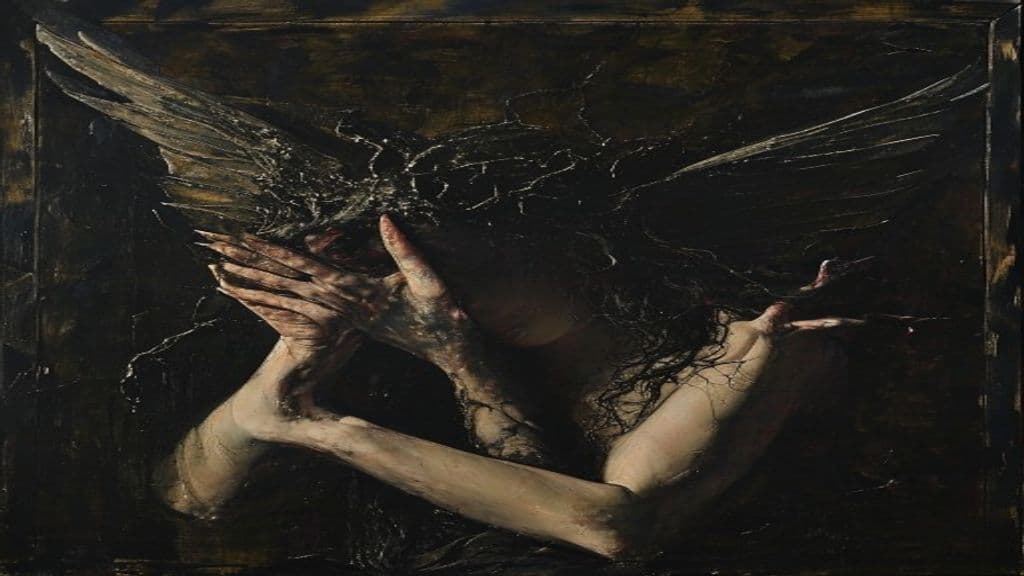
Incubus (Jewish Tradition)
A male demon that preys on female humans in their dreams, seducing them and leading to physical interactions. (Note: 1. Power tier should be Primordial (cosmic) is too high; a more fitting power tier would be Greater (deity-level), given its ability to manipulate humans' dreams and lead to physical interactions. 2. )
Alp-luachra
Alp-luachra is an Irish folkloric fairy described as an invisible being that consumes half of a person's nourishment by taking the unseen 'pith' or 'quintessence' of food; accounts say it appears in the form of a newt and crawls down a sleeping person's mouth at water margins.
Biróg
Biróg (also Biroge, Birog of the Mountain) is a female supernatural helper in Irish narrative tradition who aids Mac Cinnfhaelaidh/Cian in gaining access to the imprisoned Ethniu and rescues the surviving infant of that union; later retellings variably portray her as a leanan sídhe (female familiar spirit), a filidh (poet/seer), or a druidess.
Cat sìth
A feline supernatural being in Celtic folklore, especially Scottish tradition, described in some accounts as a large black cat with a white spot on its chest associated with the fairy/otherworld; alternative traditions identify it as a witch able to transform into a cat up to nine times.
Clurichaun
A solitary Irish fairy-like household and cellar spirit associated with drinking places (breweries, pubs, wine cellars). He is a heavy drinker and smoker, a mischievous trickster who can also act as a protective domestic spirit for a household that tolerates him; accounts are primarily from 19th-century collectors and later summaries.
Crom Dubh
Crom Dubh is a fluid mythological and folkloric figure from Irish tradition, variously represented as a remnant cultic god, a pagan chieftain or robber, a servant-figure, and the focal figure of seasonal first-fruits rites (Crom Dubh Sunday). In later narratives he is frequently framed as an antagonist subdued or reinterpreted by St. Patrick.
Far darrig (fear dearg)
A solitary Irish faerie-class trickster traditionally called fear dearg ('Red Man'), the far darrig is noted for practical—and sometimes gruesome—jokes, a reputed connection to changelings and nightmares, and a characteristic red coat and cap. Accounts portray it as an ambivalent domestic/liminal being that can bring good luck if placated but imaginative punishments if offended.
Leprechaun
A diminutive, solitary supernatural being from Irish folklore, commonly depicted as a shoemaker who delights in mischief and is associated with hidden or buried treasure. Prominent in later folkloric collections and the 19th‑century literary revival rather than central early mythic cycles.
Maine mac Darthacht
Primordial entity associated with darkness and light, connected to Celtic mythology's Tuatha Dé Danann pantheon. (Note: 1. "Primordial entity associated with darkness and light" - source material only mentions association with night/darkness, but not explicitly light. 2. Power tier should be reviewed as Maine mac Darth)
Merrow
A sea-being of Irish/Celtic folklore, the Merrow (Hiberno-English) denotes a class of half-human marine supernatural persons — often female 'sea-maidens' and uglier male counterparts — capable of interaction and occasional intermarriage with humans. Medieval Irish terms connect the figure to older siren- and sea-nymph motifs, while 19th-century collectors shaped much of the modern folk image.
Pillywiggin
Pillywiggins are very small faery or 'little people' in English and Irish folkloric compilations who function as guardians and personifications of spring flowers and small flora. Described in modern sources as trooping, winged flower-fairies, they are generally benign and largely indifferent to humans, associated with gardens, meadows and the seasonal rhythms of plants.
Stray Sod
A clump of enchanted grass attributed to faeries in Celtic tradition, causing disorientation and loss of direction. (Note: - Power tier: Primordial (not Lesser), as the effect described is far-reaching, causing disorientation even in familiar surroundings. - Abilities: Add that the effect can persist even after leaving th)
Will-o'-the-wisp
An atmospheric 'ghost light' — a small, mobile, lamp-like light seen at night over marshes, bogs, wet ground, or graveyards. In many cultures the phenomenon is interpreted as a supernatural being or manifestation (wandering nature-spirit, soul of the dead, transformed witch, or treasure-indicator); modern science offers chemiluminescent explanations for some occurrences.
Community Record
- [1]Gancanagh - Wikipedia. Wikipedia contributors, 'Gancanagh,' Wikipedia, The Free Encyclopedia.wiki
- [2]Gancanagh - Wikidata. Wikidata entry Q17015430.wiki
- [3]O'Kearney account (19th-century collector summary cited in Wikipedia). Nicholas O'Kearney, summarized in secondary sources: description of the Geancanach as a little man similar to the Leprechaun who seduces shepherdesses and milkmaids.folk
- [4]Ethna Carbery poetic portrait (as summarized in collected sources). Ethna Carbery, poetic characterization summarized in folklore collections: 'Love-Talker' described as handsome, incubus-like, with black eyes, no shadow, mist on approach, banished by the sign of the cross.literary
- [5]PathfinderWiki: Gancanagh (modern adaptation noted). PathfinderWiki entry summarizing game adaptation and modern uses; cited to show non-traditional adaptations.other
- [6]Ronel the Mythmaker — Gancanagh article (modern commentary). Blog post discussing folkloric and modern portrayals of the gancanagh.other
- [7]Archive: Fae Encounters in the Modern World. Archive collection referencing modern encounters and adaptations of fairy figures including gancanagh.other