In Greek mythographic tradition Porphyrion is one of the Gigantes, the race of Giants born of Gaia. Following the castration of Uranus, Hesiodic tradition records the Gigantes as springing from the blood of Uranus that fell upon Gaia; other variants cite Gaia and Tartarus as progenitors of the Giants. Within these narratives Porphyrion appears as a principal Giant in the Gigantomachy, the mythic uprising of the earth-born Giants against the Olympian order: these accounts consistently place him among the chief antagonists opposed by Zeus and the other gods.
Literary sources give no extended standalone physical description beyond his classification as a Giant, but Porphyrion is repeatedly named in archaic and classical visual programs of the Gigantomachy. He is labelled on a sixth-century BC black-figure pyxis and on several fifth-/late sixth-century red-figure vessels, and appears on monumental sculptural friezes (the Siphnian Treasury north frieze and the Pergamon Altar Gigantomachy frieze) where he is depicted in combat with Zeus. In art he is represented as one of the Giant combatants — a warrior figure confronting gods and heroes — rather than with a unique, consistently recorded monstrous physiognomy in the supplied sources.
Porphyrion's documented functions are as a violent combatant in the Gigantomachy: he assaults gods and heroes in battle. Apollodorus' account reports Porphyrion attacking Heracles and attempting to rape Hera, whereupon Zeus strikes him with a thunderbolt and Heracles kills him with an arrow. Pindar calls him 'king of the Giants' and credits Apollo with slaying him by arrow in a variant. Nonnus' later account portrays Gaia promising Porphyrion Hebe as his reward if the Giants should prevail against Dionysus, indicating his status as a leading figure in Giant opposition to the Olympians. The sources do not attribute additional supernatural powers beyond his role as a formidable Giant combatant.
Weaknesses
- othervulnerability to divine weapons/forces (Zeus' thunderbolt; arrows of Heracles, Apollo)
Wards
None recorded.

Alcyoneus
Alcyoneus (Ancient Greek Alkyoneús, Ἀλκυονεύς) is a colossal monstrous figure in Greek myth, variably presented as one of the Gigantes (Giants) born of Gaia and as a singular enormous hostile herdsman/warrior opposed to Heracles. Noted for prodigious strength and for a peculiar invulnerability tied to his native land, he is defeated when Heracles drags him out of his homeland at Athena's counsel in one influential tradition.
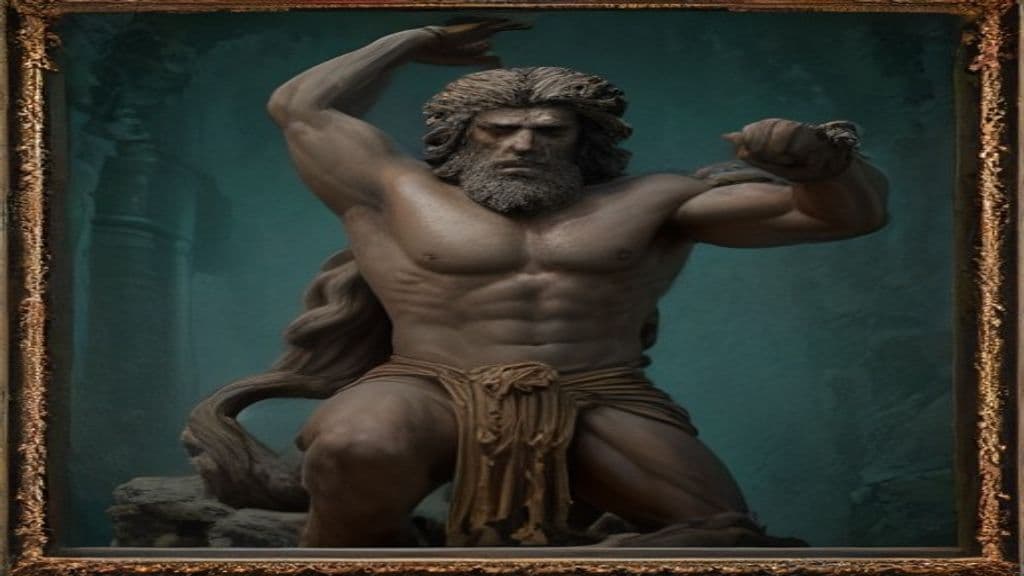
Heracles
Heracles is the greatest hero of Greek myth whose career bridges mortal hero-cult and full divinization. Celebrated for his Twelve Labours, martial prowess, and travels between the mortal world, the underworld, and Olympus, he functioned as a civic patron, ancestor of royal lines (the Heracleidae), and object of cult that treated him both as chthonic hero and as god.

Zeus
Zeus (Ancient Greek: Ζεύς) is the supreme deity of the classical Greek pantheon, a sky-and-thunder god who rules as king of the gods on Mount Olympus and functions as a sky‑father who assigns roles among the immortals.
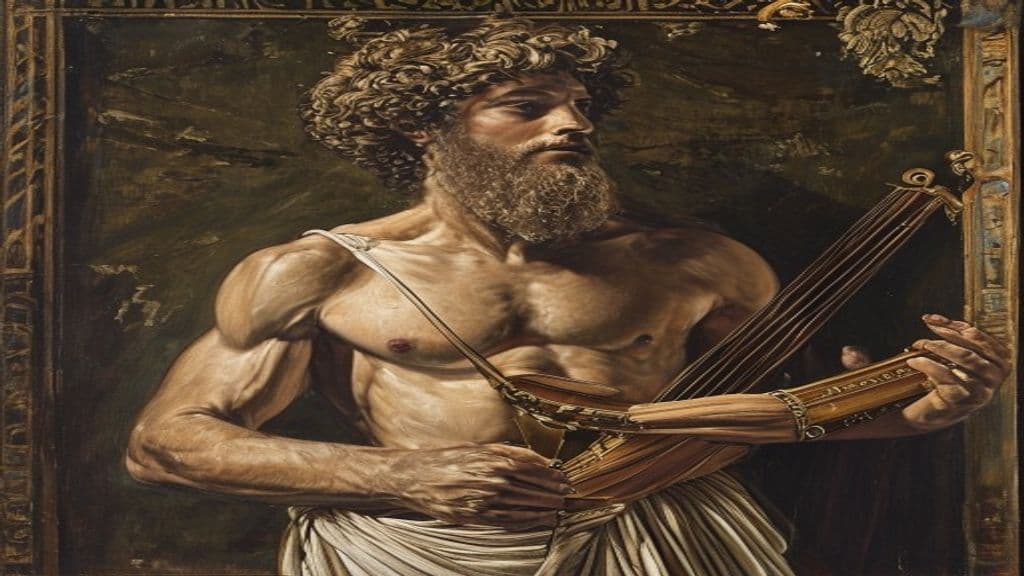
Apollo
Olympian deity of ancient Greek religion associated with prophecy, healing, music, archery, purification, and civic order. Principal patron of the Delphic oracle, protector of youth and flocks, and ambivalently both healer and bringer of plague.
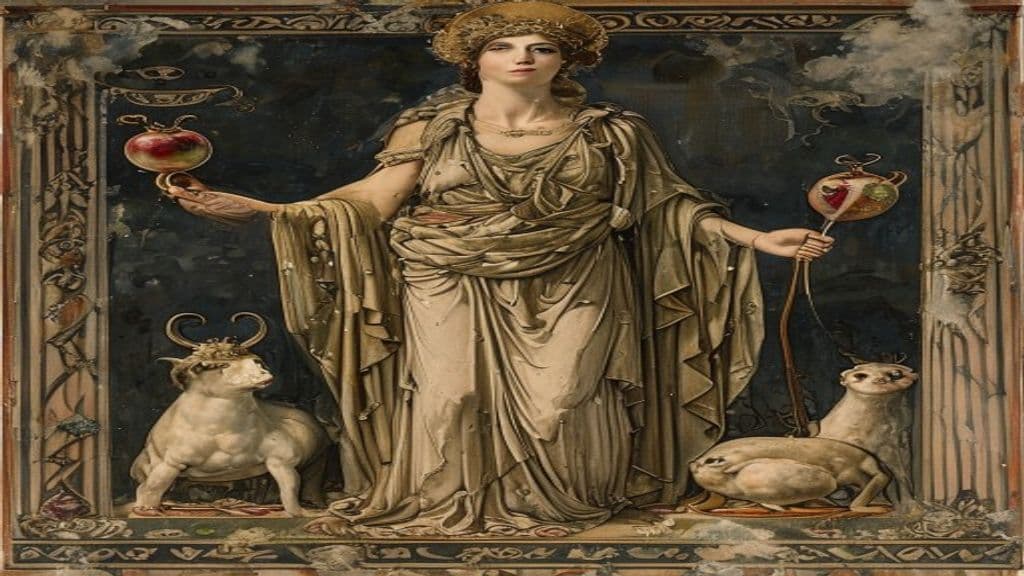
Hera
Hera is an ancient Greek goddess, queen of the Olympian gods, and a principal tutelary deity of marriage, women, and family. She functions in myth and cult as protector of lawful marriage and women in childbirth, a civic tutelary figure (notably of Argos), and a sometimes-jealous consort of Zeus with archaic fertility associations in certain local rites.

Dionysus
Dionysus (Ancient Greek: Διόνυσος) is a major ancient Greek deity associated with wine and winemaking, vegetation and fertility, festivity and theatre, ritual ecstasy and possession, and liminal links with death and the underworld. He is an epiphany-god who travels between worlds, whose cult includes ecstatic rites and mystery initiation.
Community Record
- [1]Porphyrion (Wikipedia). Wikipedia contributors, 'Porphyrion,' Wikipedia, The Free Encyclopedia.wiki
- [2]Porphyrion (radio galaxy) (Wikipedia). Wikipedia contributors, 'Porphyrion (radio galaxy),' Wikipedia, The Free Encyclopedia.wiki
- [3]Wikidata: Porphyrion. Wikidata entry Q1421201 (Porphyrion).other
- [4]Gargantuan Black Hole Jets Are Biggest Seen Yet (news / astronomy coverage). Caltech News coverage referencing the naming of an astronomical object 'Porphyrion'.other
- [5]Archive: Porphyrion, and other poems (collection). Archive.org scanned material titled 'Porphyrion, and other poems' (modern reuse of the name).other