
The term and many of the tales about pukwudgies derive from Algonquin-language little-people traditions (Ojibwe forms are recorded and popularized in the 19th century by Schoolcraft and later Longfellow). Schoolcraft published an Ojibwe folktale that features a small invisible being, and that Schoolcraft-to-Longfellow transmission encouraged use of the Ojibwe-derived name in New England narratives. The name literally links them to the wilderness ('person of the wilderness', 'little wild man of the forest') and denotes both individuals and a race; the specific older New England-language names for local little peoples are not recorded in the supplied sources.
Described in ethnographic summaries and later retellings as very short (often given as knee-high, roughly 2–3 feet tall), with gray skin and notably large noses, ears, and fingers. Sources note shape-changing aspects: some accounts indicate they can transform into animals such as cougars or quilled porcupines; popular secondary accounts also emphasize porcupine-like quills or animal-like facial features, but those embellishments are presented in contemporary retellings rather than core ethnographic citations.
Accounts record that pukwudgies can appear and disappear at will (invisibility/vanishing is emphasized in the Schoolcraft tradition) and may shapeshift into dangerous beasts (e.g., cougar or quilled porcupine). They are morally ambivalent: in some Wampanoag contexts they begin as helper spirits (whose bungling help can backfire) and in other accounts turn mischievous or menacing, capable of confusing or luring people and, in some stories, harming or killing (one source notes they 'may also have the power to bring harm to people by staring them down'). They are described as enemies of culture-hero figures such as Maushop and Granny Squanit in the adapted literature.
Weaknesses
- othernone attested in sources
Wards
- othernone attested in sources
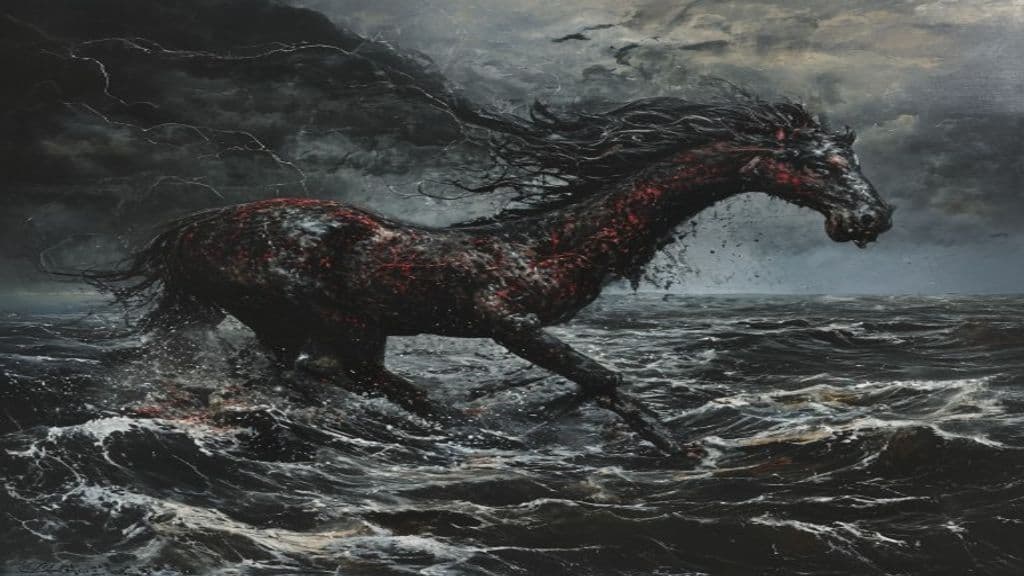
Nuckelavee
The most terrifying creature of Orcadian folklore — a skinless, horse-headed demon of the sea whose breath spreads plague and whose presence causes crops to wither. It cannot cross fresh water.
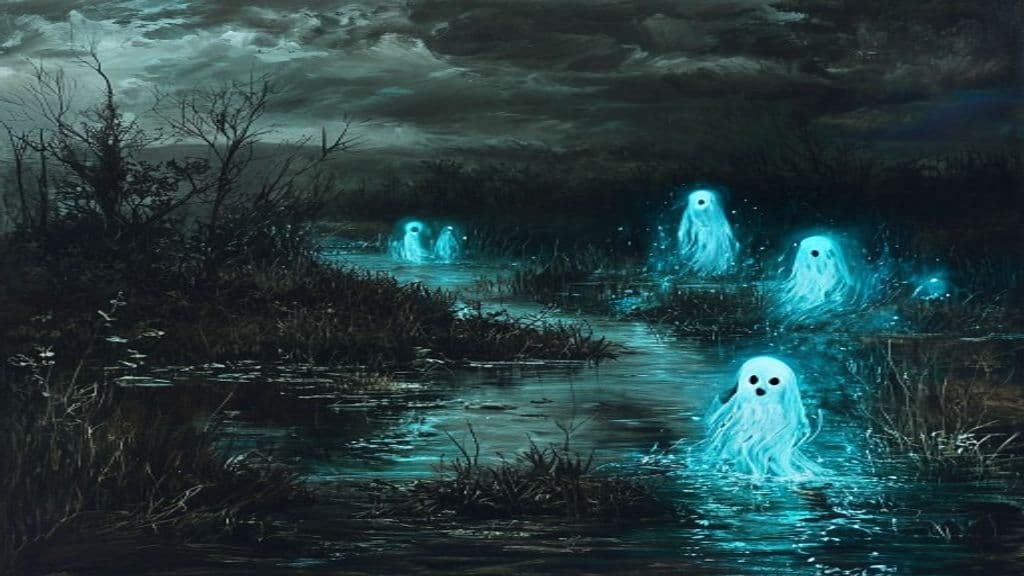
Will-o'-the-Wisp
A wandering light seen over marshy ground at night, leading travellers astray into bogs and fens. Possibly a spirit, possibly the soul of the unbaptised dead, possibly the devil himself.
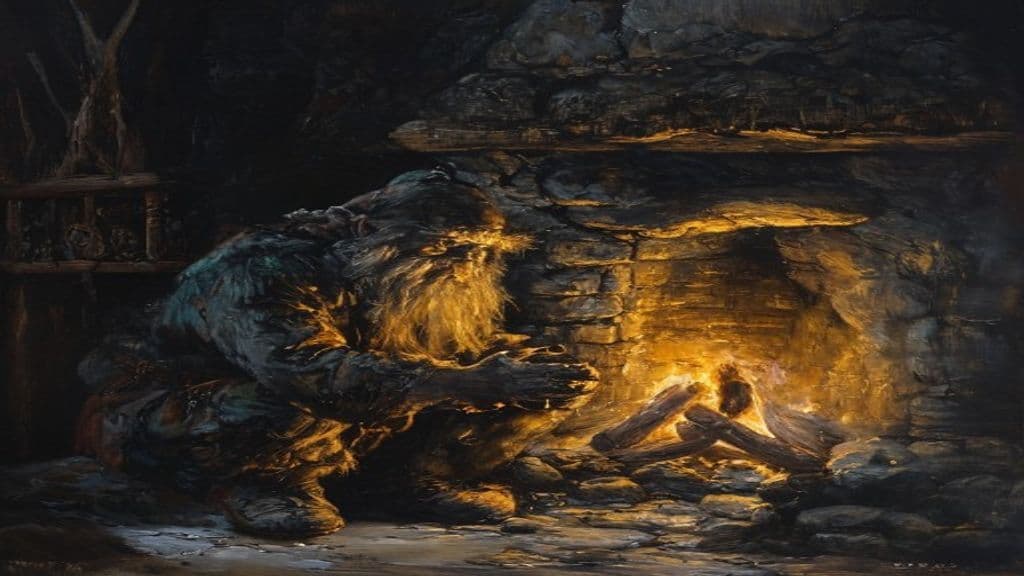
Domovoi
The house spirit of Slavic tradition — a small, invisible guardian of the home bound to a specific dwelling and its family. Protective when respected; dangerous when insulted or forgotten.
Pterelaus
Pterelaus is a mytho-historical king of the Taphians (Taphos) in Greek heroic legend whose family’s cattle-raid and defeat are narrated as antecedents to Amphitryon’s expedition and the circumstances of Heracles’ birth. In some variants he is described as invulnerable while a single magical golden hair remained in his head; removal of that hair (by his daughter Comaetho in some summaries) permitted his death.
Ptireus
Ptireus is listed in the cited source as a deity of Egyptian mythology. The available source provides only this single classificatory label and no additional information about the figure's nature, functions, or cult.
Puck
Puck is a northwest European liminal spirit occupying a space between household sprite and wild fairy trickster. Portrayed as a domestic helper who expects food offerings and as a nocturnal jester of the fairy court, Puck performs both useful chores and mischievous pranks in folklore and literature.
Puddleglum
Puddleglum is a fictional Marsh-wiggle who appears in C. S. Lewis's The Silver Chair (part of The Chronicles of Narnia). Portrayed as a gloomy yet steadfast companion, he guides Eustace and Jill, resists enchantment in Underland, and helps free Prince Rilian.
Pueo
The pueo is the Hawaiian subspecies of the short‑eared owl (Asio flammeus sandwichensis) and, in Native Hawaiian belief, a common physical form assumed by ʻaumākua (ancestor guardian spirits). It functions both as an endemic bird with specific ecological vulnerabilities and as a culturally significant ancestral protector and omen, mentioned in chants and mele.
Pukkeenegak
Pukkeenegak is an Inuit household goddess associated with children, pregnancy, childbirth, and the making of clothes. She functions as a benevolent overseer of domestic labor and reproductive life, providing food and clothing materials and protecting pregnant women.
Pulahan (Pulahanes)
A late 19th–early 20th century Visayan syncretic religious and militant revival movement in the Philippines whose adherents wore red, combined revived babaylan shamanic practices with Folk Catholic elements, and organized under charismatic 'dios-dios' leaders to pursue healing, prophecy, and armed resistance against colonial authorities.
Pulao (蒲牢)
Pulao (蒲牢) is a named mythic creature in Chinese tradition commonly listed among the 'nine sons of the dragon.' Textual references identify it as a dragon-son notable for its fondness for roaring and as an established decorative motif in Chinese material culture.
Pumuckl
Pumuckl is a fictional household spirit character created for German children's media by Ellis Kaut and popularized beginning with a 1961 Bavarian Radio play. Classified in modern catalogs as a 'Kobold', Pumuckl functions as a mischievous domestic companion within the Meister Eder und sein Pumuckl franchise and has been adapted into books, television, films and a musical.
Punga
Punga is recorded in the provided sources as the named ancestor of sharks in Māori tradition. The available material supplies only this brief identification and contains no further narrative, descriptive, or ritual detail about Punga.
Purson
Purson is a named supernatural being attested in goetic grimoire tradition references (the Ars Goetia / Pseudomonarchia Daemonum corpus as cited in secondary summaries). In the supplied materials he appears primarily as a catalogued, addressable entity in Western occult lists and as a modern cultural reference (band name, amulet reproduction), but no primary ritual entry or full grimoire description is included among the provided sources.
Puzzle the Donkey
Puzzle is a fictional donkey character in C. S. Lewis's The Chronicles of Narnia, prominently appearing in The Last Battle. In the novel he is a simple, credulous beast manipulated by the ape Shift and presented to others as the deity Aslan as part of a deception plot.
Community Record
- [1]Pukwudgie (Wikipedia). Wikipedia: Pukwudgie entry (summary of Ojibwe/Algonquin little-people traditions, Schoolcraft reference, description and name etymology).wiki
- [2]Pukwudgie (Wikidata). Wikidata entry for Pukwudgiewiki
- [3]The Bridgewater Triangle: The Sensational Hot Spot Where UFOs, Demons & Monsters Meet | Documentary. Archive.org documentary referencing modern paranormal localization of pukwudgie lore in New England (Bridgewater Triangle).other
- [4]What the pukwudgie. Archive.org item referencing pukwudgie materials and popular retellings.other
- [5]What Is a Pukwudgie? Explaining the Cryptid and Its Origins (The Portalist). Popular secondary account summarizing origins, appearance, and modern retellings.other
- [6]NEW ENGLAND FOLKLORE: Pukwudgies in Freetown: Some Fairy Sightings in Massachusetts. Blog post documenting modern New England sightings/retellings and folkloric overlay.folk
- [7]Thought Catalog: 20 Facts About The Pukwudgie. Contemporary popular article summarizing descriptive elements and modern lore.other