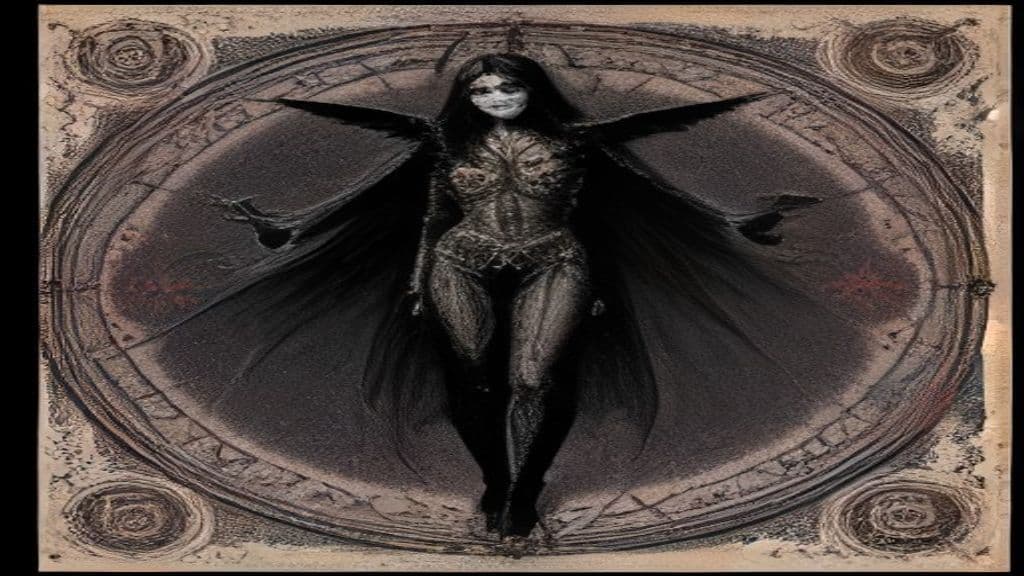
The supplied sources do not provide a mythological origin narrative for Purson. What is documented in the provided material is his presence as a named individual within the goetic enumerations (Ars Goetia / Pseudomonarchia Daemonum as referenced in secondary summaries). Beyond that catalogued placement, no indigenous origin story, earlier-language name form, or cosmological origin is present in the materials supplied; modern references instead reuse the name for artistic and popular purposes.
The provided documents do not contain a consistent or primary physical description of Purson. No classical grimoire entry, sigil description, or iconographic details are included in the supplied materials; the only imagery connected to the name in the set consists of contemporary cultural artifacts (e.g., a modern 3D printable "Amulet of Purson" and visual material associated with a rock band) which are creative adaptations rather than historical attestations.
Within the goetic/Ars Goetia framework referenced in the materials, Purson is presented as a named, rankable non‑human intelligence in catalogs of conjurable entities. The supplied items do not include the typical detailed grimoire entry listing specific powers, legions, or services; therefore no primary-source catalogue of abilities, behavioral modalities, or specific human interactions can be reliably reported from the provided documents. A modern music review characterizes him as "the Great King of Hell, served by legions of demons," but that statement is a secondary commentary from popular culture rather than a contained primary ritual source in the supplied set.
Pukkeenegak
Pukkeenegak is an Inuit household goddess associated with children, pregnancy, childbirth, and the making of clothes. She functions as a benevolent overseer of domestic labor and reproductive life, providing food and clothing materials and protecting pregnant women.
Pukwudgie
A class of small humanoid 'little people' from Algonquin-language traditions, described as forest-dwelling, ambivalent beings who can help or harm humans; the Ojibwe-derived name and tales entered New England folkloric use via 19th-century publications and later local retellings.
Pulahan (Pulahanes)
A late 19th–early 20th century Visayan syncretic religious and militant revival movement in the Philippines whose adherents wore red, combined revived babaylan shamanic practices with Folk Catholic elements, and organized under charismatic 'dios-dios' leaders to pursue healing, prophecy, and armed resistance against colonial authorities.
Pulao (蒲牢)
Pulao (蒲牢) is a named mythic creature in Chinese tradition commonly listed among the 'nine sons of the dragon.' Textual references identify it as a dragon-son notable for its fondness for roaring and as an established decorative motif in Chinese material culture.
Pumuckl
Pumuckl is a fictional household spirit character created for German children's media by Ellis Kaut and popularized beginning with a 1961 Bavarian Radio play. Classified in modern catalogs as a 'Kobold', Pumuckl functions as a mischievous domestic companion within the Meister Eder und sein Pumuckl franchise and has been adapted into books, television, films and a musical.
Punga
Punga is recorded in the provided sources as the named ancestor of sharks in Māori tradition. The available material supplies only this brief identification and contains no further narrative, descriptive, or ritual detail about Punga.
Puzzle the Donkey
Puzzle is a fictional donkey character in C. S. Lewis's The Chronicles of Narnia, prominently appearing in The Last Battle. In the novel he is a simple, credulous beast manipulated by the ape Shift and presented to others as the deity Aslan as part of a deception plot.
Puṣpadanta
Puṣpadanta is a name attested in South Asian religious literatures with at least two distinct roles in the supplied sources: (1) in Digambara Jain tradition as Ācārya Puṣpadanta, credited (with Bhūtabali) for committing the oral teachings of Mahāvīra to writing in the Ṣaṭkhaṇḍāgama; and (2) in Vaishnava/Śrīmad-Bhāgavatam-type devotional lists as one named attendant/associate among a retinue of divine or semi-divine companions.
Pylades
Pylades (Ancient Greek: Πυλάδης) is a mortal Phocian prince in Greek myth, best known as the steadfast companion, counsellor, and co-actor of Orestes across the Orestes cycle (revenge on Clytemnestra and Aegisthus, the Tauris episode, and related episodes). He functions as a loyal attendant, caregiver, and occasional combatant, and later traditions emphasize the depth of his devotion to Orestes.
Pylaemenes
Pylaemenes is a proper name attested in ancient Greek literary traditions for at least two mortal characters — a Paphlagonian king allied with Troy and a suitor of Penelope — and is also used in modern zoological taxonomy as the genus name for a group of stick and leaf insects (Phasmatodea). The name is not presented as a supernatural entity in the supplied sources.
Pylaeus
Pylaeus (Ancient Greek: Πύλαιος) is a mortal figure in Greek mythic-historical tradition presented as a descendant of Pelasgus and a commander allied to King Priam in the Trojan War. He is recorded as commanding the Pelasgian contingent together with his brother Hippothous and is noted in local Lesbos tradition as having commanded the Lesbian army and giving his name to a mountain on the island.
Pylenor
Pylenor is attested as a proper name in two unconnected sources: a centaur listed in classical myth indices (noted as wounded by Heracles) and a human priest character in a modern Assassin's Creed memory scene. The sources do not present Pylenor as a single folkloric being with attendant rituals or warding practices.
Community Record
- [1]List of demons in the Ars Goetia (Wikipedia). Wikipedia, "List of demons in the Ars Goetia"wiki
- [2]Purson (band) (Wikipedia). Wikipedia, "Purson (band)"wiki
- [3]Amulet of Purson (Thingiverse archive). Thingiverse user page archived as "Amulet of Purson (3079239)"other
- [4]Purson – Desire's Magic Theatre review. Disagreement.net music review referencing Purson and noting a popular-culture descriptionother
- [5]Purson review — Brighton Source. Brighton Source, review of Purson (band)other
- [6]Purson – Desire’s Magic Theatre – Heavy Blog Is Heavy. Heavy Blog Is Heavy, album review of Pursonother