
The supplied ethnographic summaries and referenced sources do not record a specific cosmogonic or origin narrative for the qiqirn; available accounts present it as a spirit‑like canine presence in Inuit tradition rather than providing a creation or origin story.
Traditionally described as a large, bald or hairless dog spirit with hair reported only on the feet, around the mouth, and on the tips of the ears and tail. Literary and modern fictional adaptations (e.g., Rudyard Kipling's 'Quiquern' or various game sources) expand or alter the form (additional legs, phantasmal features), but the ethnographic descriptions emphasize a large, mostly hairless canine shape.
The qiqirn's presence causes men and dogs to suffer convulsions or fits, sometimes fatally; these convulsions are described as ending only when the qiqirn leaves. Sources report that, despite the dangerous effects of its presence, the qiqirn is frightened of humans and will run away if an angakkuq (Inuit shaman) sees it. A scholarly interpretation (Daniel Merkur, as reported in summaries) suggests the fits may allude to shamanic initiation processes, an interpretive link rather than a directly attested native explanation in the cited material.
Weaknesses
- conditionSight or recognition by an angakkuq (Inuit shaman)
Wards
- conditionBeing seen by an angakkuq (Inuit shaman) — reported to cause the qiqirn to run away
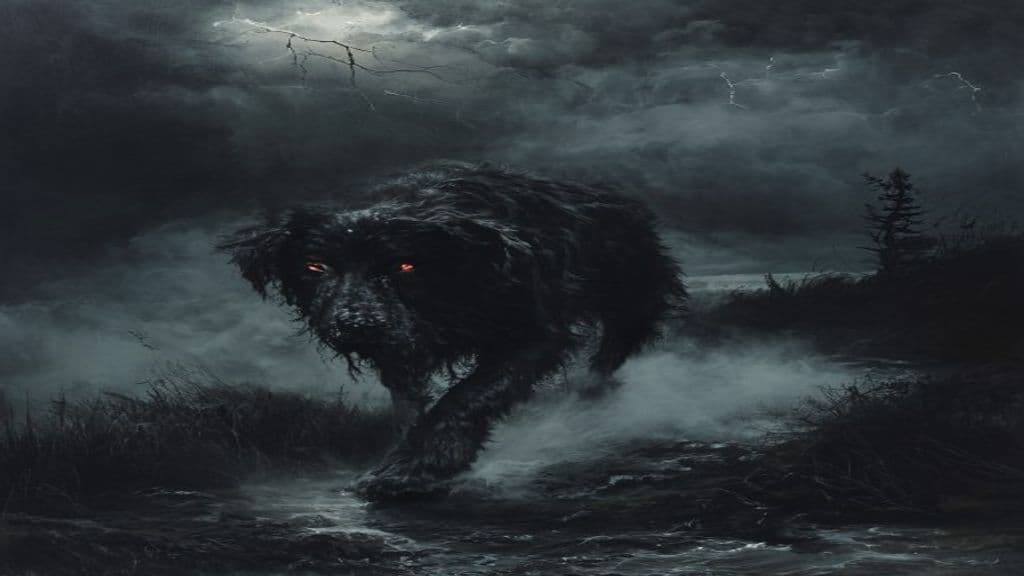
Black Shuck
A spectral black dog of East Anglian legend, with glowing red or green eyes. Its appearance is an omen of death. Its howl has been heard on clifftops during storms for centuries.
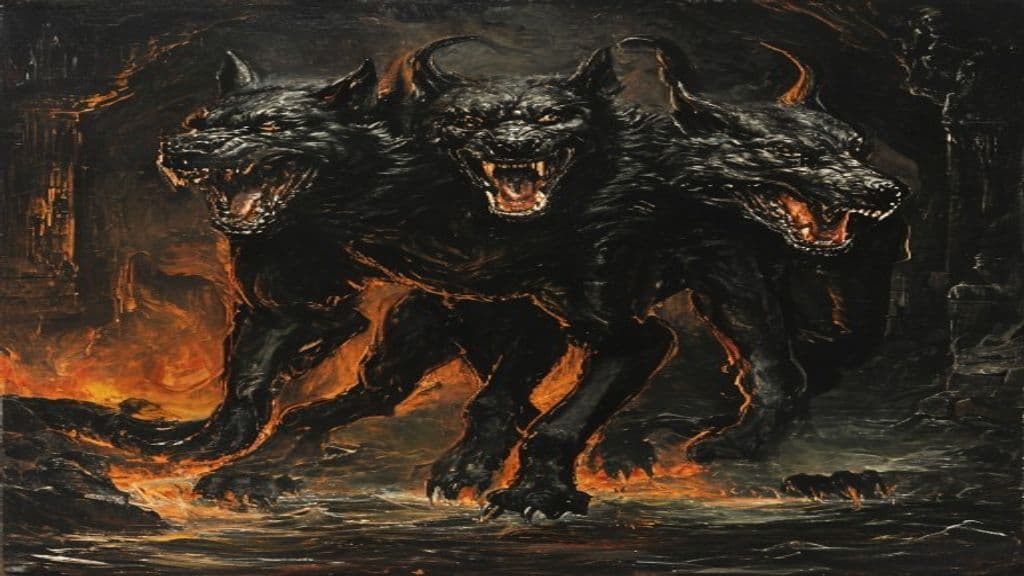
Cerberus
The three-headed hound of Hades, guardian of the underworld's gates — welcoming the dead in but allowing no shade to leave and no living mortal to enter uninvited.
Adlet
A category of non-human peoples in Inuit narrative tradition (also rendered Erqigdlet/Irqigdlit) that functions both as a mythic ancestor-race and as dog‑legged antagonists; the term can denote inland native American peoples or half‑canine humanoids depending on regional usage.
Aipaloovik
Aipaloovik is an Inuit sea-associated supernatural being described in available sources as an evil or dangerous water deity linked to death and hazard for fishermen. The figure is described as the opposite of the being Anguta; beyond this brief characterization the cited sources provide no detailed myths, appearance, or ritual corpus.
Akhlut
An Inuit composite, shape‑changing animal‑spirit described in early ethnographic accounts as an orca that can become a wolf on land (and sometimes depicted in later popular media as a wolf‑orca hybrid). Associated with the seashore and ice edge along the Bering Sea, it is portrayed as powerful and dangerous in the cited sources.
Alignak
Alignak is named in modern reference works as an Inuit deity associated with the moon and with dynamic natural phenomena such as weather, water, tides, eclipses, and earthquakes. The available sources provide only terse domain associations and do not supply narrative, iconographic, or ritual detail.
Amarok
In Greenlandic Inuit tradition the Amarok (also Amaroq) is a singular, gigantic wolf-like spirit said to hunt alone and to interact powerfully with humans: stalking and devouring lone nocturnal hunters, wresting with humans to bestow strength in Rink's tales, and — in another tale — dragging a humanoid from the water and taking a mourner's soul. The term in some dialects is reserved for this legendary wolf, while other Arctic peoples may use the word for ordinary wolves.
Amautalik
Amautalik is a child‑stealing ogress from Inuit folktale collections and modern retellings. Presented in story collections, illustrated books, graphic novels, and short films, she functions as a monstrous threat who carries away children and haunts communities, and whom protagonists overcome through luck, courage, and ancestral knowledge.
Anguta
Anguta is an ancestral/parent figure in Inuit cosmology associated with the sea-goddess Sedna and the underworld Adlivun. Different traditions variously portray him as a creator or supreme being (especially in some Greenlandic accounts), a mortal ancestor, and most consistently as a psychopomp or lord of the dead who ferries souls and supervises part of the afterlife journey.
Apanuugak
Apanuugak is an Inuit legendary figure presented in modern summaries as a culture-hero who is narratively ambivalent: sometimes an error-prone or long-lived warrior and elsewhere depicted as a dastardly villain or cunning trickster.
Arnapkapfaaluk
A fearsome sea-being of the Coronation Gulf Copper Inuit who controls access to seals and other marine mammals; she withholds game as punishment for taboos or indiscretions and thus governs hunters' success.
Aulanerk
Aulanerk is an Inuit sea spirit attested in several short ethnographic and reference summaries as a benevolent sea-being who lives in the ocean and is responsible for producing waves and surf; he is also described as helping hunters by working with other sea powers to lead them to seals.
Caribou Mother
An Inuit deity described as the maternal source and protector of caribou herds and, in some texts, the owner of all land animals. She is depicted as ancient and gigantic and is implicated in regulating human behaviour toward animals, especially in the context of hunting.
Eeyeekalduk
Eeyeekalduk is identified in multiple compiled references as an Inuit supernatural figure associated with medicine, healing, and good health. The available sources list the name among Inuit deities or pantheons but provide no primary ethnographic detail about myths, rituals, or iconography.
Community Record
- [1]Qiqirn - Wikipedia. Wikipedia article 'Qiqirn' — summary of Inuit tradition, appearance, effects on men and dogs, and note that an angakkuq's sight makes it flee; also cites Merkur's interpretation and mentions Kipling's fictional 'Quiquern'.wiki
- [2]Qiqirn | A Book of Creatures. A Book of Creatures entry describing the qiqirn as a hairless dog spirit whose presence causes fits in men and dogs that end when it leaves, and noting it flees if seen by an angakkuq.folk
- [3]Wikidata entry Q3622699 (Qiqirn). Wikidata item for Qiqirn, cross‑referencing common name forms and linked sources.wiki
- [4]Summary references to Rudyard Kipling's 'Quiquern' (as reported in Wikipedia). Wikipedia summary noting Kipling's fictional treatment describing a giant, phantasmal, toothless, hairless dog with multiple pairs of legs, and that the story portrays the creature wandering before important events and driving dogs mad.literary