
Runic-song material and later Kalevala ordering locate Sampsa in mythic sequences as the active sower of vegetation. In several runic narratives a wealthy landowner (Ahti) seeks someone to awaken the sleeping Sampsa; a sequence of candidates (including a wolf and contrasting seasonal figures such as a "summer boy" and sometimes a "winter boy") attempt awakening and only the selfless summer youth succeeds, after which Sampsa sows the formerly barren land (one tale situates his sleeping-place on an island without trees that is then filled with growth). Some songs place Sampsa’s sowing in the narrative timeframe of land-creation; other regional variants attach him to a first tussock or tuft of green where vegetation reappears. Scholarly commentaries record variant motifs (e.g., Ganander’s 1789 note calling him a faunic planter and accounts in which Sampsa impregnates the earth-female Maaemä), but source notes also mark certain incestual-wording as a later or foreign-influenced accretion within some runes.
In Kalevala-derived summaries and many collected runes Sampsa appears as a slender youth carrying a bag or basket around his neck, imagery popularized by Elias Lönnrot’s editorial ordering. Older or regional notes supply alternative images: Christfried Ganander (1789) described a faun-like figure — "a faun, a son of Pellervoinen and the planter of trees" — while Forest Finn and Ingrian material preserves a connection between Sampsa and a tussock (Ämssä) or the first tuft of grass (local names such as sämpsykkä / sämpsä-heinä refer to plants like the bulrush Scirpus sylvaticus). Ganander also records a helper-figure, a draft ox named Vennon härkä Uljamoinen, associated with planting activity in his account.
Runic songs consistently ascribe to Sampsa the action of sowing all vegetation on earth — trees, fields, meadows, swamps and rock lands — making him the culture’s operative vegetation-haltia. In some songs the sowing is enacted with mythic means such as small pieces of the sampo. His activity is seasonally patterned and in several regions he must be ritually awakened each summer (the ritualized awakening is performed in song at community festivals and is presented as necessary for the annual renewal of plant growth). Narrative variants also present Sampsa as a generative partner to the earth-female (Maaemä) in some runes, a motif treated cautiously by scholars as variably attested.
Weaknesses
- conditionrequires ritual awakening each summer (if not awakened, vegetation cycle will not commence)
- conditionlocalized attachment to a tussock or sleeping-place (must be found/awakened)
Wards
None recorded.
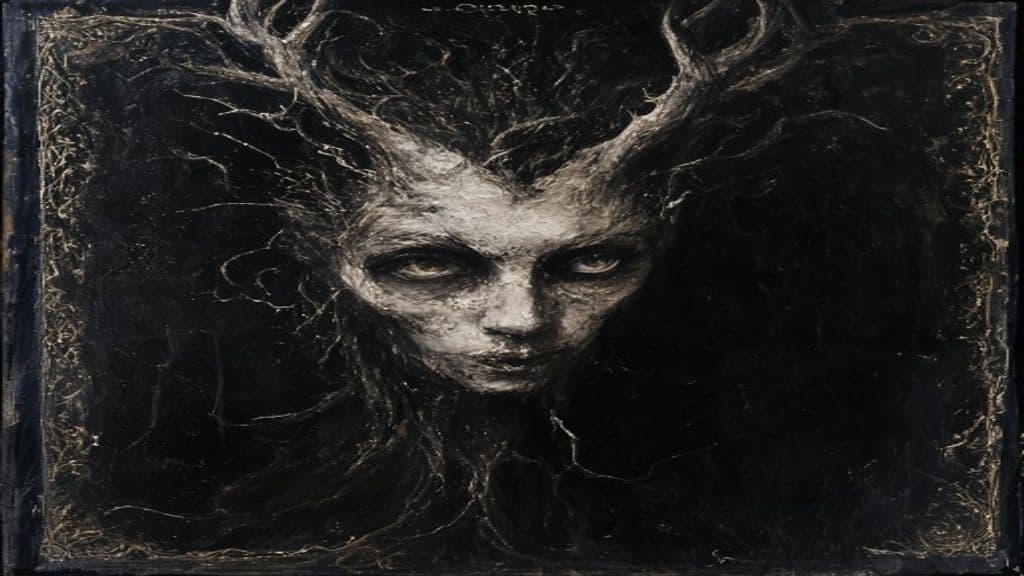
Kave
Kave (also attested as Kavet, Kaave, Kaveh; class-name Luonnotar/luonnottaret) is a polyvalent female spirit figure in Finnish and Karelian traditional belief, functioning both as an individual primordial woman and as a class of nature-women invoked in childbirth, healing, and cosmogonic accounts. Regional traditions vary: in some songs kapeet are lunar eaters, in others Kave frees or restores the sun and moon; she is commonly engaged through runic song and spells rather than fixed material cult.
Kullervo
Kullervo is a tragic heroic figure from Finnish and Estonian runic-song tradition and the Kalevala epic: a surviving scion of a destroyed clan whose life is marked by enslavement, mistreatment, latent magical powers, vengeance, and self-destruction.
Maaemä
Maaemä (Finnish) / Maaema (Estonian) is the personification of the earth as a maternal, generative principle in Finnish and Estonian runic-song and folk-ritual material; she functions as the 'earth mother' who receives offerings and is invoked regarding fertility, harvest, and things that come from the ground.
Päivätär
Päivätär is the female personification of the Sun in Finnish traditional mythology, depicted in runic songs and Kalevalaic material as a beautiful lady who owns the Sun's silver, spins and weaves silver yarns into clothes, gives jewellery to maidens when petitioned, and appears in regional myths connected to fire, wasps, and mythic households such as Päivölä.
Virankannos
Virankannos is a figure in Finnish and Karelian runic-song tradition associated with fertility and the wellbeing of crops and is treated in sources as a sky-associated, culture-level divine actor. Attested in Mikael Agricola's 1551 list as a protector of oats and in Kalevala runes (20 and 50), he appears in saga-level scenes such as the attempt to slay the great ox and the baptism/naming of Marjatta's child.
Samhain
Celtic festival marking the end of harvest season and beginning of winter. (Note: 1. Power tier should be "Ancient" instead of "Primordial", as Samhain is a festival or time of transition, not an entity with cosmic powers. 2. Abilities need to be rephrased to reflect that the blurr)
Samia
Samia is a name attested in modern reference works for two closely related senses within Greek mythic tradition: (1) a mythic woman, described as daughter of Maeander and wife of Ancaeus; and (2) an epithet of the goddess Hera. The attestations provided in the available sources are limited to brief lexical/gazetteer notices rather than surviving narrative or cult texts.
Samodiva
A South- and West-Slavic (especially South Slavic/Balkan) female nature spirit and personification of wild places. Samodivas are ambivalent supernatural women associated with mountains, springs, trees, songs and dances; they can grant healing knowledge or punish humans who offend the landscape.
Sampo
In Finnish mythology, the Sampo is a magical device that brings riches and good fortune to its holder, akin to the horn of plenty. (Note: - Power tier: Reduce from Primordial to Greater (The Sampo's abilities are powerful, but not cosmic in scope) - Abilities: Clarify that the Sampo attracts prosperity and success, but does not necessar)
Samsin Halmeoni
A Korean goddess associated with childbirth and fate, revered for her connection to family lineage. (Note: * Power tier: Lesser (based on the description of being a localized spirit) * Abilities: Add that she has no specific abilities or behaviors described * Sensory cues: None listed in source material * )
Samson
A constructed fictional character in the 28 Days Later film series presented as an unusually large and highly aggressive variant of the infected, classified in the films as an "Alpha." Introduced in 28 Years Later (2025) and returned as a central character in 28 Years Later: The Bone Temple (2026).
Samyaza
Samyaza is a leading heavenly Watcher (one of the grigori) who instigates the descent of angels to mate with human women, transmit forbidden knowledge, and sire the Nephilim. In the Enochic tradition he leads the oath-bound band whose transgression brings divine punishment (binding and imprisonment); later and related traditions adapt his name and role in Manichaean, rabbinic, and legendary materials.
Community Record
- [1]Sampsa Pellervoinen — Wikipedia. Wikipedia, "Sampsa Pellervoinen"wiki
- [2]Magic Songs of the West Finns, Vol. I: Chapter VI. Belief.... Magic Songs of the West Finns, Internet Sacred Text Archive, chapter on belief (runic songs and haltia terminology)academic
- [3]Kalevala runes (runic songs collection). Runic-song corpus (online transcription of Kalevala-related runos)literary
- [4]Ganander (1789) summary (as cited in sources). Christfried Ganander (1789) summary cited in secondary sources describing Ganander’s account of Sampsa as faunic and a planter of treesfolk
- [5]Pellervo — Pellervo Coop Center (modern cultural reference). Pellervo Coop Center, explanation of the Pellervo name and cultural resonance tied to Sampsa Pellervoinenother