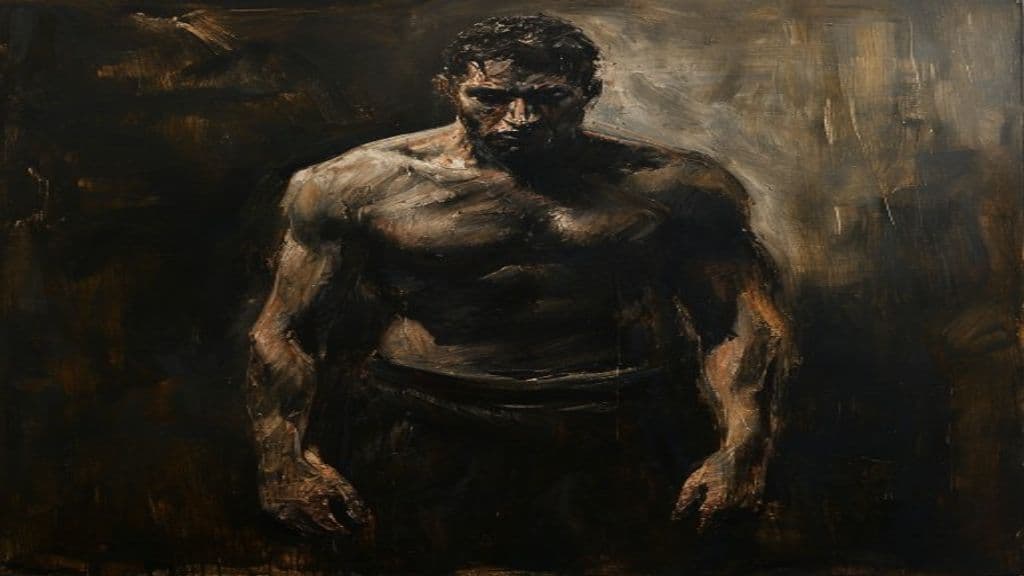
Samson is a fictional constructed figure within the narrative world of the 28 Days Later film series. He is introduced in the film 28 Years Later (2025) as an "Alpha" classification of the infected and later returns as a central character in 28 Years Later: The Bone Temple (2026). Sources describe him as a pronounced subtype of the contagion known in the series as the "rage virus."
Source descriptions in the cited material are limited; Samson is described as "an unusually large and highly aggressive variant of the infected." No additional corroborated physical details (coloration, wounds, clothing, facial features) are provided in the available sources.
Described in sources primarily in behavioral and physical terms: unusually large size and markedly higher aggression relative to other infected. The supplied texts do not list supernatural powers or specific quantified abilities beyond these descriptors.

Samhain
Celtic festival marking the end of harvest season and beginning of winter. (Note: 1. Power tier should be "Ancient" instead of "Primordial", as Samhain is a festival or time of transition, not an entity with cosmic powers. 2. Abilities need to be rephrased to reflect that the blurr)
Samia
Samia is a name attested in modern reference works for two closely related senses within Greek mythic tradition: (1) a mythic woman, described as daughter of Maeander and wife of Ancaeus; and (2) an epithet of the goddess Hera. The attestations provided in the available sources are limited to brief lexical/gazetteer notices rather than surviving narrative or cult texts.
Samodiva
A South- and West-Slavic (especially South Slavic/Balkan) female nature spirit and personification of wild places. Samodivas are ambivalent supernatural women associated with mountains, springs, trees, songs and dances; they can grant healing knowledge or punish humans who offend the landscape.
Sampo
In Finnish mythology, the Sampo is a magical device that brings riches and good fortune to its holder, akin to the horn of plenty. (Note: - Power tier: Reduce from Primordial to Greater (The Sampo's abilities are powerful, but not cosmic in scope) - Abilities: Clarify that the Sampo attracts prosperity and success, but does not necessar)
Sampsa Pellervoinen
A Finnish vegetation haltia — an animate principle who sows all plant growth across the land. Attested in runic songs and Kalevala-derived compilations, Sampsa is ritually awakened in summer festivals to ensure the yearly return of fields, meadows, forests and other vegetation.
Samsin Halmeoni
A Korean goddess associated with childbirth and fate, revered for her connection to family lineage. (Note: * Power tier: Lesser (based on the description of being a localized spirit) * Abilities: Add that she has no specific abilities or behaviors described * Sensory cues: None listed in source material * )
Samyaza
Samyaza is a leading heavenly Watcher (one of the grigori) who instigates the descent of angels to mate with human women, transmit forbidden knowledge, and sire the Nephilim. In the Enochic tradition he leads the oath-bound band whose transgression brings divine punishment (binding and imprisonment); later and related traditions adapt his name and role in Manichaean, rabbinic, and legendary materials.
San La Muerte
San La Muerte is a skeletal folk saint venerated in Paraguay, northeastern Argentina and southern Brazil. Represented by small standing statuettes ('santitos'), the devotion functions as a transactional, saint-like patron who grants protections, favors (including aid in love, health, luck, and criminal matters) in exchange for offerings and ongoing reciprocal care.
San Martin Txiki
A trickster figure from Basque mythology with a strong connection to the natural world, particularly agriculture. (Note: - Power tier should be Ancient (deity-level), as San Martin Txiki is a trickster figure who stole secrets from deities and is described as inventing new tools. - Sensory cues are not mentioned in the )
Sandalphon
Sandalphon is a highly elevated angelic figure in later Jewish and Christian mystical literature (rabbinic, midrashic, and Kabbalistic), often ranked among the chief angels. He functions as an intermediary who gathers human prayers and transmits them to God, is associated with heavenly song, and is placed in Kabbalah as representing the sephirah Malkuth and as chief of the Seventh Heaven.
Sanjna
Sanjna (also Samjñā, Saranyu) is a Hindu goddess best known as the chief consort of the sun-god Vivasvant/Surya whose mythic actions (flight, transformation into a mare, and leaving a substitute/Chhaya) link her to themes of motion, identity, and the origins of several important progeny (Yama, Yami, Manu, the Ashvins).
Sanki Daigongen (三鬼大権現)
Sanki Daigongen (三鬼大権現) is a named gongen — a syncretic manifestation concept in Japanese religion — cited in festival and shrine listings for Itsukushima (Miyajima). The name literally combines characters for "three" (三), "oni/spirits" (鬼), and "great gongen" (大権現), placing the figure within the cultural category of a buddha manifesting as a local kami in the shinbutsu‑shūgō framework.
Community Record
- [1]Samson (28 Days Later). Wikipedia, article 'Samson (28 Days Later)'wiki
- [2]VOA Africa : June 21, 2018 01:00AM-02:00AM EDT. Archive.org: VOA Africa broadcast listing (June 21, 2018)other
- [3]VOA Africa : July 27, 2017 11:00PM-12:00AM EDT. Archive.org: VOA Africa broadcast listing (July 27, 2017)other
- [4]VOA Africa : July 28, 2017 12:00PM-01:00PM EDT. Archive.org: VOA Africa broadcast listing (July 28, 2017)other