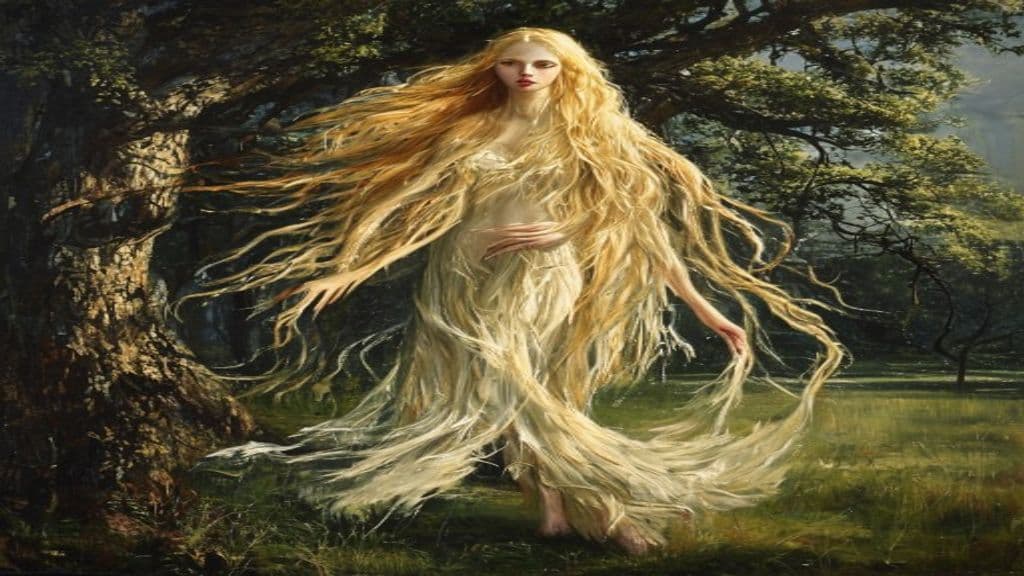
Samodivas are rooted in pre-Christian strata of Balkan belief as personified attendants of nature: spirits tied to mountains, springs, and seasonal cycles. The English and scholarly labels (samodiva / samovila / vila) reflect variant folk terms in South- and West-Slavic areas; some local strands of Balkan tradition link samodivas genealogically or thematically to older mythic figures such as Lamia, but that connection is presented in the source as one regional motif among others rather than a universal origin narrative.
Samodivas are commonly depicted as ethereal, tall, slender maidens with long loose hair (often blond, light brown, or red), pale glowing skin and striking or 'fiery' eyes. They are frequently described wearing free-flowing, feathered white gowns associated with flight; some accounts include wings. Power is often tied to their hair or to a veil-like garment in many regional tellings: damaging or removing a samodiva's hair or veil is presented in some traditions as depriving her of strength or causing her disappearance. These traits vary across collected Bulgarian and Macedonian accounts.
In the collected folklore samodivas embody forces of landscape and weather and can both help and harm humans. Specific harmful acts recorded in sources include causing drought, burning crops, or making cattle die of fever. They are also repositories of herbal and medicinal knowledge and in some Macedonian accounts can heal people or bestow healing-plant lore and magical favor on favored men. Samodivas sing and dance; their voices are described in some Macedonian tales as hypnotic and potentially dangerous to human sanity. They engage in ritualized contests of music and dance with humans and other supernatural beings, and narrative motifs describe long-term intimate bonds with men (e.g., entering a man's heart for a period and transmitting knowledge). Regional variants attribute additional practices and consequences (e.g., seasonal leaving and returning).
Weaknesses
- conditionpower tied to hair or veil (damage or removal may deprive her of strength or cause disappearance) — attested in multiple regional accounts
- conditionpricking on thorn bushes causing evaporation (Macedonian account)
- otheravoidance/taboo on direct naming (euphemistic references used in some Macedonian communities)
Wards
- conditionseasonal and locational avoidance (knowing samodivas are present from spring to autumn and avoiding their favored habitats)
- ritualtimed herb-gathering practice (example: picking certain plants such as Euonymus alatus only on the eve of Ascension Day because samodivas are considered more friendly and plant powers stronger — Bulgarian practice as reported)
- otheravoid calling them by their name (use euphemisms) — attested Macedonian precaution
Dhampir
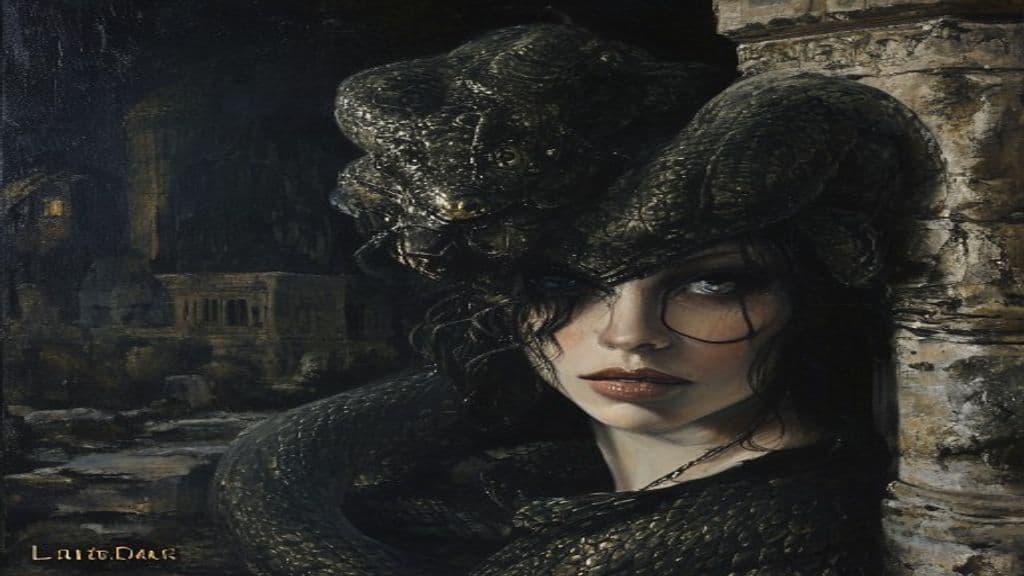
A figure from Balkan folk belief described as the offspring of a vampire and a human. Dhampirs occupy an intermediate social and ontological position — generally living among humans while inheriting certain capacities or markers associated with vampire-kind, and in many traditions are associated with the role of specialist vampire-hunters.
Kallikantzaros
A malevolent goblin-like creature in Greek and related Balkan and Anatolian traditions that dwells underground sawing at the world‑supporting tree for most of the year and emerges during the Twelve Days of Christmas (25 December–6 January) to harass households and people.
Sambhavanātha
Sambhavanātha is the third tīrthaṅkara (ford-maker, supreme spiritual teacher) of the current cosmic age in Jainism; born in the Ikshvaku (Solar) dynasty at Shravasti, he renounced royal life, attained omniscience beneath a Sala tree, and achieved mokṣa on the sacred peaks of Mount Shikharji.
Samdzimari
A fertility and oracular goddess in the Georgian tradition, associated with beauty, prophecy, and protection. (Note: - Power tier: Primordial (given her association with fertility and oracular abilities) - Appearance: Already accurately described as a beautiful blond-haired seductress - Abilities: No new information)
Samebito
A shark-like humanoid sea-being from Japanese literary and folkloric sources most familiar from Lafcadio Hearn's retelling "The Gratitude of the Samebito" (based on Kyokutei Bakin's tale "Kōjin"). Described as frightening in appearance but gentle in temper, the Samebito is notable in the tale for shedding tears that turn into precious gems.
Samhain
Celtic festival marking the end of harvest season and beginning of winter. (Note: 1. Power tier should be "Ancient" instead of "Primordial", as Samhain is a festival or time of transition, not an entity with cosmic powers. 2. Abilities need to be rephrased to reflect that the blurr)
Samia
Samia is a name attested in modern reference works for two closely related senses within Greek mythic tradition: (1) a mythic woman, described as daughter of Maeander and wife of Ancaeus; and (2) an epithet of the goddess Hera. The attestations provided in the available sources are limited to brief lexical/gazetteer notices rather than surviving narrative or cult texts.
Sampo
In Finnish mythology, the Sampo is a magical device that brings riches and good fortune to its holder, akin to the horn of plenty. (Note: - Power tier: Reduce from Primordial to Greater (The Sampo's abilities are powerful, but not cosmic in scope) - Abilities: Clarify that the Sampo attracts prosperity and success, but does not necessar)
Sampsa Pellervoinen
A Finnish vegetation haltia — an animate principle who sows all plant growth across the land. Attested in runic songs and Kalevala-derived compilations, Sampsa is ritually awakened in summer festivals to ensure the yearly return of fields, meadows, forests and other vegetation.
Samsin Halmeoni
A Korean goddess associated with childbirth and fate, revered for her connection to family lineage. (Note: * Power tier: Lesser (based on the description of being a localized spirit) * Abilities: Add that she has no specific abilities or behaviors described * Sensory cues: None listed in source material * )
Samson
A constructed fictional character in the 28 Days Later film series presented as an unusually large and highly aggressive variant of the infected, classified in the films as an "Alpha." Introduced in 28 Years Later (2025) and returned as a central character in 28 Years Later: The Bone Temple (2026).
Samyaza
Samyaza is a leading heavenly Watcher (one of the grigori) who instigates the descent of angels to mate with human women, transmit forbidden knowledge, and sire the Nephilim. In the Enochic tradition he leads the oath-bound band whose transgression brings divine punishment (binding and imprisonment); later and related traditions adapt his name and role in Manichaean, rabbinic, and legendary materials.
Community Record
- [1]Samodiva (folklore) — Wikipedia. Wikipedia contributors, 'Samodiva (folklore)', Wikipedia, The Free Encyclopedia, https://en.wikipedia.org/wiki/Samodiva_(folklore)wiki