
In the Enochic account Samyaza is one of the heavenly Watchers assigned to oversee humanity who persuades two hundred fellow angels to swear an oath to descend, take human wives, and 'consummate with human women.' Their union produces the Nephilim (giants), whose violence and appetite devastate human society and provoke divine retribution. God commands the archangel Gabriel to bind Samyaza and the transgressing Watchers; they are held 'for seventy generations in the valleys of the earth' until judgment and ultimately consigned to the abyss of fire. Variant traditions (e.g., the Book of Giants and Manichaean fragments) expand the narrative—Samyaza (Šahmīzād) appears as a progenitor whose offspring fight cosmic enemies such as Leviathan and in some versions are slain—while rabbinic and later legends adapt the figure (often conflating names such as Azza/Uzza) into other symbolic motifs.
Primary Enochic material emphasizes role and fate rather than detailed corporeal description. Later rabbinic legend (which sometimes uses Azza/Azzael as a variant) portrays a symbolic suspended figure: 'suspended between Heaven and Earth ... constantly falling, with one eye shut and the other open,' and identified in some tellings with the constellation Orion, hanging head-down. Apart from these visionary or symbolic portrayals, the supplied sources do not provide a consistent anthropomorphic or standardized physical description.
Samyaza’s principal capacities in the sources are leadership and persuasion (he organizes and secures an oath from two hundred angels), transmission of forbidden knowledge (teaching 'secret' or heavenly arts and names to humans), and sexual union with mortal women producing the Nephilim. His instruction of humans is presented as the imparting of dangerous knowledge — including names and arcana in later legendary strands — that transforms human society for the worse. Following the transgression, divine power is exercised against him: Gabriel is commanded to bind and imprison Samyaza, and some related traditions (Book of Giants) depict death or destruction of him and his offspring.
Weaknesses
- conditionDivine judgment and binding by angelic agents (Gabriel)
- conditionImprisonment in the valleys and consignment to the abyss of fire (as described in Enochic punishment)
- otherIn some accounts (Book of Giants) destruction/slaying of Samyaza and his offspring
Wards
- otherNone attested — the supplied sources record divine/angelic enforcement (Gabriel binding) rather than human wards or ritual protections
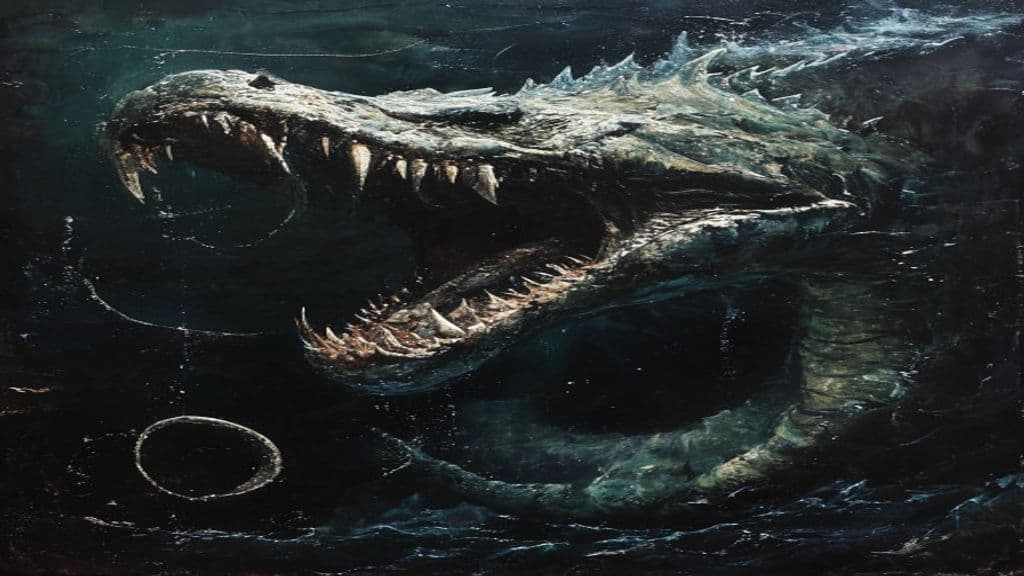
Leviathan
A giant sea serpent in Jewish mythology, embodying chaos and serving as a metaphor for a powerful enemy. (Note: - Power tier should be Ancient (Leviathan's abilities are often described as deity-level, such as threatening the damned after their lives are over and being annihilated) - Appearance is not mentioned)
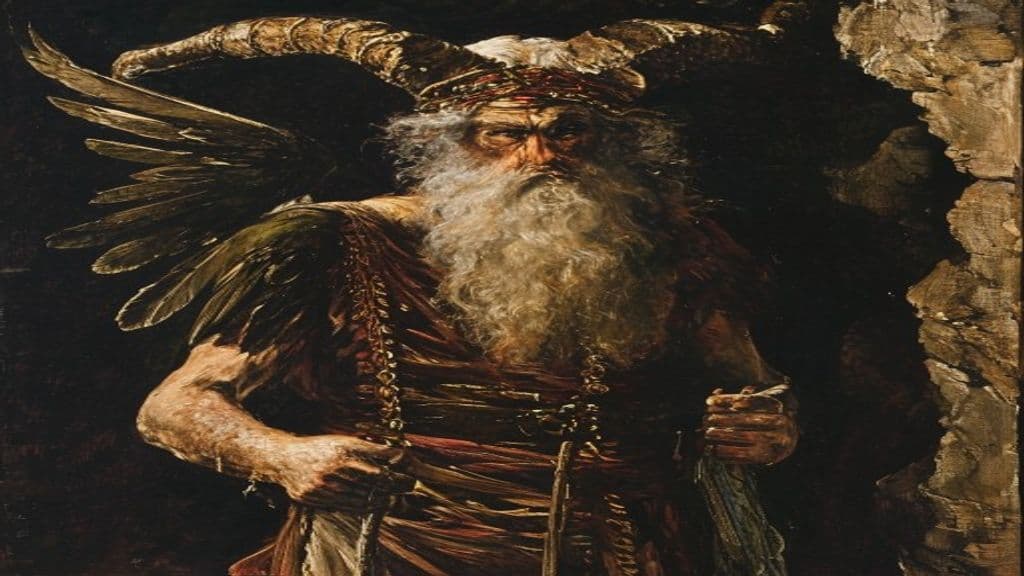
Azazel
In earliest biblical usage Azazel is a ritual locus or destination in the Yom Kippur scapegoat rite to which communal sins are sent; in later Second Temple and subsequent Christian and Islamic receptions Azazel becomes personified as a fallen angel associated with rebellion and the transmission of forbidden knowledge to humans.
Samia
Samia is a name attested in modern reference works for two closely related senses within Greek mythic tradition: (1) a mythic woman, described as daughter of Maeander and wife of Ancaeus; and (2) an epithet of the goddess Hera. The attestations provided in the available sources are limited to brief lexical/gazetteer notices rather than surviving narrative or cult texts.
Samodiva
A South- and West-Slavic (especially South Slavic/Balkan) female nature spirit and personification of wild places. Samodivas are ambivalent supernatural women associated with mountains, springs, trees, songs and dances; they can grant healing knowledge or punish humans who offend the landscape.
Sampo
In Finnish mythology, the Sampo is a magical device that brings riches and good fortune to its holder, akin to the horn of plenty. (Note: - Power tier: Reduce from Primordial to Greater (The Sampo's abilities are powerful, but not cosmic in scope) - Abilities: Clarify that the Sampo attracts prosperity and success, but does not necessar)
Sampsa Pellervoinen
A Finnish vegetation haltia — an animate principle who sows all plant growth across the land. Attested in runic songs and Kalevala-derived compilations, Sampsa is ritually awakened in summer festivals to ensure the yearly return of fields, meadows, forests and other vegetation.
Samsin Halmeoni
A Korean goddess associated with childbirth and fate, revered for her connection to family lineage. (Note: * Power tier: Lesser (based on the description of being a localized spirit) * Abilities: Add that she has no specific abilities or behaviors described * Sensory cues: None listed in source material * )
Samson
A constructed fictional character in the 28 Days Later film series presented as an unusually large and highly aggressive variant of the infected, classified in the films as an "Alpha." Introduced in 28 Years Later (2025) and returned as a central character in 28 Years Later: The Bone Temple (2026).
San La Muerte
San La Muerte is a skeletal folk saint venerated in Paraguay, northeastern Argentina and southern Brazil. Represented by small standing statuettes ('santitos'), the devotion functions as a transactional, saint-like patron who grants protections, favors (including aid in love, health, luck, and criminal matters) in exchange for offerings and ongoing reciprocal care.
San Martin Txiki
A trickster figure from Basque mythology with a strong connection to the natural world, particularly agriculture. (Note: - Power tier should be Ancient (deity-level), as San Martin Txiki is a trickster figure who stole secrets from deities and is described as inventing new tools. - Sensory cues are not mentioned in the )
Sandalphon
Sandalphon is a highly elevated angelic figure in later Jewish and Christian mystical literature (rabbinic, midrashic, and Kabbalistic), often ranked among the chief angels. He functions as an intermediary who gathers human prayers and transmits them to God, is associated with heavenly song, and is placed in Kabbalah as representing the sephirah Malkuth and as chief of the Seventh Heaven.
Sanjna
Sanjna (also Samjñā, Saranyu) is a Hindu goddess best known as the chief consort of the sun-god Vivasvant/Surya whose mythic actions (flight, transformation into a mare, and leaving a substitute/Chhaya) link her to themes of motion, identity, and the origins of several important progeny (Yama, Yami, Manu, the Ashvins).
Sanki Daigongen (三鬼大権現)
Sanki Daigongen (三鬼大権現) is a named gongen — a syncretic manifestation concept in Japanese religion — cited in festival and shrine listings for Itsukushima (Miyajima). The name literally combines characters for "three" (三), "oni/spirits" (鬼), and "great gongen" (大権現), placing the figure within the cultural category of a buddha manifesting as a local kami in the shinbutsu‑shūgō framework.
Sankōbō
Sankōbō is attested in a single cited source as a type of tengu in Japan. The available record provides only this classificatory label and supplies no further description, narratives, or ritual information.
Community Record
- [1]Samyaza — Wikipedia. Wikipedia: Samyaza (summary drawing on Book of Enoch, Talmud, Book of Giants, and later traditions)wiki
- [2]Samyaza — Wikidata. Wikidata entry for Samyaza (cross-references variant names and sources)other
- [3]The Illuminati Revisited -- 'The Secret School of Wisdom' (Archive audio). Modern esoteric/occult discussion referencing Samyaza as symbolic name (derivative use noted in provided materials)other
- [4]TFH #877: Samyaza And The Occult Symbolism Of 77 (Archive audio). Modern podcast discussing Samyaza in occult symbolism (derivative modern usage)other
- [5]Samyaza, King of Kings — Angelarium. Angelarium: modern encyclopedia of angels discussing Samyaza in occult/esoteric framing (derivative)other
- [6]Samyaza, Angel of Pride — Angelarium. Angelarium article attributing titles and attributes (modern reinterpretation)other
- [7]Samyaza (various traditional references summarized). Collected modern text compilation referencing traditional motifs (derivative modern source)other