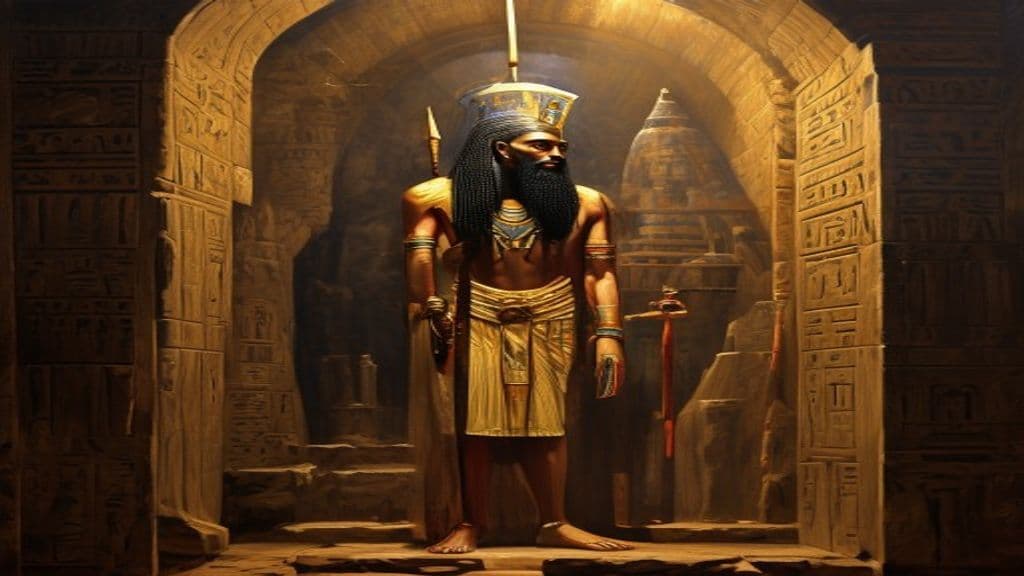
Abrahamic Seth: According to Genesis (as summarized in the supplied material), Seth is born to Adam and Eve after the murder of Abel by Cain and continues the human line; later elaborations in Jewish, Christian and Islamic traditions portray him as the righteous third son and ancestor of Noah. Egyptian Set/Seth: The supplied corpus does not give a full cosmogonic origin for the Egyptian god, but presents him as a deity significant enough to be the focus of a temple ritual ('The book of the victory over Seth') performed in the temple of Osiris and in other temples to cause his downfall and restrain his followers.
Abrahamic Seth: No physical description is provided in the supplied excerpts; he is described genealogically and through narrative roles. Egyptian Seth/Set: The supplied ritual fragment records the manufacture of 'a figure of Seth of red wax,' indicating cultic representation, but the corpus excerpts do not supply fuller iconographic detail or standard animal-headed depictions.
Abrahamic Seth: Presented as the antediluvian patriarch who continues humanity's line; later traditions attribute to him or his descendants the transmission of knowledge (Josephus credits his descendants with astronomical wisdom) and in some apocryphal accounts Seth participates in supernatural journeys and witnesses (Life of Adam and Eve). Islamic exegetical traditions sometimes describe Seth as a prophetlike transmitter of divine law. Egyptian Seth/Set: The ritual evidence in the supplied material frames Seth as an adversarial figure whose influence and followers are ritually targeted; the existence of a standardized rite to 'cause the downfall of Seth and his followers' implies a deity whose disruptive force is contained by temple liturgy rather than providing a catalogue of specific supernatural powers in the excerpts.
Weaknesses
- ritualTemple ritual of 'The book of the victory over Seth' (ritual enactment causing Seth's downfall)
- substanceRed wax (used to fashion a figure of Seth for ritual defeat)
Wards
- ritualThe book of the victory over Seth (temple rite performed in the temple of Osiris and other temples to cause the downfall of Seth and his followers)
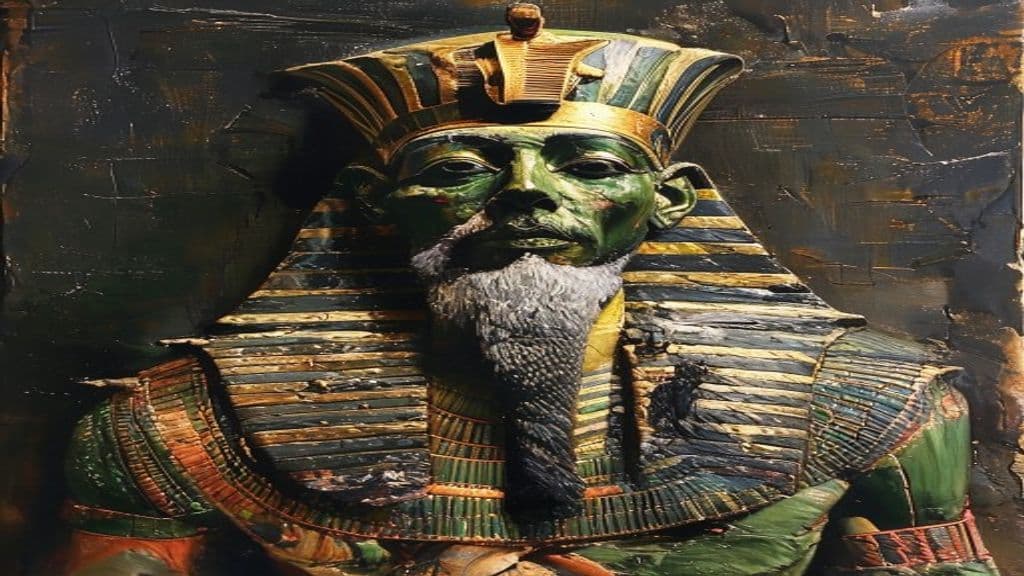
Osiris
Osiris is the major ancient Egyptian god of fertility, vegetation, death, resurrection, and the afterlife. He functions as sovereign of the realm of the dead, a guarantor of postmortem renewal and agricultural fertility, and the archetypal divine figure with whom deceased kings and mortals ritually unite to gain continuity after death.

Ghoul
A ghoul is a demon-like or monstrous humanoid originating in pre-Islamic Arabian religion, traditionally associated with graveyards and the consumption of human flesh. The concept later entered broader folklore and has been widely reused and transformed in modern fiction and popular culture.
Abimelech
Abimelech is a Hebrew personal name and occasionally a regnal title attested in the Hebrew Bible and later traditions. It appears as the name/title of Philistine rulers in the patriarchal narratives (the "king of Gerar" who interacts with Abraham and Isaac) and as the personal name of Abimelech son of Jerubbaal (Gideon) in Judges, a dynastic usurper whose brief rule ends in violent death.
Judah (Yehuda)
Judah (Hebrew: Yehuda) is a biblical patriarch—the son of Jacob—whose name became the eponym of the Tribe of Judah and of multiple historical and geographic entities (Kingdom of Judah, Judea/Yehud, later provincial and modern toponyms). The supplied sources treat Judah as a human ancestor and an ethnic/political designation rather than a supernatural being.
Serapis Bey
Serapis Bey is presented in modern Theosophical and Ascended Master movements as an Ascended Master and the Chohan (lord) of the Fourth Ray, described in these traditions as overseeing the Ascension Temple and guiding students in the qualities associated with that ray (purity, discipline, mastery). Sources place him among Egyptian-associated Brothers and within the internal organizational language of Ascended Master/theosophical brotherhoods.
Sergestus
Sergestus is a human Trojan companion of Aeneas in Virgil's Aeneid, presented as one of the minor members of Aeneas's retinue who participates in the funeral games (Book V). Later literary adaptations preserve him as a minor character; Roman tradition/gens Sergia regarded him as an eponymous ancestor.
Seri Gumum Dragon
A lake-dwelling nāga (serpent/dragon) of Pahang Malay and Jakun oral tradition, said to inhabit Tasik Chini (Chini Lake). Seri Gumum appears in origin myths that explain the creation of the lake and nearby islands and is held responsible for floods, dreams of rulers, and occasional dangerous encounters in local lore and later cryptozoological reports.
Serpent Deities of the Book of Gates
In ancient Egyptian tradition, serpent deities are guardians of gates that the newly deceased soul must pass through on its journey into the next world. (Note: * Power tier: Primordial is too strong; Greater or Ancient would be more fitting for serpent deities associated with gates and not explicitly described as having cosmic power. * Origin story and Appea)
Serpents in Jewish Tradition (Biblical Context)
Symbolic representation of evil and positive aspects, reflecting the complex nature of their symbolism. (Note: - Power tier: Downgrade to Greater (they are described as representing "evil power" but also have positive aspects) - Appearance: Add note that there is no physical description provided in source mate)
Seven Deadly Sins
A classificatory schema in Christian theological and monastic tradition that groups seven principal vices—capital or 'head' sins—understood as formative dispositions that incline persons to further wrongdoing and threaten their relationship with God.
Seven Great Lords of Narnia
A group of seven Telmarine noblemen in C. S. Lewis’s The Chronicles of Narnia who were sent beyond the Eastern Ocean during Miraz’s reign and disappeared; their fates (goldification, dragon-related death, enchanted sleep, nightmare-entrapment, and settlement) are the central quest of The Voyage of the Dawn Treader.
Seven Hathors
A grouped manifestation of the Egyptian goddess Hathor appearing as seven attendant female deities associated with birth, fate, and the transition of souls. They are attested in temple iconography and literary tales as visitors who foretell a newborn's destiny and appear in liminal contexts between life and death.
Seventh son of a seventh son
A folkloric birth-status applied to a male who is the seventh consecutive male child in an unbroken male line whose father was also a seventh son; across several European-derived and Latin American traditions this status is associated variously with exceptional healing or with dangerous supernatural transformations. The figure functions as a social/biological category that explains extraordinary capacities or misfortunes rather than a single mythic individual or species.
Sexual vampire (Daoist sexual vampirism)
A conceptual category and set of practices in Chinese Daoist sexual-alchemical literature describing the absorption of another person's qi and jing through sexual techniques; also a literary motif comparing seductress spirits to practitioners who 'feed' on vital substances. It functions as both an esoteric technique aimed at longevity and a mythic trope of sexual predation in stories of fox spirits and reanimated corpses.
Community Record
- [1]Seth. Wikipedia: Seth (summary of biblical, later Jewish, Christian, Islamic, and Gnostic traditions)wiki
- [2]The book of the victory over Seth. Attalus: Egyptian Texts — 'Ritual for causing the downfall of Seth and his followers... One shall bring a figure of Seth of red wax...'other
- [3]Life of Adam and Eve (summary). Summary (via Wikipedia) of Greek apocryphal episodes in Life of Adam and Eve noting Seth's journey to the Garden, encounter with a beast, and witnessing Adam's taking-up.wiki
- [4]Josephus on Seth (as summarized). Wikipedia summary citing Josephus' description of Seth as virtuous and of excellent character and attributing to his descendants astronomical wisdom and the erection of pillars.wiki
- [5]Seth (Wikidata). Wikidata entry for Seth, collating cross-cultural identifiers.other