
The concept appears within Daoist internal-alchemy and sexual cultivation discourse: practitioners described techniques to conserve and transmute the Three Treasures (jing, qi, shen) and to absorb another's vital substances during sexual intercourse. The arcane term cǎizhàn (採戰) — rendered in the sources as an early label for the practice — frames the sexual exchange as a competitive acquisition of energies. Literary tradition supplements technical silence by depicting spirits (notably fox spirits) and reanimated corpses that prey on human vitality, thereby exemplifying the feared or imagined outcomes of such energetic extraction.
As a practice, sexual vampirism has no fixed corporeal form; it is a set of techniques and aims rather than a distinct morphology. Literary analogues are described in stories: hulijing/jiuweihu (fox spirits) appear as beautiful women via shapeshifting to seduce men, while jiangshi ('stiff corpse; hopping vampire') is known in folklore as a reanimated, stiff corpse — the comparison is functional rather than an identity claim.
Sources describe the core ability as the absorption of another person's qi and jing through sexual intercourse or analogous techniques. Practitioners aimed to induce a partner's orgasm (provoking release of yin-associated essence) while inhibiting their own emission, thereby retaining and increasing their own stores of vital substance. Within Daoist belief this accumulation was thought to promote longevity and could, in narrative contexts, lead toward transcendence (xian); for victims, repeated loss of jing/qi was presented as weakening and potentially fatal. The depiction is framed in the sources as belief and technique within neidan and bedchamber manuals and as a motif elaborated in literature.
Weaknesses
- conditionmastery of one's own ejaculation/retention
- othertechnical knowledge of sexual techniques to avoid unwanted energetic loss
Wards
- othersexual technique and ejaculation-control practices (as preventive knowledge)
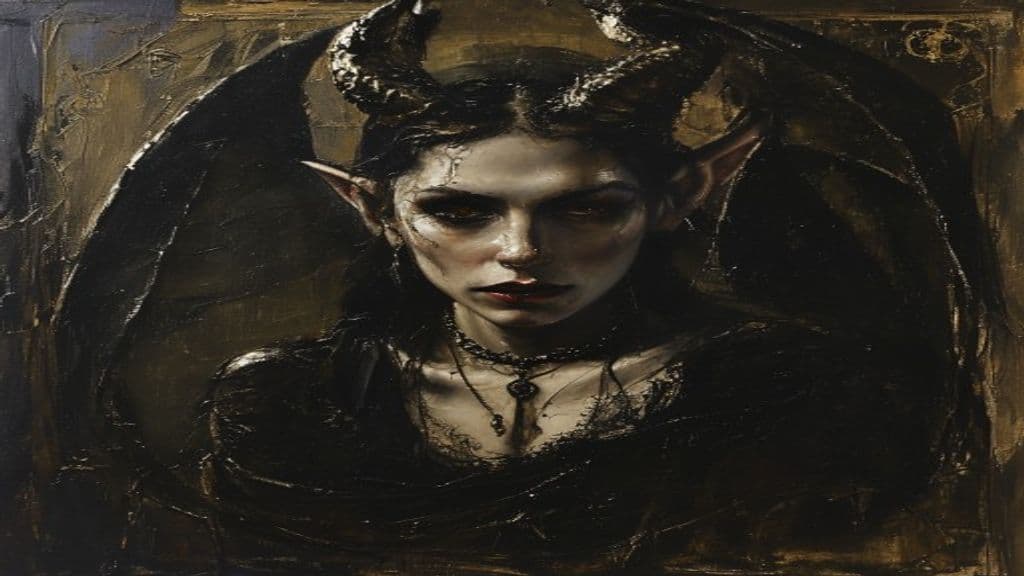
Succubus (Jewish Tradition)
Female demon that seduces male humans through dreams, potentially leading to a hybrid child and the man's decline. (Note: 1. Power tier should be Ancient, not Primordial (Primordial powers are cosmic, while Ancient powers are deity-level). 2. No information on physical appearance is missing because it's simply not mentio)
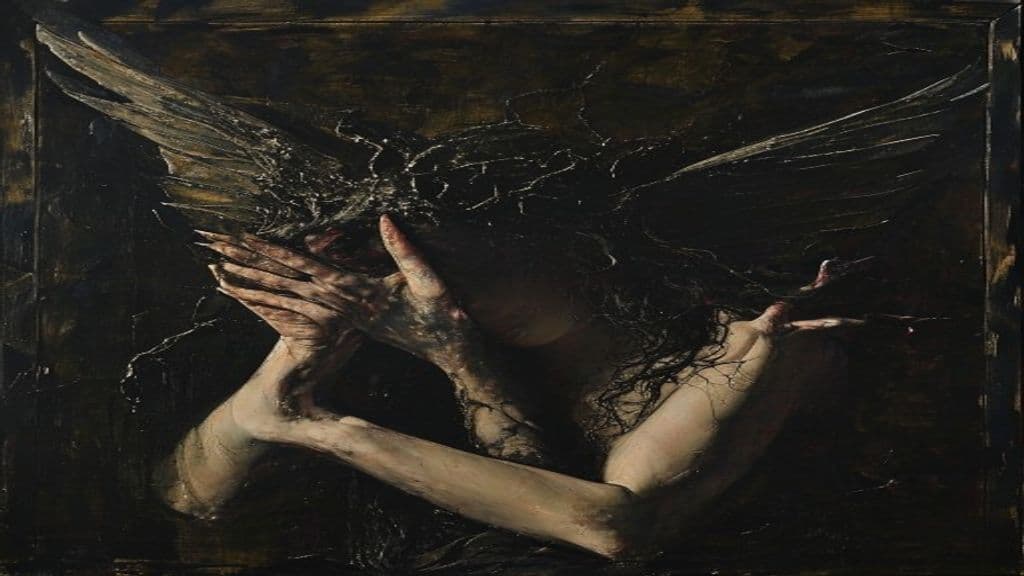
Incubus (Jewish Tradition)
A male demon that preys on female humans in their dreams, seducing them and leading to physical interactions. (Note: 1. Power tier should be Primordial (cosmic) is too high; a more fitting power tier would be Greater (deity-level), given its ability to manipulate humans' dreams and lead to physical interactions. 2. )

Jiangshi (hopping corpse)
A jiangshi (jiāngshī, 僵尸) is a reanimated human corpse in Chinese popular belief and media that moves with a stiff, hopping gait and is commonly depicted in modern sources as subject to control or containment by Taoist priests using talismans and ritual implements. The contemporary image is heavily shaped by Hong Kong cinema, which standardizes visual motifs (Qing robes, yellow fulu, glutinous rice) and priestly intervention.
Erlang Shen
Erlang Shen (二郎神) is a Chinese folk-religious and Daoist divine warrior associated with flood control, justice, hunting, and the subdual of demons. Venerated as a local river/irrigation protector who was later incorporated into Daoist pantheons and popular literary cosmologies, he is commonly depicted as a third-eyed spear-wielding hero accompanied by a celestial hunting dog.
Serpents in Jewish Tradition (Biblical Context)
Symbolic representation of evil and positive aspects, reflecting the complex nature of their symbolism. (Note: - Power tier: Downgrade to Greater (they are described as representing "evil power" but also have positive aspects) - Appearance: Add note that there is no physical description provided in source mate)
Seth
Two distinct traditional personae share the name 'Seth' in the supplied corpus: (1) the Abrahamic Seth, the third son of Adam and Eve and an antediluvian patriarch associated in later traditions with righteous lineage and transmission of knowledge; and (2) the Egyptian god Set/Seth, a powerful deity ritually opposed in the cult of Osiris, for whom a temple rite titled 'The book of the victory over Seth' prescribes the making of a red-wax figure to effect his downfall.
Seven Deadly Sins
A classificatory schema in Christian theological and monastic tradition that groups seven principal vices—capital or 'head' sins—understood as formative dispositions that incline persons to further wrongdoing and threaten their relationship with God.
Seven Great Lords of Narnia
A group of seven Telmarine noblemen in C. S. Lewis’s The Chronicles of Narnia who were sent beyond the Eastern Ocean during Miraz’s reign and disappeared; their fates (goldification, dragon-related death, enchanted sleep, nightmare-entrapment, and settlement) are the central quest of The Voyage of the Dawn Treader.
Seven Hathors
A grouped manifestation of the Egyptian goddess Hathor appearing as seven attendant female deities associated with birth, fate, and the transition of souls. They are attested in temple iconography and literary tales as visitors who foretell a newborn's destiny and appear in liminal contexts between life and death.
Seventh son of a seventh son
A folkloric birth-status applied to a male who is the seventh consecutive male child in an unbroken male line whose father was also a seventh son; across several European-derived and Latin American traditions this status is associated variously with exceptional healing or with dangerous supernatural transformations. The figure functions as a social/biological category that explains extraordinary capacities or misfortunes rather than a single mythic individual or species.
Shachihoko
A Japanese mythic sea-creature and roof-ornament (shibi) combining a predator head (dragon or tiger) with a carp body. In Japanese architectural and folkloric contexts it functions as an apotropaic roof guardian believed to store water and control rain, used primarily to protect wooden buildings from fire and as a status emblem.
Shaddād
A legendary king in Arabian folklore, described as tyrannical. (Note: 1. The power tier should be Greater (deity-level abilities are implied by association with a lost city and connection to Qur'anic lore). 2. Add appearance description from source material, mentioning )
Shade
A shade is the shadowy spirit or ghost of a dead person in classical and ancient Near Eastern literary and religious cosmologies, understood as the diminished, insubstantial residuum of a person who dwells in the underworld (Hades, Sheol/tsalmavet) rather than among the living.
Shadow (concept)
A polyvalent term used across optics, psychology, computing/administration, and popular paranormal conversation. In the supplied sources it is primarily an optical phenomenon and a psychological archetype; other uses are metaphorical or technical rather than descriptions of a single, traditional supernatural being.
Shadow People
Shadow people are a contemporary paranormal concept describing animate, human-shaped shadow-like presences. Presented primarily in modern paranormal media and practitioner discourse, they are often interpreted as spirits or unseen presences rather than as elements of a specific historic folk cosmology.
Community Record
- [1]Sexual vampire (Wikipedia). Wikipedia, 'Sexual vampire' article (summarizing Daoist sexual techniques, cǎizhàn, qi/jing, and literary analogues such as jiangshi and hulijing)wiki
- [2]Wikidata: Sexual vampire. Wikidata entry 'Sexual vampire' (label and linked data)other