
Sources do not give a single cosmogonic origin myth for the shtriga; rather, the figure is part of Albanian popular belief in which a woman may 'become' a shtriga through social circumstances such as childlessness, envy, or malicious intent. Linguistically the Albanian term is reported to derive from Latin strīga and is cognate with Italian strega, Romanian strigă and Polish strzyga, placing the shtriga within a wider European lexical and folkloric field of witch/striga-type beings. Ethnographic anecdotes (e.g., Edith Durham) supply localized images and practices but do not provide a unified origin narrative.
Typically described in human form as an old or middle-aged woman, often ugly or disfigured, with a crooked nose and eyes described as grey, pale green, or pale blue—referred to in Albanian as sybardha (literally 'white/pale eyes'). Her stare is said to be hateful and uncomfortable; people are warned to avoid looking directly into her eyes. After feeding she is commonly said to transform into a small flying creature, traditionally a moth, fly, or bee.
The shtriga is primarily portrayed as a nocturnal life-force or blood-sucker who creeps into sleeping infants' and children's rooms to suck their blood or vitality, leaving victims comatose or dead unless cured. After feeding she is said to transform into a flying insect and depart; folkloric motifs assert that only the shtriga herself can cure those she has drained (often by spitting into their mouths). She is also associated with an 'evil eye' (Albanian: syliga) whose gaze can harm or unsettle people. Socially, the shtriga functions as both an embodied witch-type person and a label applied to spiteful, envious, or childless women.
Weaknesses
- substancegarlic (hudhër)
- symbolcross (including pig-bone cross anecdote preventing exit from church on Easter, Edith Durham account)
- mantrarecitation of Ayatul Kursi (Qur'an 2:255) (Islamic tradition reported as repellent/curative)
- substanceholy water (used with a cross in Catholic accounts to destroy or repel)
Wards
- ritualsalt-and-words prophylaxis ('syt i dalçin syt i plaçin' / 'plast syri keq')
- substancegarlic placed in the house
- ritualblessing on first meeting ('t'rujt Zoti' and touching the child's nose)
- othersilver coin amulet soaked in shtriga's regurgitated blood and wrapped in cloth (Edith Durham anecdote)
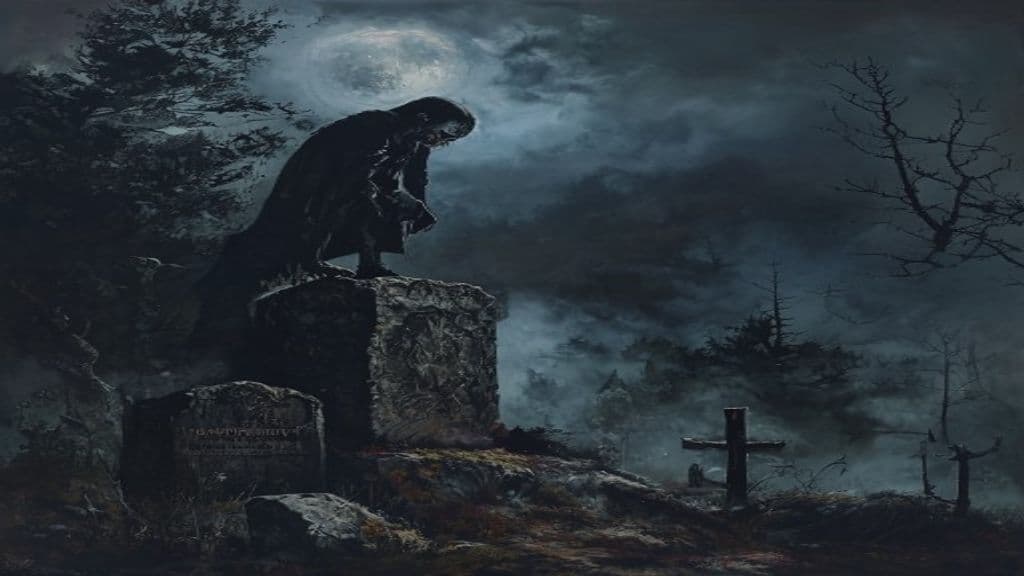
Strigoi
The vampire of Romanian folklore — either a living witch (strigoi viu) or an undead blood-drinker (strigoi mort). The source tradition from which the literary vampire emerged.
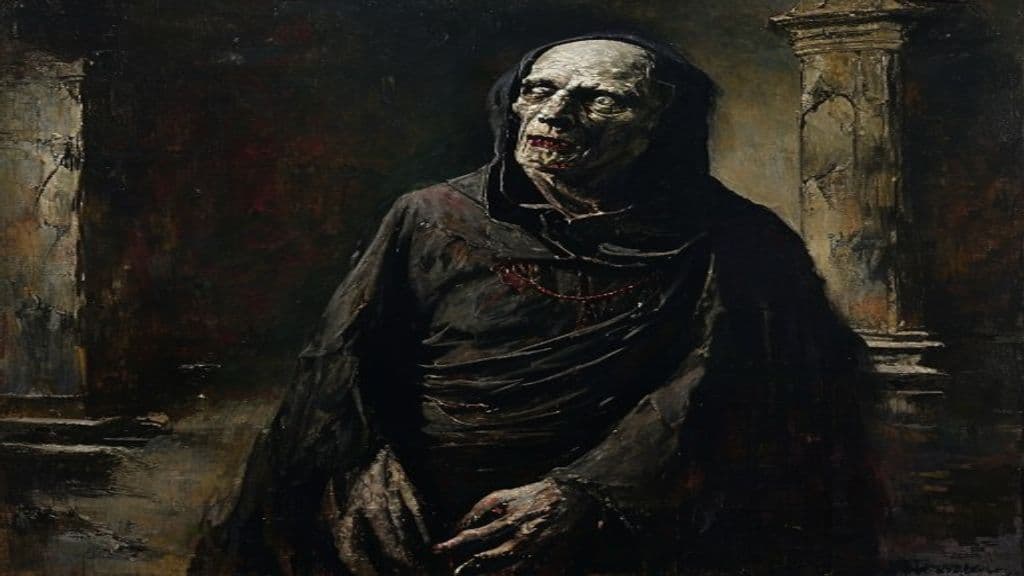
Vampire (tradition)
A class of revenant beings in southeastern and eastern European folk belief that subsist by feeding on the vital essence (generally blood) of the living. Recorded chiefly in early modern to modern oral traditions, these vampires are typically described as reanimated corpses whose presence explains unexplained illness, death, and post-mortem disturbances in their communities.
Kukudh
Kukudh (definite Kukudhi) is an Albanian undead revenant variably depicted as the restless soul of a miser haunting his house, a disease-carrying female demon, or a chain-borne January corpse in some regional accounts. The term also functions as a moral label for an evil person and as a name for a severe sickness in southern traditions.
Shiqq
A jinn-like monstrous being from Arabic folklore, described in available sources as a lower-ranked, 'half-formed' creature with a monstrous appearance. Attested in references to pre-Islamic Arabian belief and retained in later Bedouin folklore with conceptual overlap with ghouls and other malformed entities.
Shishiga
Shishiga (Russian: шиши́га), also called leshenka in one account, is a female swamp or forest spirit in Russian and Komi traditional belief. Presented as a place-bound nature-being, she is associated with marshes, riverbanks and wooded margins and is said to harass people (particularly intoxicated persons) and, in Komi tradition, to be an omen or cause of drowning and death for those who see her.
Shitalanatha
Shitalanatha is the tenth Tirthankara (spiritual ford-maker) of the present Jain cosmic age (avasarpini). Venerated as an exemplar who attained omniscience (Kevala Jnana) and liberation (moksha), he is worshipped in temples and at pilgrimage shrines including a footprints shrine on Mount Shikharji.
Shiva
Shiva (Sanskrit: Śiva) is one of the principal deities of Hinduism, central to Shaivism and pan-Hindu worship. Portrayed as a paradoxical figure—ascetic yogi, householder, warrior and cosmic agent—he is described as the auspicious One who creates, protects and transforms the universe and is commonly associated with dissolution within the Trimurti framework.
Shobijin
Tiny twin fairies who serve as the priestesses and emissaries of the giant guardian Mothra (Mosura), acting as ritual singers and spokeswomen for Infant Island and its protector across multiple films and media appearances.
Shreedhar Pandit
A devoted follower of Shaktism and discoverer of the holy cave-shrine of Sri Mata Vaishno Devi. (Note: - Power tier should be Greater, not Primordial (discovery of a cave-shrine is significant but not cosmic in scale). - Abilities should include the actual abilities or powers associated with Shreedhar )
Shu
Shu is a primordial deity of the Heliopolitan Ennead in ancient Egyptian religion, commonly identified with the atmosphere, air, and the space that separates sky and earth. He is portrayed in sources as spouse and brother of the goddess Tefnut and is credited in summaries with roles including separating Nut (sky) from Geb (earth), generating wind, and associations with light, dryness/heat, peace, and lions.
Shubin
Shubin (Ukrainian: Шубін) is a localized subterranean spirit from the Donbas mining region of Ukraine, described in regional folklore as a spirit 'of the mines' whose temperament is ambivalent — usually good but sometimes wicked. The figure is tied to miners' experience of the underground and to explanations of mine hazards and tragedies.
Shug Monkey
A Cambridgeshire folkloric supernatural creature described as having the shaggy body of a black sheepdog and the face of a monkey. Traditionally reported as haunting Slough Hill Lane between West Wratting and Balsham, it is framed in sources as a local ghostly or demonic road‑haunt related in popular literature to the region's black dog traditions.
Shuka (Śuka / Shukadeva)
Shuka is a rishi (sage) in Hindu tradition, son of Vyasa, famed as the principal narrator of the Bhagavata Purana and an exemplar of renunciation (sannyāsa) and immediate liberation (moksha). Many texts present him as born under miraculous circumstances linked to a parrot motif and as possessing innate scriptural knowledge.
Shulgi
Shulgi was a historical king of Ur (Third Dynasty of Ur, reign c. 2094–c. 2046 BCE) who, during his lifetime, was ritually elevated and inscribed with the divine determinative (𒀭) and thereafter received cultic worship as a deified ruler integrated into Sumerian temple practice.
Community Record
- [1]Shtriga - Wikipedia. Wikipedia contributors. 'Shtriga.' Wikipedia, The Free Encyclopedia.wiki
- [2]Shtriga - Wikidata. Wikidata entry Q1622598.wiki
- [3]Archive: Supernatural S01E18 'Something Wicked' (episode summary referencing shtriga motif). Episode archive summary referencing a witch who feeds on children; used to note modern media variants aligning with folk motifs.other
- [4]Archive item: magjistarja 4, koha e mospërfilljes.. Audio archive referencing Albanian folk motifs (used as a modern media/archival example).other
- [5]Archive: Starling Tribune fan podcast (references to media portrayals). Fan-podcast archive referencing contemporary portrayals that adapt shtriga motifs.other