
Multifaceted and potentially transformative; associated with water features, aquatic animals, pottery, snakes, gourds, and fire.
Believed to protect water and nature, implying a deep connection with the environment.
Weaknesses
- unknown
Wards
- unknown
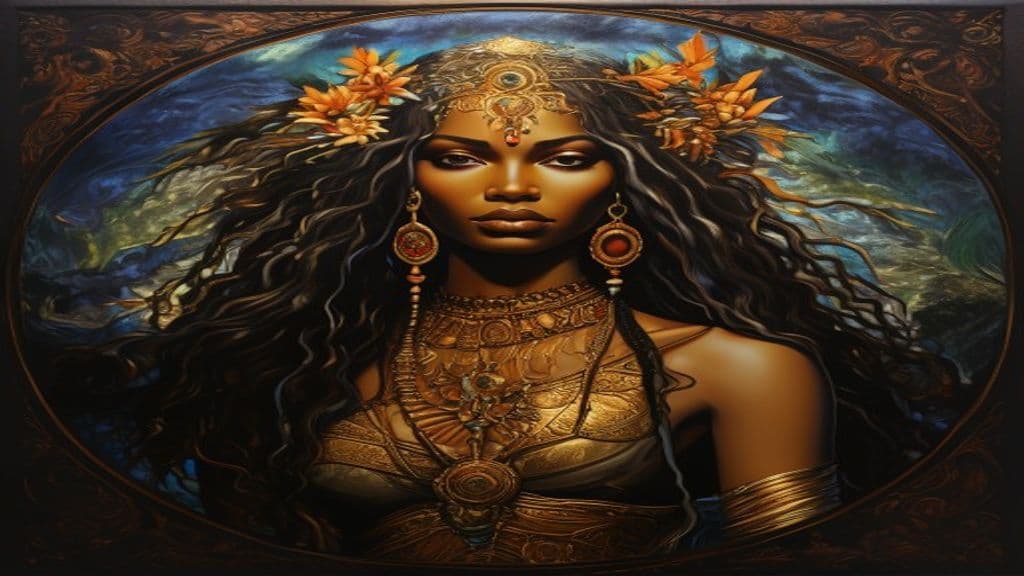
Leitra do ano/Letra del año
Annual proclamation or prediction made by babalawos (Yoruba priests) to advise and foretell events for the coming year. (Note: - Power tier: Leitra do ano/Letra del año is not a supernatural entity, so it should be removed from the power tier altogether (it's not a Minor Spirit). - Appearance: Add that there is no physical de)
Sila (Si'la, Si'lat)
A jinn-like, chiefly female shapeshifting spirit from Arabian folklore, the Sila (Si'la/Si'lat) is associated with desolate desert places where it misleads travellers, seduces men, and may intermarry with humans. Early sources equated it with the ghoul; later traditions treat it as the female counterpart of ghoul-type beings.
Silaa
The supplied sources do not attest to a supernatural entity named Silaa. The lexical string "Silaa" appears in the corpus as personal names, a place-name variant (Selaa/Silaa in Lebanon), institutional or project names (film title, architecture firm), and legal case citations; none of the provided materials describe Silaa as a spirit, demon, ghost, or other folkloric being.
Silap Inua
A pervasive Inuit cosmological principle—often called Sila—understood as breath/spirit, the animating medium of life, and the force of sky, wind, and weather. It is generally formless and impersonal, functions as the source or category for certain shamanic powers and helping spirits, and shows regional variations in depiction and emphasis.
Silenus
Silenus is the elderly, often drunken companion and tutor of Dionysus/Bacchus in Greek and Roman tradition. He appears both as an individual mythic personality and as a type (sileni), serving in theatrical, cultic, and artistic contexts as a comic rustic figure who, when intoxicated, may speak prophetic or bitter wisdom.
Silvanus
In Roman tradition, Silvanus is a prophetic deity associated with forests and woods, known for his ability to foretell events. (Note: 1. Power tier should be Primordial, as Silvanus is described as having prophetic abilities that foretell events, implying a level of cosmic or divine power. 2. Appearance: Add that the lack of physica)
Silver Branch (Celtic tradition)
The Silver Branch is an unclear symbol found in Irish mythology and literature, lacking clear definition and context. (Note: * Summary: The Silver Branch is a symbol, not an unclear symbol. * Power tier: Primordial (This seems too high given the lack of described powers or abilities) * Abilities: Mention that it doesn't hav)
Simoeis
Simoeis (Ancient Greek Σιμόεις) is the river-god personification of the Simoeis river in the Troad, counted among the offspring of Oceanus and Tethys and attested as an allied river-deity in accounts of the Trojan War (notably referenced in Homeric material summarized in modern sources).
Simonside Dwarfs
A regional race of small, hill-dwelling supernatural beings from Northumberland folklore (Simonside Hills). They are famed for leading travellers astray at night with lighted torches and vanishing at dawn; traditions treat them as a local variety of English/Borders 'dwarfs' or 'brownmen'.
Simurgh (Simorgh, Seemorgh)
The Simurgh is a large benevolent mythical bird from Persian literature and tradition, associated with wisdom, healing, and the fostering of heroes (notably Zal). It appears in epic sources (Ferdowsi's Shahnameh) and is adopted in mystical-theosophical symbolism (e.g., Suhrawardi) and in visual art across regions influenced by Persian culture.
Simut
Simut (also attested as imut or Shimut) is an Elamite deity attested in brief sources as the herald of the gods and associated with the planet Mars; he is also reported as closely associated with the rainbow goddess Manzat. Surviving references are short and fragmentary in the provided materials.
Sin (Nanna)
Sin (Akkadian Sîn/Su'en) and Sumerian Nanna is the Mesopotamian moon god, an astral deity associated with the lunar cycle, calendrical timekeeping, and civic cult. He is tutelary deity of Ur (and later Harran), father of Inanna/Ishtar and Utu/Shamash, and is represented iconographically by the crescent.
Community Record
- [1]