
The Sleep Temple is mentioned in relation to Heliopolis, an ancient Egyptian city, under the influence of Imhotep. This suggests that it may have been part of the ancient Egyptian tradition.
No physical description of the Sleep Temple is available.
Possible connection to hypnosis; no other abilities are described.

Imhotep
Imhotep was a historical Old Kingdom Egyptian official (chancellor to Pharaoh Djoser) whose memory was gradually glorified and by the Late Period and Ptolemaic era had been assimilated into Egyptian cult as a deified patron of medicine, wisdom, architecture, and scribal arts. He functioned as a non-royal cult deity centered at Memphis and was syncretized with gods such as Thoth and equated by Greeks with Asclepius.
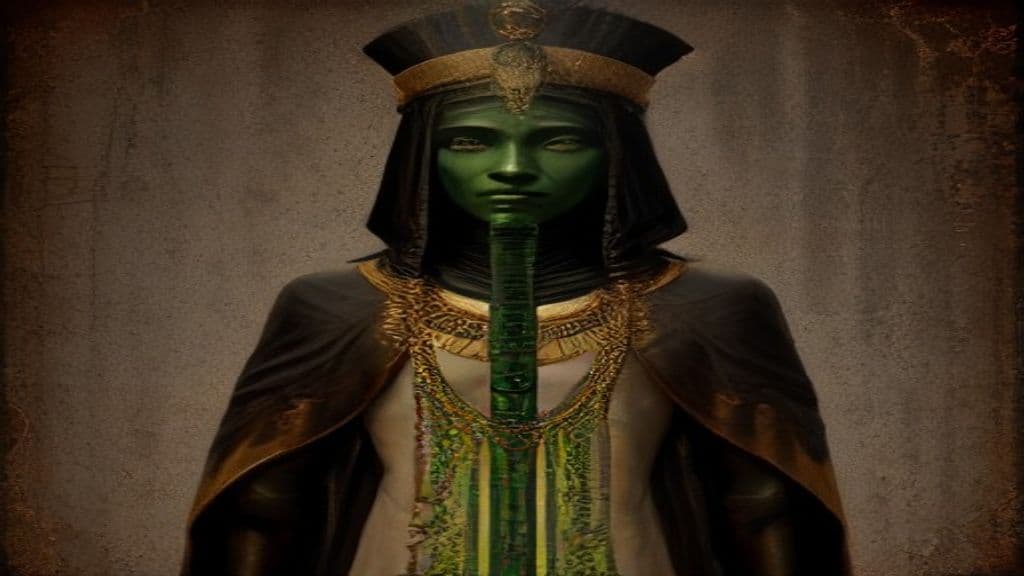
Ptah
Ptah is the principal Memphite deity of ancient Egypt, venerated as a creator god and patron of craftsmen and architects. He conceives the world 'in the design of his heart' and realizes it by speech, serves as master of ceremonies and justice in state cult, and is central to funerary and royal ritual in Memphis.
Amphiaraos
Greek hero and seer associated with the Amphiareion of Oropos sanctuary, known for his ability to foresee the future and connection to oracular responses and healing. (Note: 1. Power tier should be Ancient (not Primordial), as Amphiaraos is a hero and seer, but not a cosmological being. 2. Ability description: The ability to foresee the future is accurate, but the transfo)
Anius
Mortal king and priest of Apollo in Greek mythology, with significant spiritual roles. (Note: * Power tier: Lower than Primordial; considering Anius is described as a mortal king and priest, a more accurate power tier would be Greater or at least Ancient, but likely not Primordial. * Abilities)
Corona Australis
A constellation in the Southern Celestial Hemisphere associated with various cultural interpretations. (Note: 1. Power tier should be "Primordial" as Corona Australis is an astronomical object and not a deity-level entity. 2. Abilities are not mentioned in the source material; delete this section entirely. 3.)
Cult of Dionysus
A cult associated with the Greek god Dionysus, patron deity of wine, fertility, theater, and ecstasy. (Note: 1. Factual claim: The article states that Dionysus's original name 'Dionysus' (Διόνυσος) is derived from Linear B tablets as 𐀇𐀺𐀝𐀰 (di-wo-nu-so). However, the source material does not support this )
Greek Hero Cult
In ancient Greek religion, a hero (heros) is a being that occupies an intermediate plane between mortals and gods. They are venerated for their fame during life or unusual manner of death. (Note: 1. Power tier should be Primordial, as they are "more than human" and occupy an intermediate plane between mortals and gods. 2. Appearance is stated as abstract presence, not a physical description; t)
Interpretatio Graeca
Ancient Greek cultural practice of identifying foreign deities with their own gods through comparative methodology. (Note: - Remove the term "Ancient" from the power tier as it is not specified in the source that this entity has deity-level abilities. - Add to summary: "...and interpreting foreign mythologies through comp)
Interpretatio Slavica
A cultural practice among Slavic peoples to identify and equate their deities with those of neighboring cultures and Christian saints. (Note: - Power tier should be Ancient (deity-level), as it's a cultural practice rather than a supernatural being. - Sensory cues, weaknesses, and wards are not applicable to this entity, as it's an abstract)
Maschalismos (Undead Entity)
In Greek tradition, Maschalismos refers to the practice of rendering the dead unable to rise or haunt the living. (Note: - Power tier: Lesser (as it's a local, regional concept rather than a powerful deity-level entity) - Abilities: The source material doesn't support specific details about its powers; should be rephras)
Pelasgians
In Greek tradition, the Pelasgians were a collective term for indigenous people inhabiting Greece before the emergence of the Greeks. (Note: 1. Power tier should be Primordial is incorrect; given that there's no information about their abilities or behaviors, they should not have a power tier assigned. 2. Appearance should state "No physic)
Xoanon (Greek)
A wooden cult image used in Archaic Greece, often associated with deities or legendary figures. (Note: - Power tier should be Primordial (since Xoana are described as having spiritual significance and being associated with legendary figures/deities, implying they may have had more fundamental or univer)
Sledovik
A sacred stone in Slavic and Finnic pagan practices, imbued with spiritual significance. (Note: - Power tier should be Primordial (due to their widespread presence and spiritual significance in Slavic and Finnic cultures). - Abilities description is incomplete and inaccurate (the text only menti)
Sleeping Beauty (folktale motif)
A widespread fairy-tale narrative figure (Aarne–Thompson Type 410): a royal young woman who falls into a prolonged enchanted sleep caused by a curse or a magical/physical agent and is later awakened by reversal of that causation. The story functions as a folkloric motif across Italian, French, and German literary traditions and many later adaptations.
Community Record
- [1]