
Born Ghanshyam Pande on 3 April 1781 in Chhapaiya near Ayodhya, he left home at age eleven (29 June 1792) and traveled across India and parts of Nepal for seven years as a renunciate pilgrim known as Nilkanth Varni. During this peregrination he visited major pilgrimage sites (e.g., Puri, Badrinath, Rameswaram, Nashik, Dwarka, Pandharpur). He arrived in Gujarat (Loj) in 1799, met Muktanand Swami and Ramanand Swami, was initiated into sannyasa on 20 October 1800, and thereafter led and reconstituted the Uddhava Sampradaya into what became called the Swaminarayan Sampradaya. In 1826 he issued the Lekh, a legal document establishing two dioceses (Laxmi Narayan Dev Gadi/Vadtal and Nar Narayan Dev Gadi/Ahmedabad) with hereditary acharyas and institutional prerogatives, and he composed and promulgated core teaching materials including the Shikshapatri.
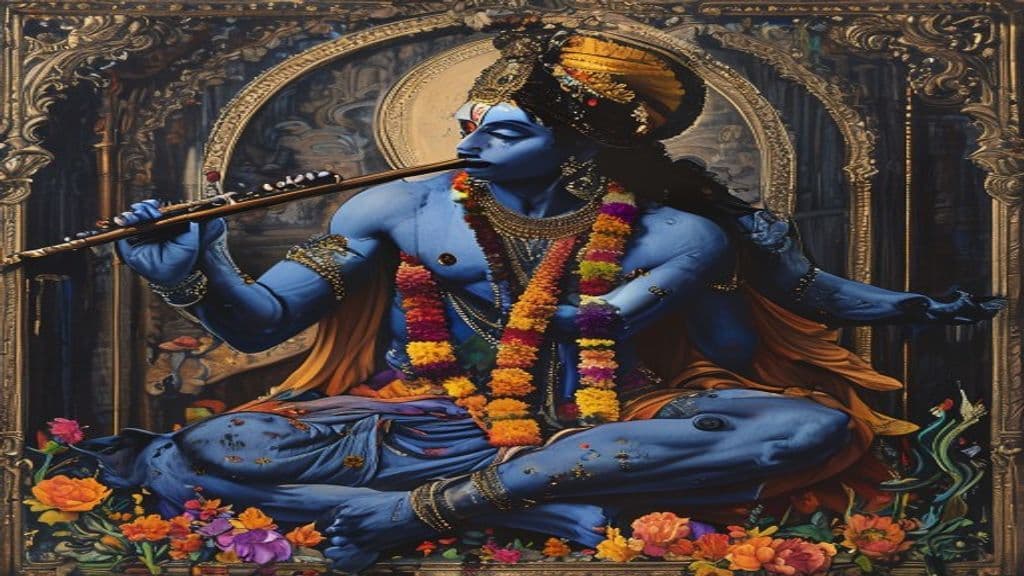
The sources emphasize his stages of identity rather than a sustained physical portrait: born Ghanshyam, he traveled as the renunciate Nilkanth Varni, and on initiation received monastic names such as Sahajanand Swami and Narayan Muni. He is described as a yogi and ascetic who adopted monastic life and attire appropriate to a sannyasi; the supplied sources do not provide detailed physiognomic description but situate him socially and ritually as a wandering ascetic turned founder and temple-centered leader.
Sources report that followers and tradition narratives attribute to him advanced yogic attainments (e.g., mastering a form of aṣṭāṅga yoga under Gopal Yogi in a short period), healing acts during travels (a reported cure of King Rana Bahadur Shah's stomach ailment), and prolific institutional achievements: teaching and transmitting the Swaminarayan mantra, composing the Shikshapatri, performing large-scale non-violent yajñas, founding six mandirs, instituting monastic orders, and legally organizing the sampradaya via the Lekh. Statements about supernatural or metaphysical status (that he is a manifestation of Krishna/Narayana/Purushottama) are presented in the sources as the belief of his followers.
Radha
Radha (Sanskrit: Rādhā; also Rādhikā) is a central goddess-figure in Vaishnavite devotional literature, portrayed as the chief gopi and beloved of Krishna and in many traditions as the supreme feminine principle (an aspect of Lakshmi or the hlādini-śakti). She is a paradigmatic emblem of devotional love (bhakti) whose prominence grows in medieval and early modern Bhakti poetry.
Surma
Surma is a Finnish mythic beast associated with the boundary of the dead (Tuonela) and a personification or synonym of death; in popular and literary summaries it is described as a terrible beast linked to being mauled or devoured and to the gates of the Underworld.
Surtr
Surtr is a foremost fire-associated jötunn in Old Norse myth who stands at the frontier of Múspell (Muspelheim). In eschatological sources he leads the sons of Múspell from the south at Ragnarök, bears a bright flaming sword from which light shines more brightly than the sun, and flings fire that burns the world.
Susan Pevensie
Susan Pevensie is a fictional English girl and one of the four Pevensie siblings created by C. S. Lewis in The Chronicles of Narnia. In the series she functions as a mortal child who becomes Queen Susan the Gentle (Queen Susan of the Horn) while ruling in the parallel realm of Narnia; her later estrangement from Narnia and ambiguous fate have generated extensive critical and fan commentary.
Sutītu
Sutītu is a Mesopotamian goddess whose theonym literally means "the Sutean goddess," understood in first‑millennium BCE Babylonia as the divine personification of the Sutean (West Semitic/nomadic) group. She is primarily attested in cultic and administrative contexts at Borsippa and in a chapel or festival lodging within Esagil in Babylon, where she received offerings and took part in ritual ceremonies alongside deities such as Nanaya and Mār‑bīti.
Svartálfar
Svartálfar (Old Norse svartálfar, sing. svartálfr), literally "black/swarthy elves" and sometimes called myrkálfar ("dark elves"), are a class of subterranean beings attested in Snorri Sturluson’s Prose Edda. In that corpus they are associated with Svartálfaheimr, a realm of the Nine Worlds, and appear primarily in the role of skilled underground craftsmen whose works affect the gods.
Svāhā
Svāhā is both the Vedic oblation-formula uttered when offering into the sacred fire and a personified goddess associated with sacrificial power (śakti) and the fire-god Agni. As formula she functions as the consummatory invocation in yajña and as a mantric ending in Mahāyāna Buddhist dhāraṇīs; as goddess she is described in Upanishadic and Purāṇic materials as the power that makes oblation effective and as a divine consort and mother in various narratives.
Swan maiden
A widespread folktale and mythic figure: a female being who changes between human form and a bird via a feathered garment (feather cloak, swan‑shirt, hagoromo). The motif appears across many cultures and is classed in folktale catalogues under ATU 400 and related 'magic wife' narratives.
Synty (Finnish)
Concept explaining origin of phenomena, materials, and species in Finnish mythology. (Note: 1. Power tier should be "Ancient" instead of "Primordial", as Synty is an abstract concept explaining origins and has no direct powers. 2. Add sensory cues based on the source material: "No explicit d)
Syrictæ
In Greek mythology and Medieval bestiaries, the Syrictæ are described as an Indian tribe with snake-like nostrils and serpentine legs. (Note: Power tier should be Minor Spirit, as the description doesn't imply deity-level or regional power; Abilities are missing, need to add source-based information; Sensory cues, wards, and weaknesses )
Syrinx
Syrinx is an Arcadian wood-nymph of classical Greek myth, a devotee of Artemis famed for her chastity who, pursued by the god Pan, is transformed into hollow reeds that Pan fashions into the first panpipes (syrinx). The story variously frames the metamorphosis as an answered plea to river-nymphs or as disappearance into marsh reeds.
Sytry
Sytry (also spelled Sitri) is a named spirit from the goetic/grimorial tradition (Ars Goetia) described as a 'great prince' who commands legions, appears as a leopard-headed, griffin-winged hybrid, and is said in the grimoire tradition to procure love between the sexes and assume a beautiful human form at a magician's command.
Community Record
- [1]Swaminarayan — Wikipedia. Wikipedia contributors. "Swaminarayan." Wikipedia, The Free Encyclopedia.wiki
- [2]Swaminarayan (Wikidata). Wikidata entry Q931506.other
- [3]Swaminarayan Mantra — Wikipedia. Wikipedia contributors. "Swaminarayan Mantra." Wikipedia, The Free Encyclopedia.wiki
- [4]Swaminarayan Jayanti & Rama Navmi Celebrations at BAPS Shri Swaminarayan Mandir, London (2009). BAPS news: "Shri Harijayanti / Swaminarayan Jayanti" (2009).other
- [5]Swaminarayan Jayanti & Rama Navmi Celebrations at BAPS Shri Swaminarayan Mandir, London (2011). BAPS news: "Shri Swaminarayan Jayanti" (2011).other
- [6]Is Swaminarayan an incarnation of any God? — Hinduism StackExchange. User Q&A: "Is Swaminarayan an incarnation of any God?" on Hinduism StackExchange.other