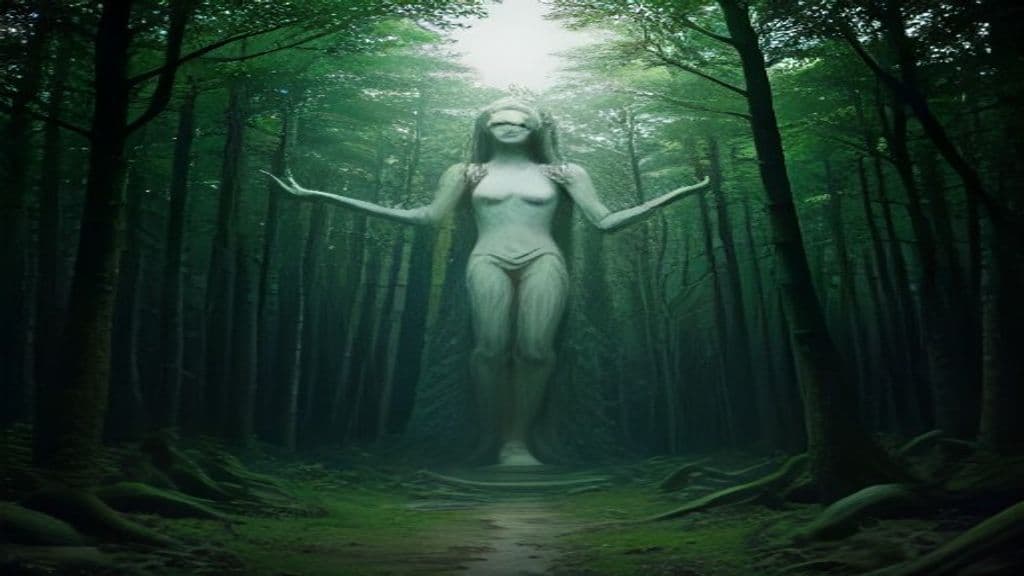
The provided sources do not contain an indigenous origin myth for Tharapita/Taara. Secondary summary material characterizes Tharapita as a prominent Estonian god and makes a scholarly comparison to the Finnish Ukko and the Germanic Thor, which places the figure in the category of high gods in northern European comparative accounts. Beyond that comparative placement, no origin narrative, cosmogony, or foundational myth is recorded in the supplied materials.
The supplied sources include no physical descriptions or iconographic representations of Tharapita/Taara. The only descriptive context in the materials is a song lyric that places the deity in relation to a sacred grove (hiis) — specifically the 'Püha Taara hiie' — but this lyric does not provide any visual or bodily depiction of the deity itself.
The sources do not enumerate specific powers, deeds, or mythic narratives for Tharapita/Taara. A secondary encyclopedic statement describes Tharapita as having 'a strong resemblance to the Finnish Ukko and the Germanic Thor,' a scholarly comparison that suggests a functional placement among prominent northern European sky/war/thunder deities; however, the primary materials supplied do not attribute concrete abilities or stories to Tharapita. The song source does indicate that Taara is a focus of sacred groves and invoked in burial practice, implying a cultic role in funerary rites and sacred landscape.
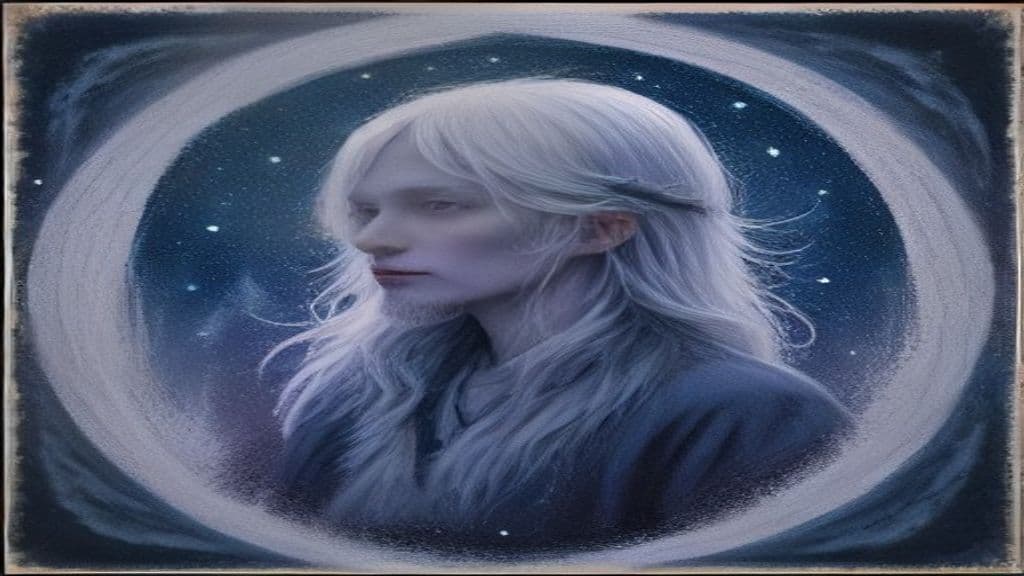
Ukko
Ukko is a Finnish sky- and thunder-associated deity figure whose thunder and rain are credited with fertilizing fields and securing agrarian fertility. He occupies the high sky (epithet ylijumala) and was petitioned for weather, harvest success, and various communal needs; his character and antiquity are debated in scholarship.
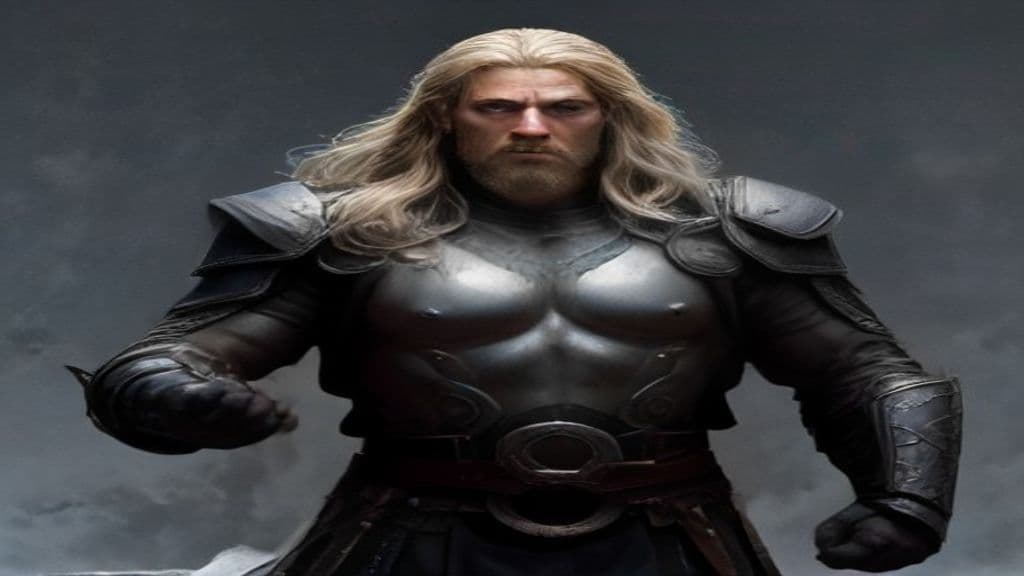
Thor (Þórr)
Thor (Old Norse Þórr) is a central god in the pre-Christian Germanic/Norse religious framework, primarily associated with thunder, storms, strength, protection, fertility, and the welfare of farmers. He is a hammer-wielding warrior who fights monstrous enemies (notably Jörmungandr) and is widely attested from Roman-era Germania through the Viking Age, with ongoing cultural presence in personal and place-names and weekday nomenclature (Thursday).
Kõu
Kõu is a name referenced in the context of Estonian mythic nomenclature in the supplied materials, but the provided sources do not record any substantive mythology, description, or practices connected to it. The surviving documentation of Estonian pre‑Christian belief is fragmentary and was systematically recorded only from the 19th century, which limits what can be asserted from the given dataset.
Olevipoeg
Olevipoeg (also attested as Alevipoeg in some listings) is a named figure within the Kalevipoeg epic and related Estonian mythic/genealogical traditions. He functions as a kinship/companion figure — a son/brother-type persona in the heroic cycle rather than a standalone supernatural deity or spirit in the supplied sources.
Sampo
In Finnish mythology, the Sampo is a magical device that brings riches and good fortune to its holder, akin to the horn of plenty. (Note: - Power tier: Reduce from Primordial to Greater (The Sampo's abilities are powerful, but not cosmic in scope) - Abilities: Clarify that the Sampo attracts prosperity and success, but does not necessar)
Tuonela
In Finnish mythology, Tuonela is a primordial realm representing the Underworld and the afterlife, sharing similarities with other Finnic cultural traditions. (Note: 1. Summary: Add that Tuonela's significance extends beyond Finnish mythology, as it shares similarities with other Finnic cultural traditions. 2. Power tier: Corrected - Tuonela is indeed associated w)
Ukko
Ukko is a Finnish sky- and thunder-associated deity figure whose thunder and rain are credited with fertilizing fields and securing agrarian fertility. He occupies the high sky (epithet ylijumala) and was petitioned for weather, harvest success, and various communal needs; his character and antiquity are debated in scholarship.
Thalassa
Thalassa (Ancient Greek: θάλασσα, 'sea') is the divine female personification of the sea in Greek mythographic, poetic, and visual traditions. Treated variably as a primordial sea-principle, a mother of certain sea-beings, and as an emblematic figure in Roman-era mosaics, she functions more as the sea made person than as a narrowly characterized cult-deity.
Thalia
Thalia is not a single supernatural being in the supplied sources but a personal name applied to multiple distinct figures in Greek myth (a Muse, a Grace, a Nereid, and a nymph/minor vegetation goddess) and to various modern secular persons, places, and institutions. The provided materials are disambiguation and archival records and do not present a unified cosmology or ritual system for a single entity named Thalia.
Thalpius
Thalpius is a human heroic figure of Greek myth, an Epeian leader from Elis and son of Eurytus of the Molionid line. He is listed among the leaders who sailed to Troy in the Catalogue of Ships and appears in later mythographical and local genealogical tradition as part of the ruling network of Elis.
Thanatos
Thanatos (Greek: Θάνατος) is the personified figure of Death in ancient Greek myth — a divine, chthonic agent who escorts or takes the dead. He appears across literature and art as an operative presence of mortality, frequently paired with his twin Hypnos (Sleep) and counted among the children of Night (Nyx).
The Abductors of the Sabine Women
In Roman mythology, a group of male warriors forced the abduction and marriage of women from other cities. (Note: 1. Power tier: Lower to Greater (their actions are described as a regional incident, not cosmic or deity-level). 2. Abilities: Change "strength and martial prowess" to something more accurate, e.g., ")
The Black Dog of Newgate
A late‑16th/early‑17th century English prison legend of a spectral black hound tied to Newgate Prison in London. First recorded in a tract attributed to Luke Hutton, the story functions as a morality exemplum in which a monstrous black dog is reported to avenge a murder inside the gaol and to haunt the prison precincts.
The Black Hood
The Black Hood is a fictional costumed vigilante and serialized comic-book superhero originating in American 'Golden Age' pulp/comic tradition (first appearing in Top-Notch Comics #9, October 1940). The mantle has been borne by multiple human individuals across continuities (notably Matthew Kipling Burland, Thomas "Kip" Burland, and Gregory Hettinger) and appears in comics, a 1943–1944 radio serial, and later reboots.
Community Record
- [1]Tharapita (Wikipedia). Wikipedia contributors, 'Tharapita,' Wikipedia, The Free Encyclopedia.wiki
- [2]Tharapita (Wikidata). Wikidata entry Q2610857, 'Tharapita'.wiki
- [3]Mets kohab, pilved jooksvad ruttu - Põldsepp & Pojad (archive recording, song lyric). Archive recording containing the song lyric that mentions 'Püha Taara hiie sülle talle hauda kaevame.'literary