Sources identify the Yara‑ma‑yha‑who as part of southeastern Aboriginal storytelling (often cited with Koori associations) and sometimes place it within broader Dreamtime or Aboriginal mythic frameworks in modern commentary, but the supplied materials do not preserve a definitive original‑language origin narrative or a fixed Dreaming account. The tale appears in oral disciplinary contexts and was popularized in modern retellings and anthologies rather than documented as a single codified creation story.
Described consistently as a small, little or baby‑sized being with bright red or scarlet skin and a squat, frog‑like body. It is said to have a very large head and a large mouth with no teeth, and its hands and feet end in sucker‑like pads used to attach to victims. Accounts vary between a miniature humanoid and a more monstrous goblin‑like form, but the standard English renderings emphasize the red, frog‑like man with suckers and a big head.
The Yara‑ma‑yha‑who waits in or under fig trees and drops onto unsuspecting travellers who rest beneath. It uses the suckers on its hands and feet to drain blood, then swallows the person, drinks water, takes a nap, and later regurgitates the victim who is left shorter and with a reddish tint to the skin; repeated occurrences reportedly transform the victim into another Yara‑ma‑yha‑who. Sources state it only targets living prey and is active during the day. Some tellings add that it "was not meant to be seen and got rid of anybody who glimpsed it," a formulation that appears in several retellings as an admonitory detail.
Weaknesses
- conditionInactivity at night / only active by day
- otherAvoidance by not resting under fig trees / supervision of children
Wards
- conditionPlaying dead until sunset
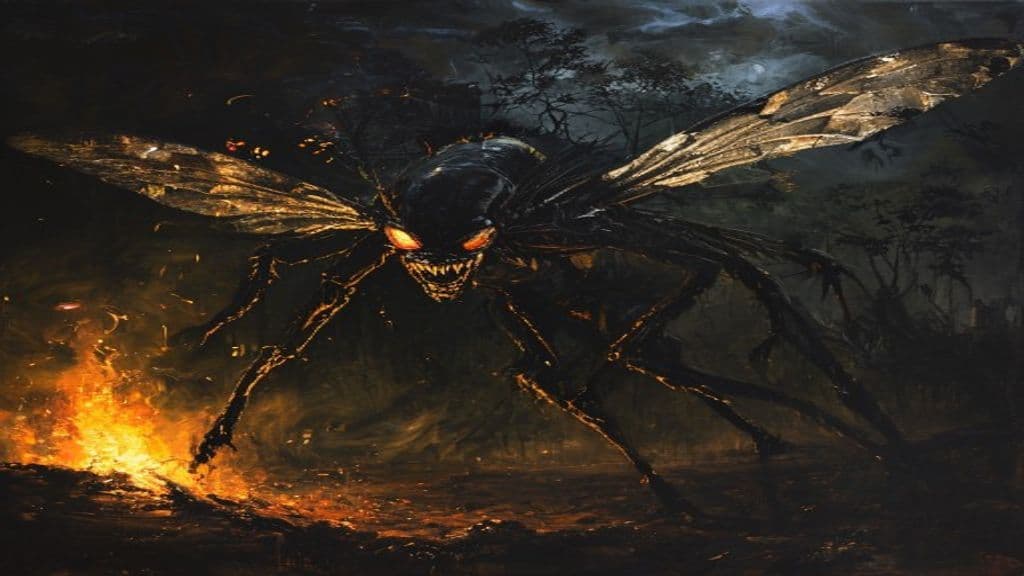
Adze
A vampiric firefly of the Ewe people of West Africa — a spirit that takes the form of a firefly by night and a malicious possessing being by day, drinking the blood of sleeping children and spreading disease.
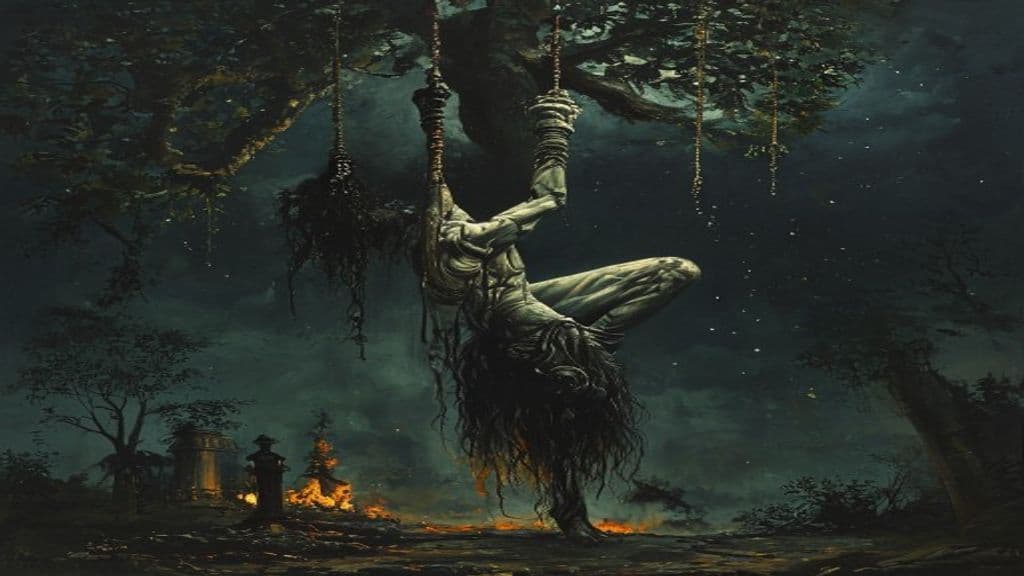
Vetala
A spirit that inhabits and reanimates corpses, possessing supernatural knowledge and the power to prophesy. One of the most feared beings in Shaiva tradition.
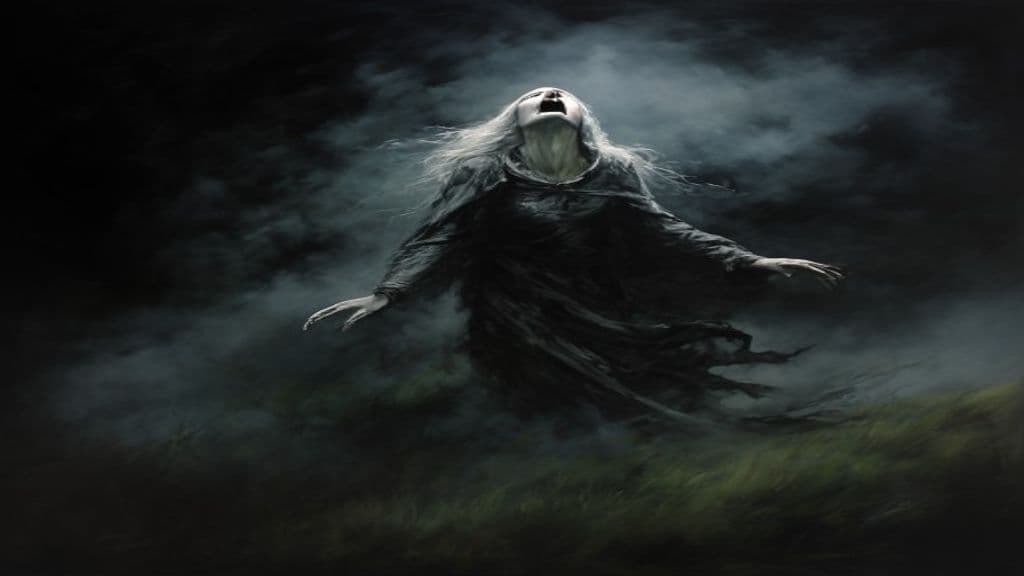
Banshee
A female spirit of Irish and Scottish folklore whose wail heralds an impending death in a family of Gaelic descent. Not a cause of death — a witness to it.
Adnoartina
Adnoartina is a Dreamtime ancestral lizard-being in Dieri tradition associated with the creation of red ochre (yamparnu) and the formation/sanctification of landscape features such as Uluru. The being’s actions in ancestral time explain the origin of sacred pigment and sustain ritual practices and social journeys to ochre sources.
Akenta
Akenta is attested in the provided sources only as a proper name appearing in several unrelated contexts (a listing of South Australian groups, commercial wine branding, a health company, and a parliamentary text). The sources do not describe Akenta as a supernatural being, and no mythic attributes, appearance, powers, or rituals are recorded.
Arkaroo
Arkaroo is a primordial ancestral serpent of the Dreaming associated with the northern Flinders Ranges (Ikara/Wilpena Pound) in South Australia. In local creation narratives it drank the waters of Lake Frome, carved valleys by reclining in the mountains, and left waterholes where it rested; the being is commemorated in place-names and rock art at sites such as Arkaroo Rock.
Baiame
Baiame is a principal creator/ancestral Sky Father in the Dreaming traditions of several south‑eastern Australian Aboriginal peoples. He is credited with shaping landscape, instituting law and ceremony (notably the first bora initiation), and returning to the sky while remaining present in sacred sites and rock art.
Barraiya
Barraiya is named in a single recorded account as a god in Australian Aboriginal mythology who fashioned the first vagina with a spear so that the being Eingana could give birth. The attestation presents Barraiya in a creator role connected to the origin of human birth.
Bunyip
A class of Aboriginal Australian water-being from southeastern Australia associated with swamps, billabongs, creeks, riverbeds and waterholes. Bunyip stories warn people away from dangerous waters and in some traditions enforce resource-use norms and child safety.
Buttons (pantomime)
Buttons is a stock theatrical character in British and Australian Cinderella pantomimes, typically a male household servant who helps Cinderella, expresses affection for her, and provides comic and emotional engagement with the audience. The role is conventional to stage pantomime practice rather than a supernatural being.
Cleone
Cleone is attested in the provided sources primarily as a feminine given name, a literary character/title (notably Robert Dodsley's 1758 tragedy), a subject of poetry (Henry Kendall), and a California place name. The supplied materials do not provide evidence of Cleone functioning as a folkloric supernatural being; a Wikipedia disambiguation line mentions a mythological Naiad named Cleone but no supporting primary or descriptive sources are present in the provided set.
Daramulum
Daramulum is a southeastern Australian Aboriginal sky-hero and ancestral figure associated with the major creator Baiame and with an emu-wife. He is embedded in rock‑art, sky knowledge (constellation identification), and initiation ritual practice, notably as a presence voiced through the bullroarer.
Gwion Gwion
A regional tradition/style of painted anthropomorphic rock art from the north‑west Kimberley region of Western Australia, characterized by finely rendered human figures with ornamentation. The tradition (also known by local names such as Kiro Kiro/Giro Giro) is archaeologically significant and the subject of debate over age and authorship.
Mimi (Mimi spirits)
Mimi are noted in the supplied source material only as a 'fairy-like' being appearing in a single-line entry for Northern Australian Aboriginal folklore. No further descriptive or functional information about Mimi is present in the provided dataset.
Mimi spirits
Mimi (Mimih) are extremely thin, elongated ancestral spirit-beings of Arnhem Land whose presence is embedded in regional rock‑art and Dreaming traditions. They are associated with rock crevices and rock‑shelters and are treated in some sources as spirit-figures tied to ancestral custodianship of painted sites.
Community Record
- [1]Yara‑ma‑yha‑who. Wikipedia: Yara‑ma‑yha‑whowiki
- [2]Wikidata: Yara‑ma‑yha‑who. Wikidata entry Q515345other
- [3]Episode 25: The Vampire Part 2 (You Dang Dip Get Out Of My House). Archive.org podcast episode referencing Yara‑ma‑yha‑whoother
- [4]The vampire hunter's guide. Archive.org: The Vampire Hunter's Guide (anthology/reference)other
- [5]A terrifying taste of short & shivery : thirty creepy tales. Archive.org anthology including Yara‑ma‑yha‑who retellingsother
- [6]The Yara‑ma‑yha‑who (blog). Bogleech: Informal retelling/summaryother
- [7]Writing Indigenous Vampires: Aboriginal Gothic or Aboriginal Fantastic?. M/C Journal article; discusses representational issues and comparative framingacademic
- [8]Episode 76: Yowie — Spirits. Spirits podcast episode referencing Aboriginal spirits including Yara‑ma‑yha‑who (modern commentary)other
- [9]13 Days of Myth‑mas: Day 5 — THE YARA‑MA‑YHA‑WHO. 13th Dimension popular culture articleother