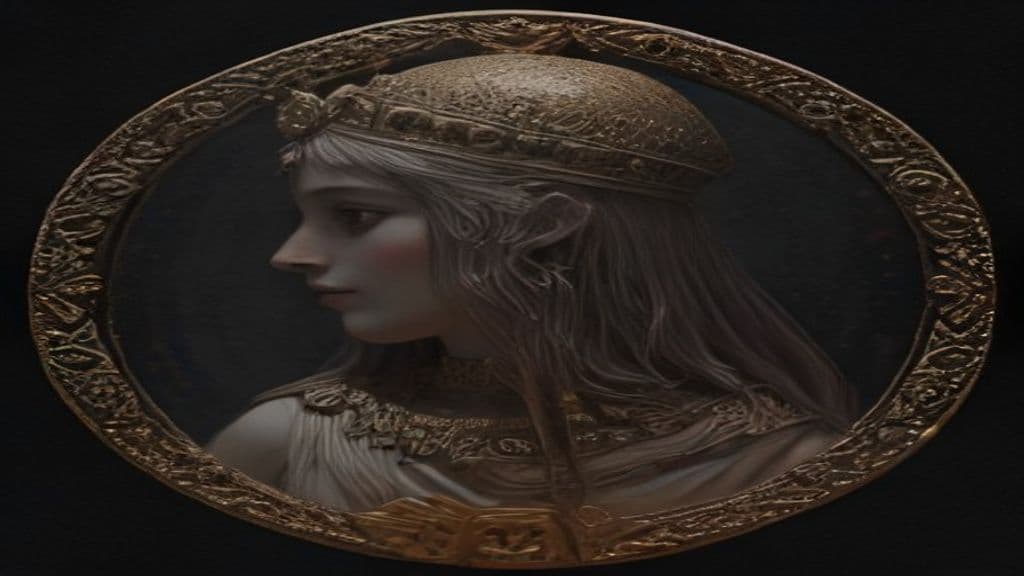
In the Heracles cycle Admete is presented as a daughter of King Eurystheus of Tiryns / Mycenae; Eurystheus commands Heracles to fetch for her the girdle of Hippolyte, queen of the Amazons, as one of the labors. In a separate tradition recorded in summaries of local lore, Admete was a priestess of Hera at Argos who fled with the cult image of Hera to Samos; after Samians recovered the image it was purified and restored to the Samian temple by Admete, an event commemorated locally by an annual festival called Tonea. Sources note that the Argive version may have been formulated to claim precedence for Argive worship of Hera.
Surviving sources provide no detailed physical description of Admete; she is identified by social roles (princess of Eurystheus' house and, in one tradition, priestess of Hera) rather than particular bodily or iconographic features.
No supernatural powers are attributed. Literary and local accounts portray her in human, social, and ritual capacities: as the named recipient whose desire for Hippolyte's girdle motivates one of Heracles' labors (and in one report as accompanying Heracles on that expedition), and as a cultic attendant who purified and restored a Hera image following its transfer to Samos. These actions are described as human, ritual, and narrative roles rather than magical abilities.
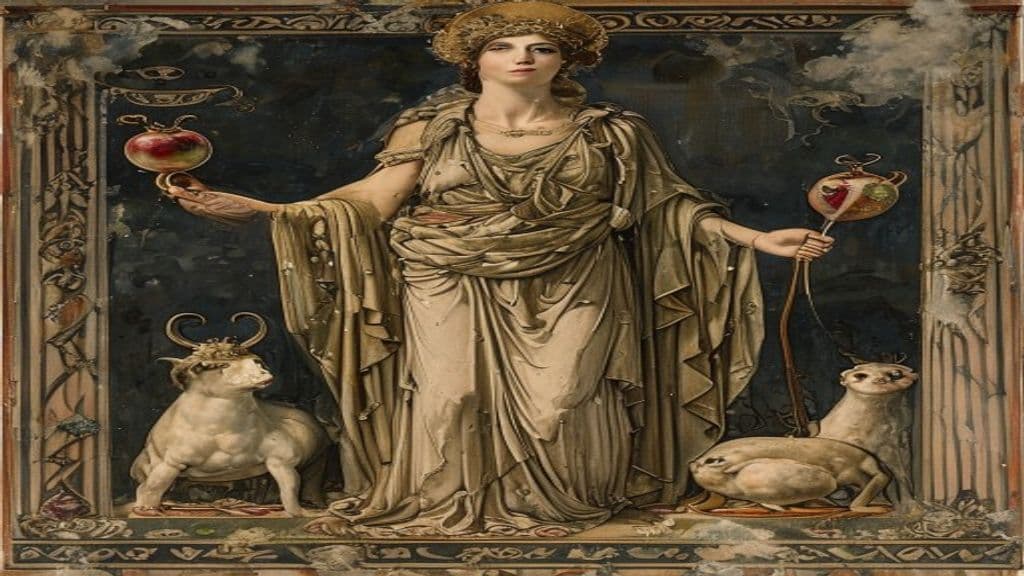
Agriopas (werewolf account)
A classical account—attested via Agriopas as quoted by later compilers—relating that a Parrhasian named Demaenetus/Demnetus ate human viscera during the Arcadian sacrifice to Zeus (Jupiter) Lycaeus and was transformed into a wolf for a period (reported as ten years in some recensions) before reverting to human life.
Alcathous (son of Pelops)
Alcathous (Ancient Greek: Ἀλκάθοος) is a mortal heroic prince in Greek myth, son of King Pelops of Pisa and Hippodamia, associated with the Pelopid house and remembered as the reputed founder-eponym of the Megarian citadel called Alcathoe. He is credited in some local traditions with slaying the Cithaeronian lion and functions primarily as a genealogical and topographical founder-figure rather than a supernatural being.
Alcyoneus
Alcyoneus (Ancient Greek Alkyoneús, Ἀλκυονεύς) is a colossal monstrous figure in Greek myth, variably presented as one of the Gigantes (Giants) born of Gaia and as a singular enormous hostile herdsman/warrior opposed to Heracles. Noted for prodigious strength and for a peculiar invulnerability tied to his native land, he is defeated when Heracles drags him out of his homeland at Athena's counsel in one influential tradition.
Antiope
Antiope is a name applied to several distinct mortal women in Greek mythic tradition, most commonly an Amazon daughter of Ares and a Theban princess mother of Amphion (by Zeus). The figures named Antiope appear across variant local narratives rather than as a single, consistent supernatural type.
Cercopes
The Cercopes (Greek Κέρκωπες, 'tailed ones') are a pair (or more) of mischievous trickster woodland figures in Greek myth, proverbial as liars, thieves, and comic rascals. Best known for stealing Heracles' weapons during his servitude to Omphale and being bound and humiliated by him, they appear across literary fragments and vase imagery and are variously explained as primordial offspring, human tricksters, or etiological figures for monkeys.
Adim (Egyptian Mythology)
In Egyptian mythology, Adim is a king and son of Budasheer who appears after the Great Flood. He has problem-solving skills and consults with his father's ghost for guidance. (Note: 1. The power tier should be Lesser (local spirit) as Adim is described as a king of Egypt, but not as having deity-level abilities. 2. Add sensory cues such as "consulting his father's ghost" and poss)
Aditi
Aditi is a major Vedic goddess in Hindu tradition who personifies the boundless, infinite cosmic principle and functions as the maternal matrix from which many celestial deities (the Ādityas and other groups) are born. In the Vedic hymns she is invoked as a protective liberator who guards petitioners, provides wealth and safety, and frees devotees from hindrances such as sin and sickness.
Adjassou-Linguetor
Adjassou-Linguetor is a loa in Haitian Vodou associated with spring water. The limited cited sources describe her as having protruding eyes and a bad temper; beyond these points, the available documentation (Wikipedia and Wikidata) is minimal.
Adlet
A category of non-human peoples in Inuit narrative tradition (also rendered Erqigdlet/Irqigdlit) that functions both as a mythic ancestor-race and as dog‑legged antagonists; the term can denote inland native American peoples or half‑canine humanoids depending on regional usage.
Admeto (Admetus)
Admeto is the legendary King of Thessaly from classical myth as transmitted into European opera (notably Handel's Admeto, HWV 22). Portrayed as a mortal tragic protagonist, his fate in the narrative is determined by divine oracular decree and by the actions of other mythic figures (Alceste, Apollo, Hercules) rather than by any innate supernatural power.
Admetus
Admetus is a mortal king of Pherae in Thessaly in the Greek tragic tradition (notably Euripides' Alcestis). His life becomes the subject of a divine bargain in which Apollo intervenes to delay his appointed death, a bargain that requires another to die in his stead — most famously his wife Alcestis.
Admetus of Pherae
Admetus of Pherae is a mortal king of Thessaly in Greek myth whose household and fate intersect with Olympian gods (notably Apollo and Artemis), the Fates, the personification of Death (Thanatos), and the hero Heracles. He is celebrated for hospitality and justice and is best known from the tragic cycle surrounding his wife Alcestis, who dies in his stead and is later recovered.
Community Record
- [1]Admete. Wikipedia: 'Admete (Ancient Greek: Ἀδμήτη means "the unbroken, unwedded, untamed").' and passages summarizing the girdle labor, the Tzetzes report, and the Samian Tonea account.wiki
- [2]Admete, Daughter of Eurystheus. Online myth-summary page summarizing Admete's role as Eurystheus' daughter and her connection to the girdle of Hippolyte.folk
- [3]Wikidata: Admete. Wikidata entry for Admete, linking data used in summary sources.other