
In the genealogical tradition surveyed by classical and modern compendia, Aetolus is a son of Endymion (himself a descendant of Deucalion) and appears among Endymion's children alongside brothers such as Epeius and Paeon. Pausanias' summary of the Elis traditions records that Endymion set his sons to race at Olympia for the kingship; Epeius is said to have won and obtained the throne, while other sequences of rulership in later summaries place Aetolus as the eponymous ancestor or founder associated with Aetolia. Variant accounts name different mothers for Aetolus (attested names in the surveyed sources include the Naiad Neis or Iphianassa, and in other traditions Asterodia, Chromia, or Hyperippe), illustrating the fluidity of local genealogical traditions.
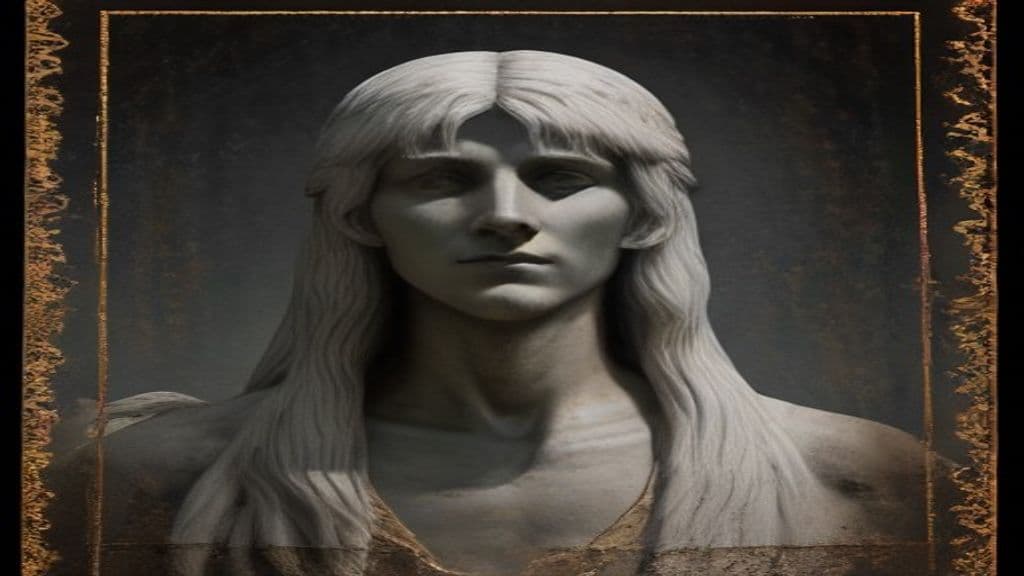
The examined sources treat Aetolus as a mythic ancestral and royal name within genealogies and provide no sustained physical description or surviving iconography in the cited material. Classical summaries and later encyclopedic entries present him as a genealogical personage rather than as a described visual type.
The sources summarized in the provided material do not attribute supernatural powers, magical faculties, or ritual functions to Aetolus; he is presented in the capacities typical of a legendary founder or king—as a participant in dynastic succession and as the eponym linked to a territorial name. No magical behaviors or cultic competencies are attested in the cited references.
Epeius
Epeius (Ancient Greek: Ἐπειός) is a name borne by at least two distinct mortal figures in Greek mythic-historical tradition: an Elean prince/king of the heroic age associated with the succession of Elis and the foundation narratives of Olympia, and an Achaean soldier-engineer celebrated in epic tradition as the builder of the wooden stratagem used at Troy (the Trojan Horse). Both personae appear as human actors within genealogical and epic frameworks rather than as supernatural beings.

Naiad
A class of female nature-spirits in ancient Greek religion whose being is bound to particular bodies of fresh water (springs, wells, fountains, streams). Naiads are local, embodied presences venerated in community cults and invoked in rituals of purification, healing, and life-cycle events, yet they may also act harmfully toward humans.
Abas
Abas (Ancient Greek: Ἄβας, gen.: Ἄβαντος) is not a single mythic being but a recurring personal name borne by multiple mortals and minor mythic figures in Greek epic and genealogical traditions — kings, founders, seers, warriors, attendants, a centaur, and a youth transformed by a goddess. The name is glossed in the sources as 'guileless' or 'good-hearted' and appears across Argive, Theban, Trojan, Euboean, and other local cycles.
Aegina
Aegina is an eponymous nymph of Greek mythology who personifies the island of Aegina in the Saronic Gulf. She is remembered primarily as the mother of the hero-king Aeacus and as the island’s mythical ancestress, anchoring local civic identity and cultic landscape.
Hippeia
Hippeia (Ἱππεία) is a Greek name applied both to a mortal woman in heroic genealogies and to a cultic epithet of the goddess Athena meaning 'of horses' or 'equestrian'. As an epithet (Hippeia Athena) the name marks Athena's association with horses and chariotry; as a proper name it appears in mythic genealogies (wife of Elatus).
Itonus
Itonus is an eponymous figure in Greek myth, appearing in two distinct genealogical traditions as a king and ancestor tied to the settlement Iton in Phthiotis and to a local sanctuary of Athena. The name is glossed in modern summaries as Ἴτωνος (romanized Itonos / Itonus) and has been interpreted as having willow associations in some scholarly reconstructions, but classical sources present him primarily as a mortal founder/ancestor rather than an independent supernatural spirit.
Lynceus of Argos
Lynceus of Argos is a mythic human figure in Greek legendary genealogy: a prince of Egypt, son of Aegyptus, who marries the Danaid Hypermnestra and thereby begins the Danaid dynasty that, in mythic descent, leads to Perseus. He is presented as a mortal king of Argos who succeeds Danaus on the throne and functions as an ancestor/founder figure in Argive dynastic legend.
Aethon
Aethon (Ancient Greek aithōn) is an epithet meaning 'burning', 'blazing' or 'shining' used across classical Greek literature to describe animals (especially horses), some other animals, and occasionally humans. In the provided sources it functions as a descriptive name applied in poetry and myth rather than as a single, individuated supernatural being; the term is also reused in modern taxonomy and cultural titles.
Aethra
Aethra (Ancient Greek: Αἴθρα, romanized Aithra, lit. 'bright sky') is a name borne by multiple women in Greek myth, most prominently a princess of Troezen who is mother of the hero Theseus. In some traditions an Aethra is also listed among Oceanids, indicating a separate, water‑nymph identity in certain genealogies.
Aetna (corporate name)
The supplied sources refer to 'Aetna' as Aetna Inc., an American managed health care company whose name derives from Mount Etna (Latin Aetna). The provided materials contain no attested folkloric or mythological entity named Aetna.
Aetnaeus
An epithet associated with gods and mythical beings connected to Mount Etna. (Note: - Power tier: Primordial (due to association with major gods like Zeus) - Weaknesses: Needs to be filled - Wards: Needs to be filled - Sensory cues: Needs to be filled - The summary should be revised )
Aex
Aex (also rendered Aix) is a name attested in fragmentary Greek mythic traditions with at least three different identifications: a nurse of the infant Zeus later said (in a Hyginus-derived summary) to have been changed into a constellation; an Arcadian epimelid or 'nanny-goat' nymph said to have borne the goat-associated son Aegipan; and a goatish primeval figure called Gorgô Aix ('Terrible Goat') described in a source-summary as slain by Zeus at the start of the Titanomachy. These attestations are brief and inconsistent across sources.
Aeëtes
Aeëtes is a mythic, semi-divine king of Aea (identified with Colchis) in the Greek heroic tradition, son of Helios and the Oceanid Perseis. He is guardian of wondrous objects—most famously the Golden Fleece—and functions as a royal task-master whose demands and possessions test visiting heroes (notably Jason and the Argonauts).
Afagddu
Afagddu (also Avagddu, Y Fagddu) is a figure in Welsh tradition noted for extreme ugliness and associated darkness. He appears in the Taliesin/Ceridwen narrative as the intended recipient of Ceridwen's cauldron of inspiration, and functions as a narrative catalyst within bardic origin material and Welsh triadic/name-list contexts.
Community Record
- [1]Aetolus (son of Endymion) — Wikipedia. Wikipedia, 'Aetolus (son of Endymion)'wiki
- [2]Aetolus (mythology) — Wikipedia. Wikipedia, 'Aetolus (mythology)'wiki
- [3]Elis - The Kingdom of Elis (summary of Pausanias). Archive: 'The Kingdom of Elis' (summary based on Pausanias' material)literary
- [4]Endymion / Elis genealogies — maicar Greek Mythology Link. maicar.com, 'Endymion' (genealogical treatment referencing Aetolus as son/eponym)other
- [5]Elis - Greek Mythology Link (maicar). maicar.com, 'Elis' (genealogical notes identifying Aetolus as eponym of Aetolia)other
- [6]Aetolus | Facts, Information, and Mythology (Pantheon). Pantheon.org article 'Aetolus'other
- [7]AETOLUS Definition & Meaning | Dictionary.com. Dictionary.com entry 'AETOLUS'other
- [8]ToposText entry: Aetolus. ToposText, 'Aetolus' (reference entry)other