
Classical and late-antique summaries preserve two separate mythic personages named Itonus. In one tradition (attested in summaries of Pausanias and later reference works) Itonus is a son of Amphictyon, king of the settlement Iton in Phthiotis, husband of the nymph Melanippe and father of Boeotus and daughters Chromia and Iodame; he is credited with founding a sanctuary of Athena at Iton where his daughter Iodame served as priestess. In a separate genealogical tradition (recorded in modern summaries of classical genealogies) a different Itonus appears as a descendant in the Boeotian line (son of a different Boeotus) and is named as father of Electryon, Hippalcimus, Archilycus (Areilycus) and Alegenor, making him grandfather to figures who figure among Trojan War genealogies. Later modern and medieval uses of the form Itonus appear as onomastic reuses but do not preserve the ancient cultic specifics.
Ancient sources and the supplied summaries provide no consistent physical description of Itonus as a supernatural appearance — he is represented as a mortal king/ancestor in genealogical lists and as the eponym of a place and sanctuary. Modern creative reinterpretations (e.g., contemporary blog material) portray vegetal or vine-like imagery, but these are modern artistic reworkings and are not classical attestations.
Classical traditions attribute to Itonus social and cultic roles rather than supernatural powers: founder of a sanctuary of Athena at Iton and progenitor in local genealogies. Some variant traditions present extraordinary parentage claims (for example, minority traditions that connect him to origins of Athena worship or that in some accounts make him a progenitor tied to the goddess), but primary sources treat him as an ancestral founder and eponym used to explain Athena's local epithets Itonis/Itonia. Modern sources may ascribe vegetal or animistic behaviors, but those are modern literary inventions absent from the classical record.
Weaknesses
- otherNone attested in supplied classical sources
Wards
- otherNo wards or protective practices against Itonus are attested in the supplied material; Itonus functions as ancestor/cult founder rather than a hostile spirit
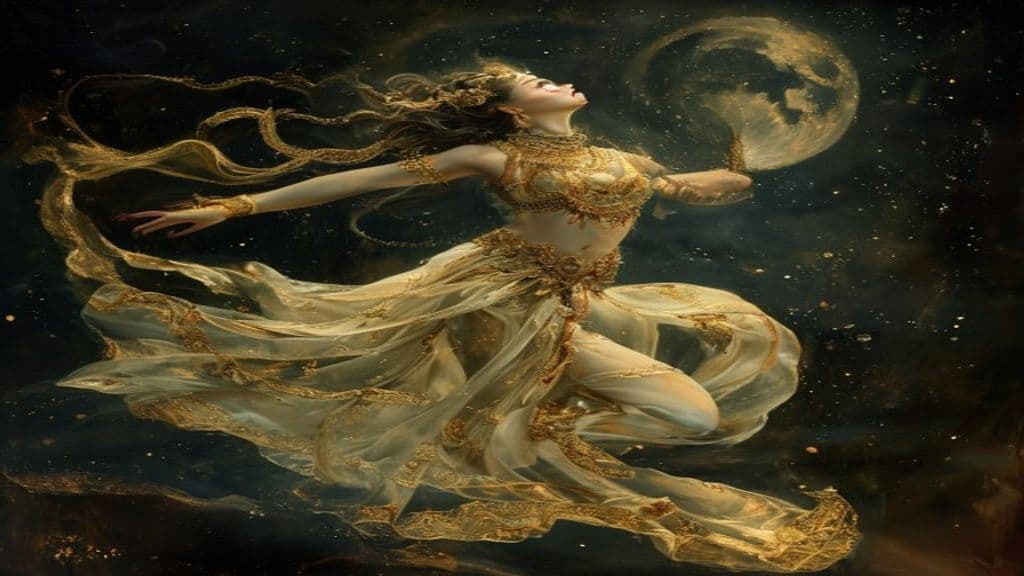
Apsara
Celestial dancers and water nymphs of Hindu cosmology — beautiful semi-divine beings who dance at the court of Indra and, by his command, descend to earth to distract sages from excessive asceticism.
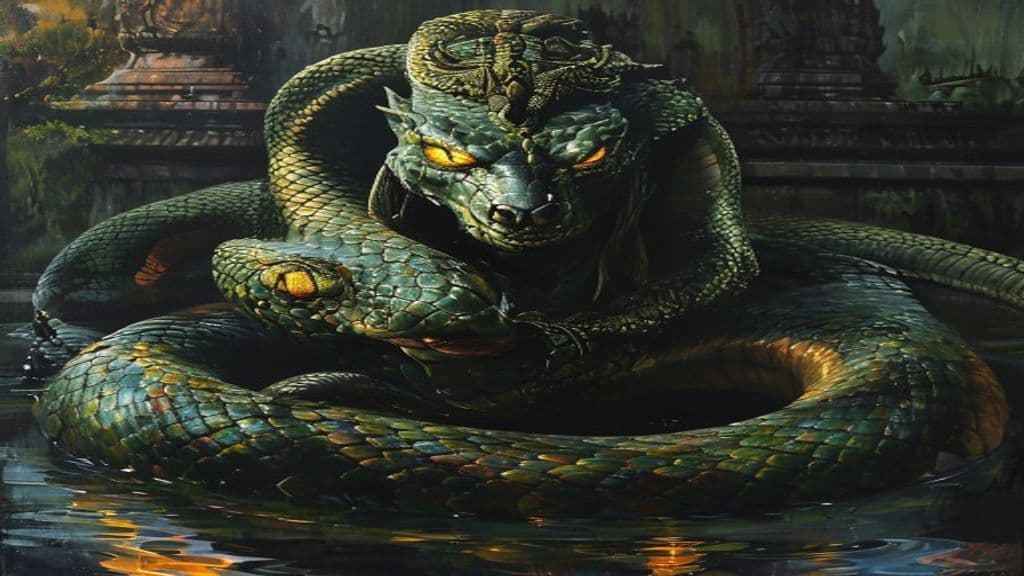
Naga
Divine serpent beings of Hindu, Buddhist, and Jain cosmology — powerful guardians of water, earth, and underground treasures. Revered as deities in South and Southeast Asia.

Athena
Athena is a major ancient Greek goddess associated with wisdom, handicraft (notably weaving), and warfare; she serves as a tutelary protector of cities—most prominently Athens—and is central to myth, cult, and civic identity in the Greek world.
Abas
Abas (Ancient Greek: Ἄβας, gen.: Ἄβαντος) is not a single mythic being but a recurring personal name borne by multiple mortals and minor mythic figures in Greek epic and genealogical traditions — kings, founders, seers, warriors, attendants, a centaur, and a youth transformed by a goddess. The name is glossed in the sources as 'guileless' or 'good-hearted' and appears across Argive, Theban, Trojan, Euboean, and other local cycles.
Aceso
Aceso (Ancient Greek: Ἀκεσώ, Akesó) is an ancient Greek goddess who personifies the process of healing and convalescence. She is attested as a daughter of Asclepius and Epione and was worshipped in healing centers such as Athens and Epidauros, appearing in sculptural reliefs alongside her family.
Achelous
Achelous is the personified river-divinity of the Achelous River in ancient Greek religion and mythology. Regarded among the potamoi (river-gods), he is portrayed as a shape-changing elemental deity associated with springs, naiads, and the production of abundance (the horn/cornucopia motif); he appears in myths chiefly as suitor to Deianeira and as Heracles' opponent.
Actia
Actia (Ancient Greek: Ἄκτια) is attested in the supplied sources not as a supernatural being but as (a) the ancient festival and epithet of Apollo Actius associated with Actium and Nicopolis, and (b) a modern taxonomic and commercial name (genus of flies; company and product names). No folkloric or mythic entity named Actia is documented in the provided materials.
Adikia
Adikia (Ancient Greek: Ἀδικία) is the personification and embodiment of injustice and wrongdoing in ancient Greek religious and visual culture, typically portrayed as the opposite and vanquished counterpart of the goddess Dike (Justice). She appears chiefly in archaic vase-paintings and emblematic visual programs where Justice punishes or restrains her.
Adonis
Adonis is a mythic mortal youth in ancient Greek tradition, beloved by goddesses (notably Aphrodite and Persephone) whose death and seasonal return are the focus of the women’s midsummer festival Adonia. The cultic practices—planting short-lived 'gardens of Adonis' on rooftops, ritual lamentation, and casting an effigy and withered plants into the sea—symbolically link him to vegetation cycles and Near Eastern dying-and-regenerating god traditions.
Adrasteia
Adrasteia is an ancient Anatolian/Greek goddess associated with mountain-mother cults and later identified with the Greek notion of inescapable fate and retributive necessity. She appears in Phrygian contexts as a mountain goddess connected to Cybele, in Cretan myth as a nurse of the infant Zeus, and by the fifth century BC is often equated or associated with Nemesis and other personifications of necessity.
Adrestia (Adrasteia)
Adrasteia (also Adrestia and multiple orthographic variants) is a figure in classical Greek tradition whose roles shift from a Phrygian mountain/mother-goddess probably associated with Cybele, to a Cretan nymph entrusted with nursing the infant Zeus, and by the fifth century BC identified with Nemesis as a deity/personification of divine retribution and balance.
Aeacus
Aeacus is a mythic king of the island of Aegina in Greek tradition, famed for his justice and piety. After death he is accorded a permanent office in Hades as one of the three judges of the dead alongside Minos and Rhadamanthus, and he is the eponymous ancestor of the Aeacidae.
Aegina
Aegina is an eponymous nymph of Greek mythology who personifies the island of Aegina in the Saronic Gulf. She is remembered primarily as the mother of the hero-king Aeacus and as the island’s mythical ancestress, anchoring local civic identity and cultic landscape.
Aesculapius (Asclepius)
Aesculapius (Greek Asclepius) is the classical divine-hero of medicine and healing in ancient Greek religion and later Roman cult. He functioned as the patron and legitimating divine figure for temples, attendants (therapeutae), and organized healing practices; his emblem, the rod of Asclepius (a snake-entwined staff), endures as a symbol of medicine.
Aetolus
Aetolus (Ancient Greek: Αἰτωλός, Aitolos) is a figure in Greek legendary genealogy described as a son of Endymion and an eponymous ancestor of the region called Aetolia. He appears in traditions that explain regional origins and sequences of local kingship, notably in genealogies connected with Elis and the foundation/ethnogenesis of Aetolia.
Community Record
- [1]Itonus — Wikipedia. Wikipedia, 'Itonus' entry (accessed via provided research notes).wiki
- [2]Itonus — Myths UVic (Iton place-name entry). Myths of the World — entry 'Itonus. Place name: Itonus'.other
- [3]Alegenor — Wikipedia. Wikipedia, 'Alegenor' entry (genealogical material referenced in research notes).wiki
- [4]Archive: LP0052 The Kingdom of Elis (Pausanias summary material referenced). Archive material summarizing Pausanias passages used in the research notes.other
- [5]Rileybrad's Blog — January 2010 (creative reuse). Contemporary blog material cited in the research notes that reinterprets the name Itonus in vegetal/creative terms.literary