
Agares does not have a single mythic origin narrated in the supplied materials; rather he is attested across multiple historical grimoire compilations where he appears as a catalogued operative in a ceremonial magical cosmology. He is listed among the named spirits in authorities such as the Pseudomonarchia Daemonum and the Lemegeton/Lesser Key of Solomon, appears in the Livre des Esperitz and Book of the Office of Spirits, is mentioned in the Grimoire of Pope Honorius and the Grand Grimoire (in which he is sometimes placed under different superiors), and features throughout manuscript collections such as Sloane MS 3824. In these sources he is assigned a rank (commonly a titled noble such as a duke), a directional jurisdiction (commonly the east / Oriens), and a commanded following of legions; those manuscript traditions collectively create his role as a named, serviceable spirit within the grimoire corpus rather than a single biographical origin tale.
Across the grimoire tradition Agares is most commonly described as an old man. Many compendia (notably the Lemegeton/Lesser Key and Pseudomonarchia Daemonum as summarized in reference works) add distinctive accoutrements: he is depicted riding upon a crocodile and bearing a hawk on his fist. Variant manuscripts alter these details: the Book of the Office of Spirits describes him riding a cockatrice (and omits the hawk), while the Grimoire of Pope Honorius and the Livre des Esperitz present briefer descriptions that omit the animal mount and reduce him simply to an old man. The supplied sources therefore record a stable core (an elderly male figure) with manuscript-dependent variations in mount and attendant bird of prey.
The grimoires as summarized in the supplied materials attribute a cluster of practical and disruptive functions to Agares. He is named as a spirit who teaches languages; who stops, locates, and retrieves runaway persons; who causes earthquakes; and who can grant noble titles. Legion counts attributed to him vary by source (the Lemegeton/Goetia and Pseudomonarchia give 31 legions, while the Livre des Esperitz gives 36), and some manuscripts connect him to treasure-guarding invocations. Sloane MS 3824 specifically references an "Experiment of Agares," a procedure intended to draw or bind him into a crystal, attesting to practices of invoking and containing him in material objects. Thomas Rudd’s schema (as reported) pairs Agares with the Shem HaMephorash angel Jelial as an oppositional correspondence in an angel–spirit balancing system.
Weaknesses
- ritualbinding and commanding via grimoire conjurations
- ritualoppositional angelic names (Shem HaMephorash correspondence: Jelial) — attested in Thomas Rudd's pairing
Wards
- ritualstandard ceremonial protections of grimoire evocation (circles, conjurations, sigils) — implied by grimoire context
- ritualcontainment in a material vessel (e.g., the Sloane MS 3824 "Experiment of Agares" to draw him into a crystal)
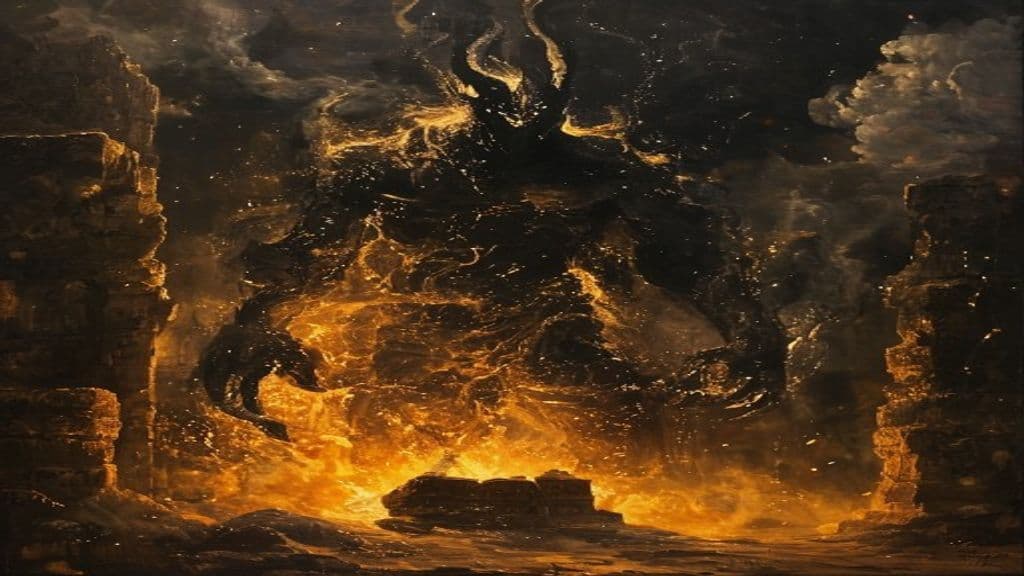
Ifrit
One of the most powerful classes of jinn in Islamic and pre-Islamic Arab tradition — a fire-born being of immense strength and cunning, capable of great works of engineering and terrible violence.
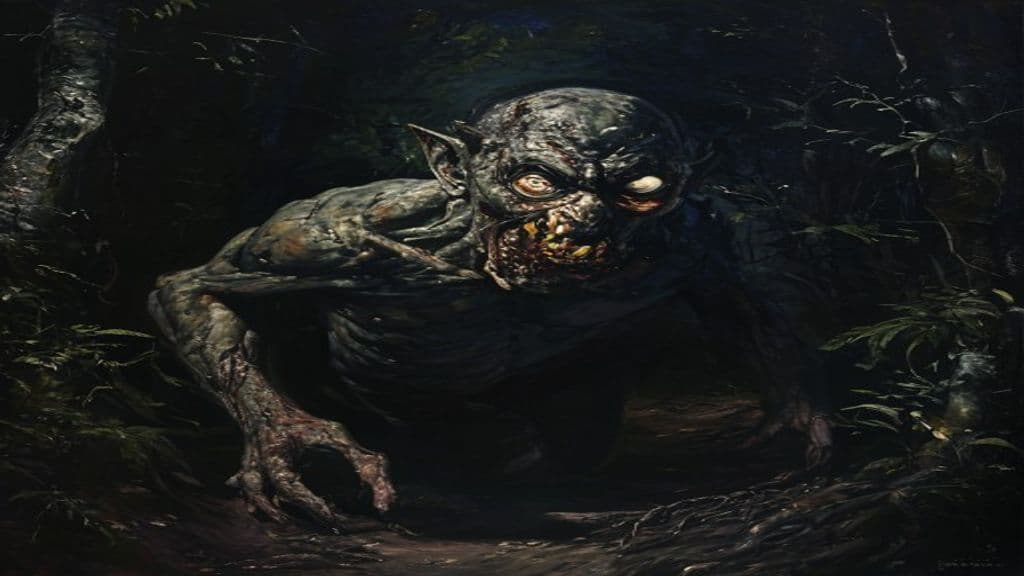
Pishacha
Flesh-eating spirits of Hindu mythology that haunt cremation grounds and are associated with disease, madness, and possession. The lowest class of demon in the Vedic hierarchy.
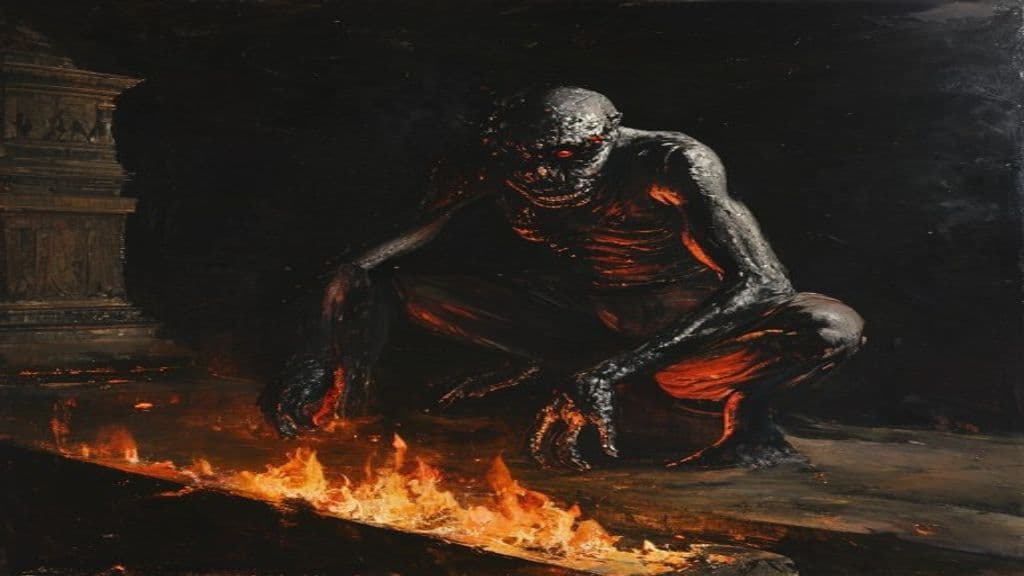
Pishach
Among the oldest classified demon-types in Hindu tradition — flesh-eating entities of the cremation ground first named in the Atharva Veda. The Pishach inhabits fresh corpses and possesses the living, causing the specific Ayurvedic condition of 'pishachabadha': madness, speaking in unknown languages, consuming impure things.
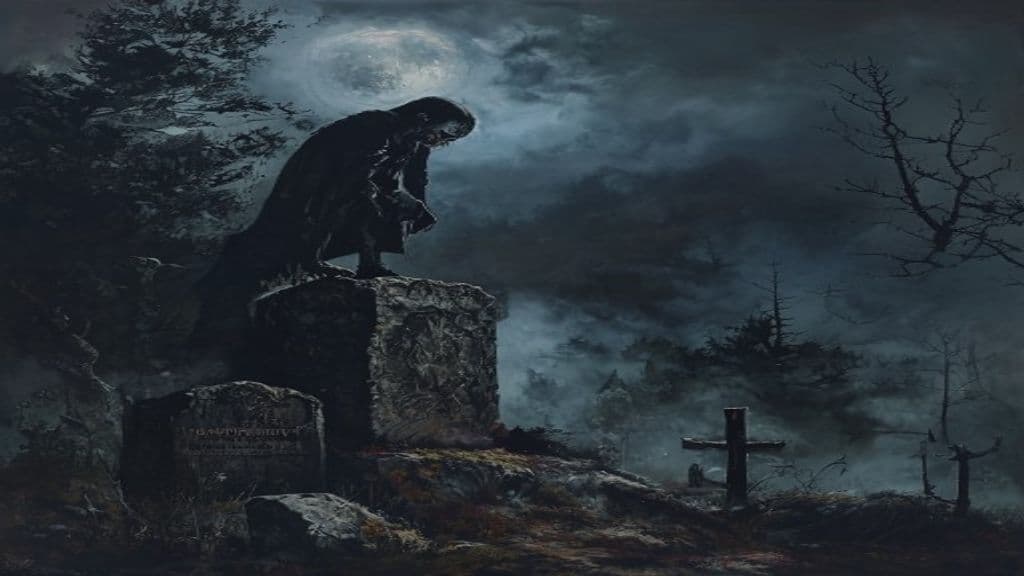
Strigoi
The vampire of Romanian folklore — either a living witch (strigoi viu) or an undead blood-drinker (strigoi mort). The source tradition from which the literary vampire emerged.
Banshee
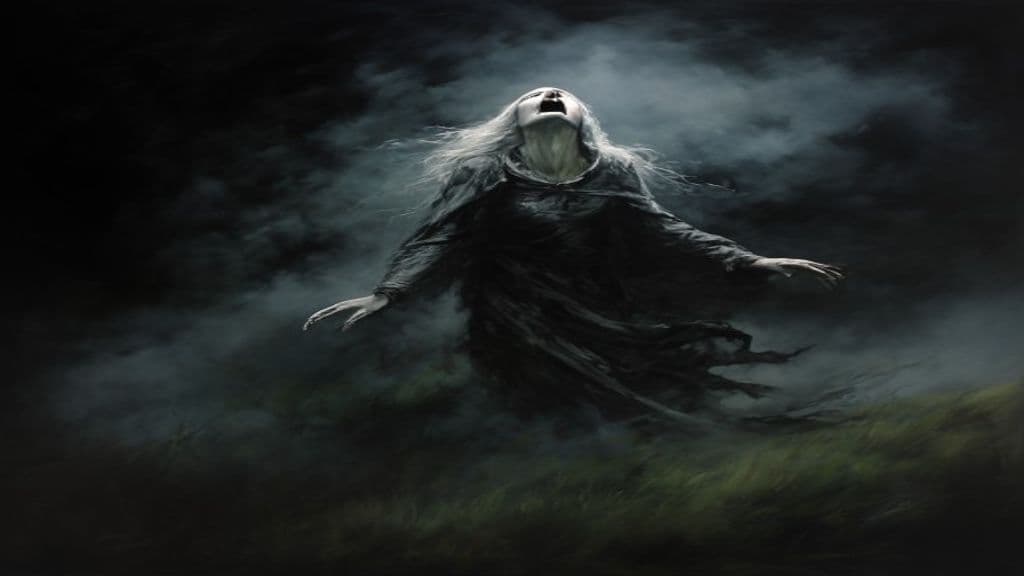
A female spirit of Irish and Scottish folklore whose wail heralds an impending death in a family of Gaelic descent. Not a cause of death — a witness to it.

Rakshasa (Himalayan variants)
A Himalayan reception of the pan-Indian rakshasa motif: hostile or disruptive non‑human beings known from Sanskrit epic and Puranic literature, here noted where Himalayan sources and discussions intersect with the broader epic tradition. The supplied sources do not document distinct, well‑attested Himalayan folklore variants; the entry therefore presents primarily the epic/legendary profile as transmitted into Himalayan contexts in general references.

Ghoul
A ghoul is a demon-like or monstrous humanoid originating in pre-Islamic Arabian religion, traditionally associated with graveyards and the consumption of human flesh. The concept later entered broader folklore and has been widely reused and transformed in modern fiction and popular culture.

Baba Yaga
Baba Yaga is an ambivalent female figure of East Slavic folktale tradition, depicted variously as a fearsome, child-eating crone or as a helpful, maternal donor. She is associated with the deep forest, a hut described as standing on chicken legs, and the motific accoutrements of a mortar and pestle.
Forneus
Forneus is a named spirit in the grimoire tradition of The Lesser Key of Solomon (the Ars Goetia), described there as a Great Marquis of Hell who commands twenty-nine legions and is said to teach rhetoric and languages while making men beloved and giving them a good name. Sources depict him as able to take many forms — described as a great sea monster but said to mainly prefer human form — and note that he is "partly of the Order of Thrones, and partly of that of Angels."
Gusion
Gusion is a named spirit recorded in the grimoire tradition of the Ars Goetia (Lesser Key of Solomon), presented there and in later compilations as a high-ranking demon who commands subordinate spirits and is queried by practitioners for information about temporal matters.
Aganippe (naiad)
Aganippe is the local Naiad of the spring called Aganippe at the base of Mount Helicon in Boeotia. The spring and its nymph are traditionally associated with the Muses and with poetic inspiration; the name Aganippe is also used as an epithet in other, sometimes divergent, local mythic or cultic contexts.
Aganjú
Primordial Orisha associated with the sun, fire, and the untamed wilderness in Yoruba tradition. (Note: - Remove "untamed wilderness" from Power tier description as it's a trait associated with Lesser entities, not Primordial. - Add Appearance section based on source material (e.g., no specific descript)
Agapenor
Agapenor (Ancient Greek: Ἀγαπήνωρ) is a legendary Arcadian leader in the Greek heroic-age tradition: commander of Arcadian contingents at Troy, participant in Trojan-cycle episodes (including the Trojan Horse and funeral games), and, in later tradition, shipwrecked on Cyprus and credited with founding New Paphos. He is presented as a mortal king and genealogical ancestor rather than a supernatural being.
Agapius of Athens
Agapius (Greek: Ἀγάπιος; c. 460 – after 511) is recorded in late antique sources as a learned Neoplatonic philosopher of Athens who lectured on Plato and Aristotle and as, in some traditions, a physician who worked in Alexandria and later Constantinople. The evidence is fragmentary and transmitted through later epitomes (notably Damascius via Photius and the Suda) and a report by John Lydus.
Agaptolemus
Agaptolemus (Ancient Greek: Ἀγαπτόλεμος) is a mythic Greek prince, one of the fifty sons of King Aegyptus, best known as the husband of the Danaid Pirene who, like most of the Danaids, slew her husband on their wedding night at the command of her father Danaus.
Agaru
Agaru (attested historically as Agarum) appears in the supplied sources as a Bronze Age Near Eastern toponym—often identified with Failaka Island—and as a modern personal or media name. The provided material contains no evidence that Agaru is a supernatural being in any traditional cosmology.
Agasaya
Agasaya is presented in modern secondary sources as a little-attested Semitic war goddess who, according to some summaries, was later absorbed as the warrior aspect of the major Mesopotamian goddess Ishtar. The attestation in available materials is sparse and much inferences about her name, attributes, and later influence are explicitly marked speculative in those sources.
Agasthenes
Agasthenes (Ancient Greek: Ἀγασθένης) is a mytho-historical king of Elis in Greek tradition, presented in surviving sources as the son and successor of Augeas and the father of Polyxenus. He functions as a dynastic link in Elean king-lists that connect local rulership to wider heroic-age events such as the Trojan War.
Agastya
Agastya (also Agathiyar/Agasti) is a revered Vedic and later-period Indian rishi (sage) figure credited in textual traditions as an inspired seer, ascetic, teacher, culture-founder, and attributed author of Vedic, Puranic and Tamil works; in South Indian tradition he is associated with origins of Tamil grammar and Siddha medicine and is identified astronomically with the star Canopus.
Agatha Harkness
Agatha Harkness is a fictional Marvel Comics character portrayed as a long-lived, powerful witch who has acted as governess, tutor, and leader within witch communities in Marvel continuity; she is best known as a mentor to Wanda Maximoff (Scarlet Witch) and for ties to New Salem and the Salem's Seven.
Community Record
- [1]Agares — Wikipedia. Wikipedia entry summarizing grimoire attestations and variant manuscript descriptionswiki
- [2]Pseudomonarchia Daemonum / Lemegeton (summaries cited). Summarized entries for Agares in Pseudomonarchia Daemonum and the Lemegeton / Lesser Key of Solomon as reported in source notes (legion counts, appearance, functions).other
- [3]Livre des Esperitz / Book of the Office of Spirits (manuscript variants). Referenced manuscript variants describing Agares (e.g., Agarat, old man; cockatrice mount variant) as summarized in the supplied materials.other
- [4]Grimoire of Pope Honorius (entry: Agarus). Mentioned as a source that presents a briefer description omitting animal attributes and limiting functions.other
- [5]Sloane MS 3824 (Experiment of Agares). Manuscript noted to contain invocations for treasure-guarding spirits and an 'Experiment of Agares' to draw him into a crystal; cited in the supplied research notes.other
- [6]Grand Grimoire (hierarchical placement). Referenced as placing Agares as subordinate to Lucifuge Rofocale in that work's hierarchy (noted in the supplied materials).other
- [7]Thomas Rudd correspondence (angelic opposition: Jelial). Reported pairing of Agares with the Shem HaMephorash angel Jelial in Rudd's schema, as cited in the research notes.other
- [8]DuQuette & Hyatt — Aleister Crowley's Illustrated Goetia (modern commentary). Modern occult commentary treating Goetic spirits; listed among supplied sources though specific conjurations are not reproduced in the research notes.other